Tuesday, August 14, 2018

How Wildfires Are Affecting Your Air

How High Efficiency Air Filters Keep People Safe During – and After – Wildfires

Wildfires can cause intense air pollution that lasts for months and requires the use of high efficiency commercial air filters and portable commercial air purifiers

Wildfires are dangerous enough due to the flames that can damage landscapes and homes, but they can also contribute to deadly air pollution. The combustion of biofuels, things like wood, grasses, shrubs, and forbs, can release a wide variety of toxic air pollutants including black carbon and particulate matter. Wildfire flames can also release dangerous chemicals like benzenes and other volatile organic compounds. Depending on the conditions of the weather and geography of the landscape where the fire took place, these air pollutants can hang around for long, protracted periods of time, doing continual damage to the health of people in the region.

Because the pollutants released by wildfires can be so dangerous it is important to know what the pollutants are, how they can harm you, and what steps you can take to protect yourself from them.

Commercial High Efficiency Air Filtration Units Can Trap A Variety of Toxic Air Pollutants

The combustion of biofuels can easily release particulate matter and carbon in the form of soot and smoke. When wildfires burn hot enough they can also lead to the formation of compounds like volatile organic compounds (VOCs), sulfur dioxide, and nitrogen oxides. These compounds can do substantial damage to people’s health when inhaled.

Volatile organic compounds include things like benzenes and methanol. These compounds can be formed by the burning of soil or biofuels, fusing together different chemicals in a way that is similar to how industrial facilities release these compounds as byproducts. Many volatile organic compounds are precursors to ozone. When ozone is in the upper atmosphere, it’s a beneficial chemical that shields us from the sun’s harmful UV rays. Yet at ground level, ozone is a toxic air pollutant that damages people’s lungs.

Sulfur dioxide and nitrogen oxide are colorless air pollutants which can be released by wildfires as they combust sulfur containing soil or biofuels. Sulfur dioxide and nitrogen oxide not only harm people’s lungs, they contribute to acid rain and the damaging of water tables.

“Particulate matter refers to a number of different small particles of various chemical compositions. The only requirements that exist for particulate matter are that the particles are small enough to penetrate the human lungs and bloodstream, doing damage to the cells of the body,” stated Camfil’s Charlie Seyffer, Manager of Marketing & Technical Materials and 37-year ASHRAE member and active committee participant. “Particulate matter can be either liquid or solid, and the most critical sizes are smaller than 2.5 microns in size, or smaller than the width of a human hair. Because so many different particles can count as particulate matter, it should be no surprise that wildfires can release large amounts of particulate matter pollution. Small particles of soot, smoke, and dirt can all be sent into the air by wildfires.” ¹

High Efficiency HVAC Air Filters Can Prevent Health Damage from Wildfires

Exposure to the air pollutants released by wildfires can cause different respiratory and cardiovascular ailments. The particles of sulfur dioxide, nitrogen oxide, volatile organic compounds and other forms of particulate matter can cause the development of many different diseases and conditions like asthma, emphysema, chronic obstructive pulmonary disorder, and decreased lung function. High efficiency HVAC air filters can protect people from developing these ailments.

Volatile organic compounds are harmful to human health. VOCs like benzenes are known carcinogens, which increase people’s risk of developing cancer. Ground level ozone is also dangerous to human health. Exposure to air pollution can exacerbate asthma, emphysema, and bronchitis. High-levels of ozone can also cause difficulty breathing, coughing, and wheezing. Continuous exposure to ozone may also cause permanently reduced lung function.

Sulfur dioxide and nitrogen dioxide exposure can lead to headaches, difficulty breathing, wheezing and coughing in high concentrations. Continuous exposure to nitrogen dioxide may be responsible for the development or exacerbation of conditions like asthma. Nitrogen oxide and sulfur dioxide can also increase the lung’s susceptibility to respiratory infections, making the development of conditions like pneumonia more likely.

“Particulate matter exposure is extremely damaging to people’s health,”Seyffer said. “PM exposure can lead to the development of a variety of different health problems because it can damage the cells of the lungs. PM exposure can lead to conditions like asthma, stroke, ischemic heart disease, obstructive pulmonary disorder, and an increased risk of developing lung cancer.”²

Commercial Air Filtration Systems Become More Necessary As Wildfires Burn

In terms of the amount of air pollution released by wildfires, wildfires can easily dwarf the amount of air pollution released by even substantial sources of air pollution like cars in California. A report released by the University of California, Davis found that a week’s worth of the air pollution caused by the 2017 fires in California released enough air pollution to rival a year’s worth of air pollution released by the cars in the state.

“The wildfires that ravaged the state of California in 2017 released approximately 10,000 tons of particulate matter into the air,” stated Seyffer. “The particulate matter released by the fires consisted of not only carbon released by the combustion of biofuels but also many hazardous volatile organic compounds released by the burning of chemical containers and buildings.” ³

The sheer amount of air pollution that is released by wildfires can send people to the hospital, and the State of California had more hospitalizations in 2017 during the wildfires than at other times of the year. Those who are uniquely sensitive to air pollution like children, the elderly, and pregnant women should be especially careful to guard themselves against air pollution.

The pollution from wildfires may stay in a region for weeks on end, depending on the geography and weather in the area. Mountains may make air pollution stay in an area, trapping the particles in a valley between them, such as often happens to air pollution in California’s central valley. Weather patterns can also prevent particles of air pollution from dispersing, cold air inversions can trap air in a bowl above a region, and summer heat can exacerbate air pollution by turning the VOCs released by fire into smog and ozone.

Commercial Air Purifiers Can Defend Against Air Pollution and Smoke

The dangers involved in being exposed to air pollution means that people should use portable commercial air purifiers to protect their health from dangerous air pollutants. Portable air purifiers are those which can be used in a home and provide extra protection against air pollutants. Portable air purifiers should be placed in rooms where you spend most of your time, like the living room during the day or in your bedroom while asleep.

Be sure to purchase portable commercial air purifiers that use replaceable filters. Avoid portable air purifiers that use ozone generators and avoid electrostatic precipitators, as these devices don’t effectively trap air pollutants and they may generate ozone as a byproduct of their operation.

Traditional filters in HVAC systems may be inadequate for filtering out the toxic air pollutants released by fires, and therefore portable air purifiers should be used to augment the filtering capabilities of traditional HVAC systems. Portable air purifiers can be especially helpful to those who have special sensitivities to air pollution.

HEPA Air Filters Can Trap Particulate Matter

Portable air purifiers and air filtration systems should utilize industrial level HEPA air filters. HEPA filters, or High-Efficiency Particulate Air filters, are capable of trapping the dangerous particulates that are spewed into the air by wildfires.

Industrial HEPA filters can capture up to 99.97% of all particulate matter down to 0.3-micron across. HEPA filters have tight fiber weaves that are responsible for trapping air pollutants within the filter while the filtered air moves on. The more pollutants that a filter can capture, the tighter the weave of the filter. If you have purchased a HEPA filter, be sure that it actually meets the standards developed by the Department of Energy, as some filters are referred to as “HEPA-type,” though they can’t actually remove the smallest and most dangerous particles from the air.

Camfil USA commercial air filters can provide you with the filters you need to protect you from the emissions generated by wildfires. Contact Camfil USA air filters today to purchase high quality replacement filters guaranteed to minimize your exposure to pollutants.


Lynne Laake

Camfil USA Air Filters

T: 888.599.6620

E:Lynne.Laake@camfil.com

F: Friend  Camfil USA on Facebook

Y: Watch Camfil Videos on YouTube

L: Follow our LinkedIn Page


Sources:

  1. https://www.usatoday.com/story/weather/2017/06/15/study-wildfire-pollution-much-worse-than-thought/102882646/
  2. https://www.airnow.gov/index.cfm?action=smoke.index
  3. https://www.cnn.com/2017/10/13/health/california-fires-air-pollution-trnd/index.html

The post How Wildfires Are Affecting Your Air appeared first on Air Filters for Clean Air.


from Air Filters for Clean Air

Thursday, August 9, 2018

Defending the Productivity of Workers from Dangerous Pollutants

Industrial air filters can affect the economy and the productivity of workers by protecting the health of workers from air pollution related diseases.

It’s clear that air pollution impacts people’s health and the environment. This is obvious to anyone who has been in a city with severe air pollution. Something else that is true, if less obvious, is that air pollution harms people’s productivity in addition to their health. People who work in office buildings in large cities, where air pollution levels are often quite high, are frequently less productive than their counterparts who work in clean air conditions.

Beyond this, air pollution causes a variety of illnesses. Respiratory and cardiovascular illnesses created by air pollution often lead to missed work days or even hospital visits. The world spends billions of dollars treating conditions associated with exposure to severe air pollution every year, constituting an even larger drain on the economy. How can air pollution be reduced to minimize the impact it has on the economy? What can office workers do to protect themselves against the threat of air pollution?

Commercial HVAC Air Filters Trap The Most Dangerous Air Pollutants

The average office worker in a city like Shanghai, Beijing, London or Los Angeles is exposed to a variety of harmful air pollutants on the way to and from work, and even while in the building where they work. The air in major metropolitan cities tends to be full of a variety of air pollutants, such as nitrogen oxide, sulfur dioxide, ozone, and particulate matter. Recent estimates predict that the high levels of particulate air pollution in Los Angeles cost the service-sector almost $375 million dollars over 90 days. What are the sources of the primary sources of the economically damaging air pollutants?

Nitrogen oxide comes from the interaction of nitrogen with the oxygen particles found in the air. When nitrogen is released by the combustion of fossil fuels, it combines with oxygen in the atmosphere to create nitric oxide, which then goes on to combine with more oxygen to create nitrogen dioxide. Though nitric oxide is not typically a major health hazard, in high enough concentrations it can be and nitrogen dioxide can be dangerous even at lower concentrations. Nitrogen oxide forms thick smog and acid rain, impacting visibility and damaging the environment.

Sulfur dioxide is similar to nitrogen oxide in that it comes from air mixing with byproducts from the combustion of fossil fuels. The discharged sulfur that is emitted from various industrial processes combines with oxygen in the air to create sulfur dioxide. Frequent sources of sulfur dioxide include industrial facilities (like those which process ore), locomotives, ships, and fossil fuel-based power plants.

While ozone protects us from the sun’s ultraviolet rays when it is in the upper atmosphere, in the lower atmosphere it is a toxic air pollutant. Ozone isn’t emitted directly into the air like some other air pollutants.  Instead, it comes from the interaction of volatile organic compounds (VOCs) with sunlight and heat. There are many different sources of volatile organic compounds, including car exhaust, household chemicals like paints and cleaners, building equipment, printing shops and gasoline stations.

Particulate matter doesn’t refer to one pollutant in particular – it covers a wide variety of different tiny particles that are harmful to human health.

“When particles of air pollution are below a certain size, they are capable of entering into the human lungs and bloodstream, causing substantial damage. Particulate matter is usually grouped into three different categories, PM1, PM2.5 and PM10. These particles are smaller than 1-micron in size, smaller than 2.5-microns in size, and smaller than 10-microns in size respectively,” says Kevin Wood, Vice President of Marketing and Sales at Camfil USA commercial air filters. “Because particulate matter refers to so many different kinds of pollutants, they can have many different sources, but the combustion of fossil fuels at industrial facilities, power plants, and by motor vehicles are major contributors to PM air pollution.” (1)

Commercial Air Filtration Systems Help Prevent The Development of Diseases

Commercial air filtration systems should be used within an office building to protect the health, and the productivity, of workers in said buildings. Exposure to the various air pollutants can cause a variety of health problems such as irritation of the eyes, nose, and throat. Long-term exposure to air pollutants can cause more severe afflictions such as asthma, chronic obstructive pulmonary disorder, and lung cancer. Air filters can also reduce infectious cough and sneeze droplets that transfer colds and the flu.

Exposure to nitrogen oxides can cause a number of different lung problems, impacting a person’s ability to breathe. They can cause or aggravate respiratory conditions like bronchitis and emphysema, and exacerbate previous existing heart conditions like chronic obstructive pulmonary disorder. Exposure to nitrogen oxide is also correlated with the exacerbation of asthma.

Sulfur dioxide primarily damages the cardiovascular system, causing various respiratory illnesses like asthma and emphysema. Sulfur dioxide can aggravate existing heart diseases and lead to issues like chronic obstructive pulmonary disorder, much like nitrogen oxides.

Ozone and other kinds of photochemical smog can irritate the lungs, and lead to headaches, nausea, chest discomfort, and the exacerbation of asthma. Continuous exposure to high concentrations of ozone can permanently impair lung function and may make a person’s lungs more vulnerable to infection.

Particulate matter can lead to asthma attacks, visits to the emergency room, and even premature death. The small particles can cause a number of different health problems such as stroke, heart attack, arrhythmia, pneumonia, and lung cancer.

High Efficiency Air Filtration Units Can Keep The Productivity of Workers High

Air pollution can harm the health and productivity of office workers, and increase the need for high efficiency air filtration units in a number of ways. It can decrease the overall level of productivity of workers, making them think and react more slowly, distract them from their work with coughing or wheezing, and necessitate sick days or trips to the hospital.

“One study found that as the air pollution index increased by 10% in the concentration of air pollution, the number of calls handled by a call center fell by about 0.35% per day,” says Wood at Camfil USA commercial air filters. “This means that overall workers were about 6% more productive on days with low air pollution, compared to when air pollution was high. A separate analysis found that if China could reduce its air pollution index by 10 points overall, worker productivity would go up around $2.2 billion every year.” (2)

These findings are neatly explained when you consider the activity that occurs in office buildings situated in polluted cities accounts for around 64.5% of global GDP. Separate studies have resulted in findings that corroborate the results of this research project. When workers were tested in two different environments, those who were tested in the “green conditions” performed approximately 61% better at a variety of cognitive tasks than those who were tested in the normal (polluted) office conditions.

Researchers also found that workers who work in green-certified office buildings have approximately 30% fewer headaches and perform around 25% better on cognitive tasks than their counterparts who work in non-green certified buildings. While this study tracked the effects of indoor air pollution rather than outdoor air pollution, the pollutants that impact people’s health are usually quite similar for both indoor and outdoor conditions.

Research suggests that spending approximately $40 per person on indoor air quality every year can lead to a $6500 increase in the productivity of employees, negating the need for employees to take as many sick days due to ailments caused by air pollution.

Portable Air Purifiers Can Be Used Alongside Filters in HVAC Systems

Managers of office buildings can protect the productivity and health of their workers by using portable air purifiers. Portable air purifiers give an extra level of protection to a building over its regular HVAC system. Portable air purifiers can remove the toxic air pollutants from the air within a building that may infiltrate in from outside the building, as well as from indoor sources of air pollutants.

Any portable air purifier purchased should include a replaceable HEPA air filter. HEPA filters are High-Efficiency Particulate Air filters, and they are capable of removing up to 99.97% of pollutants as small as 0.3 microns across. Electrostatic precipitators and ozone generators should be avoided as these devices can emit harmful ozone as a by-product and are less effective than purifiers that use HEPA filters.

High Efficiency Air Filtration and Ventilation Can’t Combat Ambient Air Pollution

High efficiency air filtration and ventilation are capable of defending the health and productivity of office workers, as long as those air pollutants are indoors. Air filtration is of minimal help against the ambient air pollution that harms workers on their way to and from work. For these reasons, policies to reduce levels of ambient air pollution should be enforced. The United States EPA suggests that economic and engineering solutions should be used together to curb air pollution.

Economic air pollution reduction policies include the creation and enforcement of limits for emissions from vehicles and industrial facilities. Vehicle emissions limits are important as motor vehicles are one of the primary sources of air pollution, and the creation of these limits causes automobile manufacturers to invest in the creation of emissions-reducing devices like catalytic converters. Emissions limits are also important for power plants and industrial facilities, and punitive measures can be augmented with cap and trade programs to encourage companies to voluntarily lower their emissions.

“Engineering-based solutions include the creation of devices to capture and reduce emissions from power plants, industrial plants, and motor vehicles,” says Wood. “Wet scrubbers, electrostatic precipitators, absorbers, and filters can all be used to reduce the overall amount of air pollutants released by a specific facility. Switching to cleaner forms of energy generation, such as solar energy, wind energy or hydro energy are highly effective ways of reducing air pollution, as is powering electric vehicles with the energy generated from clean energy sources. ” (3)

Camfil USA air filters can ensure that your productivity is always at maximum by providing you with the most effective commercial and industrial air filters around, so contact Camfil USA commercial air filters today.

Lynne Laake

Camfil USA Air Filters

T: 888.599.6620

E:Lynne.Laake@camfil.com

F: Friend  Camfil USA on Facebook

L: Follow our LinkedIn Page


Sources:

  1. https://www.cdc.gov/air/particulate_matter.html
  2. https://www.epa.gov/air-quality-management-process/managing-air-quality-control-strategies-achieve-air-pollution
  3. https://www.economist.com/blogs/economist-explains/2016/10/economist-explains-2

The post Defending the Productivity of Workers from Dangerous Pollutants appeared first on Air Filters for Clean Air.


from Air Filters for Clean Air
Tuesday, July 31, 2018

Code Orange Air Quality Facts To Know!

Learn What A Code Orange Air Quality Alert Means And When To Use Commercial HVAC Air Filters

Camfil Commercial HVAC air filters news – If you live in a city with severe air pollution, you may occasionally hear that an “orange air quality alert” has been announced. On the days that suffer from the worst air pollution, you may even hear that a “red” air quality alert has been announced in your area.

What does the color of these air quality alerts signify?

What does a code orange air quality alert mean for your health?

The colored air quality alerts are in reference to the Air Quality Index (AQI). The Air Quality Index is a system of rating the safety of the air within a particular region during a particular time. The AQI has several different levels and corresponding color schemes that indicate different concentrations of air pollution and the corresponding level of danger that citizens in the area are in when exposed to these air pollutants. It’s important to know how to interpret the Air Quality Index as it can tell you when to take extra precautions to protect your health. Knowing when it is safe to venture outside or when you should stay indoors and use commercial air filters and industrial air purifiers will minimize your exposure to toxic and deadly air pollutants.

Commercial Air Filtration Systems Deal with The Criteria Air Pollutants

The Air Quality Index was created to advise citizens about the safety of the air within their area. The AQI tracks levels of five different air pollutants: carbon monoxide, sulfur dioxide, nitrogen oxide, ground-level ozone, and particulate matter. These air pollutants fall under the purview of the Clean Air Act, and exposure to them can cause a number of different dangerous health problems. Commercial air filtration systems can filter out all of these pollutants, with the exception of carbon monoxide.

Carbon monoxide (CO) is an odorless, colorless gas that comes from the incomplete combustion of fossil fuels. Any device that burns fossil fuels can release it, though idling vehicles and various industrial processes are common sources of CO. When there are adequate levels of oxygen in an area, carbon monoxide combines with it to become the less dangerous carbon dioxide.

“Both sulfur dioxide and nitrogen oxides are released by fossil fuels used to produce industrial products, create energy, and propel motor vehicles,” says Camfil’s Charlie Seyffer, Manager of Marketing & Technical Materials and 37-year ASHRAE member and active committee participant. “Sulfur dioxide and nitrogen dioxide come more from industrial facilities and fossil fuel-based power plants than they do cars, though cars are still substantial contributors to levels of atmospheric sulfur dioxide and nitrogen oxide. Levels of atmospheric sulfur have dropped significantly since the introduction of cleaner fuels which have reduced sulfur content.” (1)

Ground level ozone, or tropospheric ozone, is created by the interaction of volatile organic compounds (VOCs) with heat and sunlight. Tropospheric ozone is a damaging air pollutant, unlike ozone in the upper atmosphere, which protects us from the sun’s ultraviolet rays. Common sources of VOCs include industrial chemicals, paint, solvents, and gasoline fumes.

Particulate matter refers to any small particles of pollution that are capable of penetrating into people’s lungs and bloodstream, doing damage to the cells of the body. This means PM pollution can encompass a wide variety of different air pollutants. Particulate matter is usually grouped into three different categories, PM1, PM2.5 and PM10. These particles are smaller than 1 µm across, smaller than 2.5 µm across, and smaller than 10 µm across respectively.

Commercial HVAC Air Filters Can Prevent the Development of Asthma and Other Lung Conditions

Commercial HVAC replacement air filters should be used to provide protection against the various air pollutants that the Air Quality Index tracks and reports. Exposure to these air pollutants can cause devastating damage to one’s health, including asthma, pneumonia, and other respiratory or cardiovascular ailments.

Carbon monoxide exposure can quickly lead to nausea, headaches, dizziness, and interrupted thinking. The lungs are being deprived of oxygen as they are exposed to carbon monoxide, so high levels of carbon monoxide exposure can easily be fatal.

“Exposure to sulfur dioxide and nitrogen oxides can cause a number of different respiratory health problems,” says Seyffer at Camfil USA. “Exposure to high levels of the two pollutants can cause difficulty breathing, coughing, and wheezing.  These pollutants inflame the linings of the lungs, making them more vulnerable to infection and increasing the incidences of conditions like pneumonia, emphysema, and asthma.” (2)

Exposure to ground level ozone can cause difficulty breathing, much like nitrogen oxide and sulfur dioxide. High levels of ozone exposure can lead to dizziness and headaches. Continued exposure to ground-level ozone over long periods of time can permanently reduce a person’s lung function.

Particulate matter can cause a number of different health problems since it can damage the cells of the body.  Particulate matter exposure has been correlated with many different cardiovascular and respiratory ailments like asthma, stroke, heart attack, chronic obstructive pulmonary disorder, and an increased risk of developing lung cancer.

How The Air Quality Index Reflects The Need for Commercial Air Filtration and Ventilation

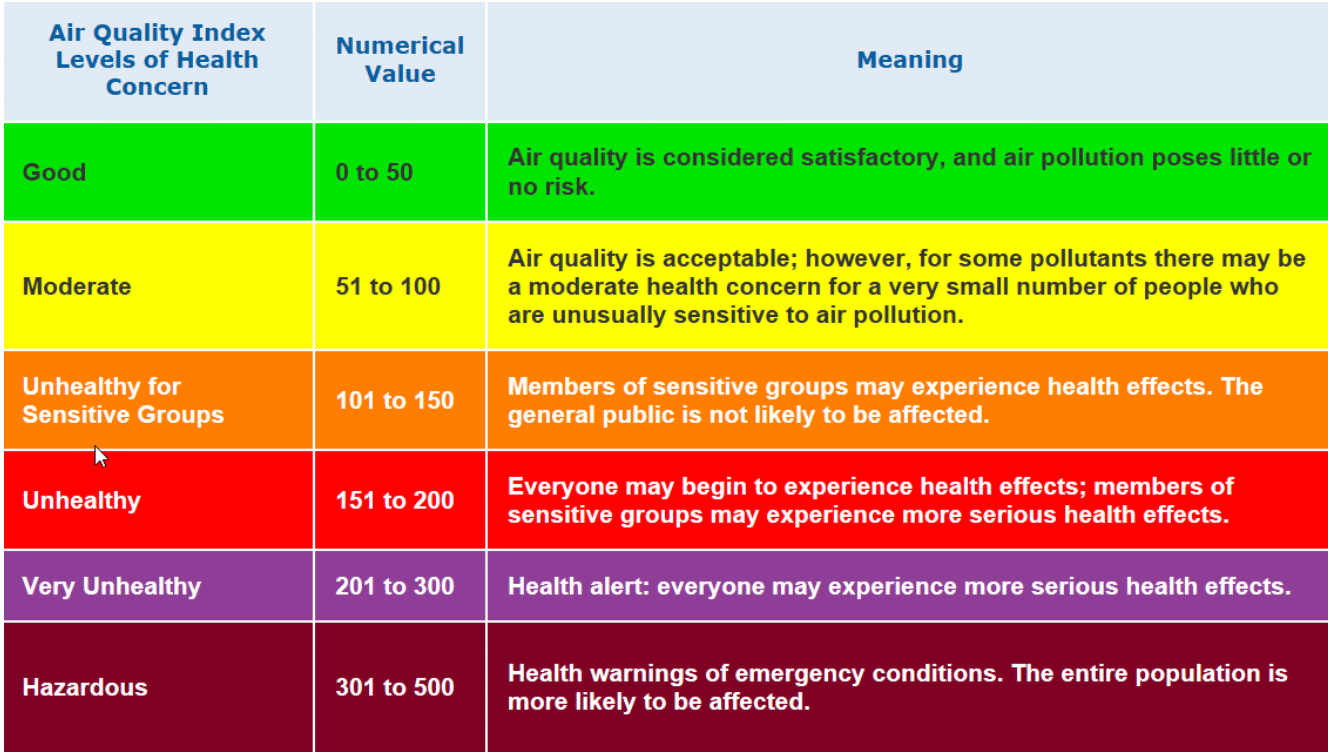
The Air Quality Index ranks the air in a particular region with one of six different safety levels. These levels reflect the concentrations of air pollutants in that particular region at that particular time. The air quality rankings run from Good to Hazardous and each of them has a color value as well as a number value.

The first level of air quality index is Good air quality, and it covers the air pollution concentrations 0 to 50. Good air quality is represented by the color green on the AQI, and at this level, the air poses no risk to the general health of the population in the region.

The second level of the AQI covers moderate air quality, and the color yellow represents this level on the index. This covers air pollution levels 51 to 100, which means that although the air is generally safe for the majority of the population, those who have unique sensitivities to air pollution should be cautious.

“The third level of the AQI represents air that is unhealthy for certain sensitive groups, and it covers the values 100 to 150,” says Seyffer. “The air in this category isn’t typically harmful to the general populace, but those who are in sensitive groups like children and the elderly should minimize their exposure to the air at this level. It is represented by the color orange on the index.” (3)

The fourth section of the AQI covers the values 151 to 200, and it is represented by the color red on the index. The air quality at this level is dangerous to everyone, and those who are at special risk from air pollutants can begin to have serious health damage occur.

The fifth section of the AQI is represented by the color purple on the index and it contains all of the values which run from 201 to 300. Air at this level of pollution is dangerous to the entire population, and everyone may have severe health damage occur if exposed to it for long periods of time.

The sixth and final section of the AQI contains all pollutant values above 300. It appears as the color maroon on the index, and the air here is extremely hazardous. Air quality at this level is classified as emergency conditions and everyone should limit their exposure to it, as they are likely to be severely impacted by it.

What Commercial Air Filtration Units Should Be Used?

As the levels of air pollution increases, commercial air filtration units become more and more important for protecting people’s health from exposure to air pollutants like particulate matter and the other criteria air pollutants. Commercial air filters are rated with the MERV system which stands for Minimum Efficiency Reporting Value. The higher a filter’s MERV number is, the more particles of pollution it can remove.

“Filters rated 8 – 13 MERV are typically sufficient for use in most HVAC systems and will do an adequate job filtering particulate air pollutants,” Seyffer. “Yet those who live in areas where the air quality index reaches orange or higher may choose to employ industrial level HEPA air filters. HEPA stands for High-Efficiency Particulate Air, and these filters can absorb up to 99.97% of all pollutants as small as 0.3-micron in size. HEPA filters can be used in HVAC systems or as part of a portable air purifier.” (4)

Those who are considering buying a HEPA air filter should do their research and be sure that the filters are genuine HEPA filters. This is because some filters may advertise themselves as being “HEPA-like”, meaning that though superficial aspects of their design are similar to HEPA filters they can’t actually trap the smallest and most dangerous particles.

Commercial Air Purifiers by Themselves Aren’t Enough to Stay Safe

While commercial air purifiers can help protect you from the harmful pollutants tracked by the AQI, they shouldn’t be your only line of defense. It’s also important to monitor and understand the Air Quality Index, staying up-to-date on air quality reports in your region. The level of air pollution in your region will affect which steps you want to take to minimize your exposure to air pollutants.

The first couple levels of the AQI represent fairly clean air, which will pose little threat to your health unless you have a pre-existing respiratory condition. Yet beginning at the orange level of air pollution, you should begin taking steps to limit your exposure to air pollutants. Try to confine your periods of outdoor activity to early morning when air pollution levels are lowest, and stay away from major thoroughfares as concentrations of air pollutants are highest around them.

When air pollution levels are at either the very unhealthy or hazardous levels, limit the amount of time spent outdoors if possible. Portable industrial air purifiers can be used in the home to augment the cleaning capabilities of filters in home HVAC systems. Industrial grade facemasks can also be used to reduce the amount of pollution one breathes in if you have to venture outside in extreme air pollution.

Camfil USA commercial or industrial air filters can help you decide on the right level of filter for you, based on the AQI reports for your area. Contact Camfil USA industrial air filters today to have a professional help you choose the right air filter for your needs.


Lynne Laake

Camfil USA Air Filters

T: 888.599.6620,

E:Lynne.Laake@camfil.com

F: Friend  Camfil USA on Facebook

T: Follow Camfil USA on Twitter

Y: Watch Camfil Videos on YouTube

L: Follow our LinkedIn Page


Sources:


  1. https://toxtown.nlm.nih.gov/text_version/chemicals.php?id=19
  2. https://toxtown.nlm.nih.gov/text_version/chemicals.php?id=29
  3. https://airnow.gov/index.cfm?action=aqibasics.aqi
  4. https://www.epa.gov/indoor-air-quality-iaq/guide-air-cleaners-home

The post Code Orange Air Quality Facts To Know! appeared first on Air Filters for Clean Air.


from Air Filters for Clean Air

Wednesday, July 4, 2018

Causes of Poor Indoor Air Quality At Commercial Facilities

Factors such as chemicals and poor ventilation can compromise indoor air quality and affect the health of employees says Camfil Air Filters

Camfil USA, a leading air filters company explains how the owners of commercial facilities that prize the health of their employees must understand the factors that can cause poor indoor air quality, so that they can implement effective air filtration strategies.

Most people understand the definition of air pollution and how it can affect health and well being, but few really understand the factors that can make indoor air quality even worse than the quality of air outdoors.

Part of that disconnect is that air pollution is an umbrella term that refers to particulates and contaminants, but does not really identify the specific airborne contaminants.

Identifying these contaminants is the first step in improving indoor air quality through an air filtration system.

Factors That Affect Indoor Air Quality

One of the ironies about air pollution is that indoor air pollution is often worse than pollution outdoors. That’s because enclosed areas act as a kind of incubation for contaminants, and in many instances actually create a more hospitable environment for pollutants such as microbes and viruses to flourish.

So with that in mind, the most common pollutants that affect indoor air quality are:

Chemicals  Chemicals are often used in laboratories; paint stores and auto repair shops, and are a major source of toxic vapors.

Suspended particles  Tiny particles that become airborne and do not move through the air due to lack of proper ventilation or air filtration.

Microbes  Fungi and viruses that grow in indoor facilities where moisture, leaking and humidity create the perfect storm for growth.

Pets  Commercial facilities in which pets roam free can become storing houses for animal-sourced allergens that can worsen breathing ailments such as asthma and bronchitis.

Pests  Dust mites, mice and cockroaches can also cause allergens from their droppings that can compromise indoor air quality.

Humidity  The humidity level in a commercial facility is often tied to proper ventilation, but if the humidity level is too low, the air will be too dry and can cause skin rashes and other ailments. However, high humidity is also not ideal as this creates moisture and can lead to the growth of mold and fungus.


Ventilation  Well-designed facilities are built with ventilation that allows air to circulate in a way that minimizes the intake of bad air. Ventilation must also be paired with air filtration devices to assure the best indoor air quality.


People  Although not as commonly understood, people who walk in and out of a facility are another major source of indoor pollution. This is especially true if those people are smokers and bring nicotine and other particles into a facility. People can also bring in allergens from their homes. People also shed skin, at a rate of millions of skin particles per hour, contributing to the dust in the environment and creating food for pests like dust mites.

Clean Air Solutions

The U.S. Environmental Protection Agency (EPA) recommends that commercial facility physical managers implement three methods to improve indoor air quality:  Identifying pollution sources, improving ventilation and implementing air filtration.

Identifying pollution sources is vital in facilities such as paint stores and auto repair shops where pollution sources can be enclosed and sealed off to prevent them from becoming airborne.

Improving ventilation is another aspect of implementing clean air solutions in a commercial facility. Improvement could involve increasing the number of openings at a facility that bring in fresh air, and controlling how much outside air enters the facility.

The final method is the most important, because without air filtration such as the proper air filters in HVAC systems or air cleaners to filter contaminants, pollution will continue to accumulate and affect the health of those who frequent these facilities.

Camfil Provides Effective Air Filtration

For 50 years, Camfil Air Filters has offered air filtration devices for every commercial industry, including hospitals, automotive paint shops, labs and libraries. Camfil’s guiding principle is that clean air should be a human right, and the company strives to fulfill that principle by offering the most affordable and energy-efficient air filters on the market.

And by also providing on-site assessments, Camfil can help determine the indoor air quality of any facility, and then design an air filtration strategy to meet a facility’s unique needs.


The post Causes of Poor Indoor Air Quality At Commercial Facilities appeared first on Air Filters for Clean Air.


from Air Filters for Clean Air

Why Museums Need Industrial Air Filters to Protect Staff and Artifacts

Industrial air filters and commercial air filtration units are capable of neutralizing major indoor air pollutants that harm museums and museum staff.

Museums are where some of the most important artifacts of our society’s culture and history are kept. If a collection in a museum is damaged, part of our history is lost along with the damage done to the item or artifact. Therefore, it’s important to preserve collections in museums. Unfortunately, museum collections can easily be damaged by a variety of indoor air pollutants. These pollutants can wear away at a canvas, degrade rock and limestone, and dissolve fragile paper or wooden artifacts.

Not only can the exhibits and collections in a museum themselves be damaged, the health of workers and visitors to a museum can also be damaged by indoor air pollutants. For these reasons, the use of high efficiency  commercial air filtration units is highly advised. High efficiency commercial air filters protect both the health of the people within a museum and the integrity of the exhibits.

Commercial Air Filtration Units Capture Pollutants Like Ozone, Sulfur Dioxide and Particulate Matter

There are many different kinds of air pollutants. Pollutants can be found both indoors and in the ambient air outdoors. While many people are aware of the problems of outdoor air pollutants, due to exposure to photochemical smog and pollutants emitted from industrial facilities, fewer people think about the harm that indoor air pollutants can do. It’s difficult to draw a strict dividing line between indoor pollutants and outdoor air pollutants, as one can easily become the other. Yet some forms of air pollution are more common indoors, while others are more common outdoors.

Ozone is by far the most detrimental pollutant that can interfere with preserving museum items. It is nature’s oxidizer and it is capable of breaking down rubber, plastic, wood and paint.   In the museum environment, it can lead to the fading of organic artists’ pigments and textile dyes that are present in paintings, tapestries and historically important clothing exhibits.

Ambient outdoor air pollution, introduced into museums by ventilation air and building leakage, includes the various pollutants emitted by the combustion of fossil fuels. These air pollutants are compounds such as sulfur dioxide and nitrogen oxide. Sulfur dioxide comes primarily from the combustion of fossil fuels in industrial facilities and power plants, as levels of sulfur in fuel for vehicles have dropped dramatically over the past few decades. Sulfur dioxide is a colorless gas with a strong odor and it can contribute to the development of smog and acid rain. Nitrogen oxides are different nitrogen-based pollutants that can also contribute to smog and acid rain. Nitrogen oxides are released by fossil fuel combustion in cars, power plants and industrial facilities.

“Common indoor air pollutants that can damage exhibits and collections include formaldehyde, hydrogen sulfide, ozone, and other volatile organic compounds. Volatile organic compounds (VOCs) are a category of air pollutants that can react with other pollutants in the air to form dangerous and toxic chemical compounds,” said Camfil’s Charlie Seyffer, Manager of Marketing & Technical Materials and 37-year ASHRAE member and active committee participant. “Some VOCs can react with heat and sunlight to create ground-level ozone. Unlike ozone in the upper atmosphere, ground-level ozone is a dangerous air pollutant. VOCs can be released by many different sources including cleaning chemicals, paints, and varnishes.” (1)

Normal airborne particles consisting of mold, dust, dead skin cells and tiny VOC particles, can make up a form of air pollution called particulate matter. Particulate matter (PM) is a form of air pollution made of various tiny, yet dangerous particles that can enter the human lungs and bloodstream.

Dust and dirt can be tracked inside by visitors and staff, dead skill cells come from both visitors and staff, and mold can develop anywhere where standing water is found, such as bathrooms and basements.

Commercial Air Filtration Systems Can Protect Fragile Artifacts from Degradation

Commercial air filters are critical for museums to have because poor air quality within the facility can easily damage exhibits and collections. While the damage caused by any individual source of an air pollutant seems negligible, the results of exposure to all forms of pollution are cumulative and over time priceless artifacts can easily be damaged or destroyed beyond repair.

One of the issues that museums must grapple with is where to store their exhibits. Museum artifacts not on public display are often stored in areas that go uncontrolled for various airborne pollutants. The airborne pollutants in storage areas can come to rest in display cases alongside artifacts or within the storage units created to hold exhibits. As these pollutants enter the display case or storage case they can cause significant degradation and deterioration of the exhibit.

Acids like acetic acid and formic acid can wear away at the surface of a variety of materials, making them dangerous to whole collections. Chemicals sometimes used to clean or preserve can be dangerous to exhibits uncontrolled, and compounds like formaldehyde, bleach, and hydrogen sulfide can easily damage exhibits.

Museums are usually full of fragile objects like paintings, books, documents, and sculptures. Particulate matter pollution is typically abrasive in nature, and because of this, it can wear away at these fragile artifacts over time.

Commercial Air Purifiers Protect The Lungs of Visitors and Museum Staff

Not only is the condition and integrity of museum collections important, the health of visitors to the museum and the museum staff is important as well. Both organic and inorganic air pollutants can harm the lungs and other organs of people exposed to them.

Air pollutants like ozone, nitrogen oxide and sulfur dioxide can cause asthma attacks in those with the condition. Continuous exposure to ozone, sulfur dioxide and nitrogen oxide can decrease overall lung function and cause various cardiovascular ailments by making the lungs more vulnerable to infection.

“VOCs like formaldehyde, acetaldehyde, and hydrogen sulfide can come from the off-gassing of composite building materials like boards, carpets, and paints,” warns Seyffer. “These compounds are thought to be carcinogenic in nature, meaning they lead to an increased risk of developing cancer.” (2)

Exposure to particulate matter pollution can damage much of the body, including the central nervous system and lungs. Exposure to PM can cause stroke, heart attack, decreased lung function, increased risk of lung cancer and chronic obstructive pulmonary disease.

Using Commercial HVAC Air Filters and Ventilation

Commercial HVAC air filters can trap the pollutants found in museums, whether they are indoor air pollutants or outdoor air pollutants. Air filtration is the removal of particles from the air by using high-quality air filters in HVAC systems. Filtered ventilation should also be used to help reduce concentrations of harmful air pollutants.

Museum storage buildings often have low air exchange rates and they should be controlled with ventilation and filtration. A high air exchange rate is important for a building as it dilutes built up concentrations of indoor air pollutants. The optimal air exchange rate for a building can be ascertained by a professional, who will know if higher air exchange rates or air filtration rates are needed to control pollutants levels within a building.

Air Filtration And Ventilation Should Be Combined with Source Control Strategies

A combination of source control methods, filtration, and ventilation is one of the best ways to keep air quality within a building high. Source control strategies are those that are capable of stopping the emission of air pollutants where they develop. Museums can and should be cleaned of dirt, dust, and debris. Cleaning should be done with eco-friendly cleaners that limit the release of particles or VOCs back into the air .

“The emission of VOCs can also be reduced by implementing smart painting and maintenance strategies,” advises Seyffer. “Low aerosol painting methods should be used, and maintenance workers should be careful about dislodging debris or dust when cleaning. Mold is a persistent threat, especially in more humid climates. Museum bathrooms, basements, storage units, and ventilation systems should be frequently checked for the presence of moisture or mold.” (3)

Camfil USA commercial air filters can provide your museum with the filters you need to protect the artifacts and people within them. We will also support you with advice from air filter professionals.  Click here to contact us today.


Lynne Laake

Camfil USA Air Filters

T: 888.599.6620,

E:Lynne.Laake@camfil.com

F: Friend  Camfil USA on Facebook

T: Follow Camfil USA on Twitter

Y: Watch Camfil Videos on YouTube

L: Follow our LinkedIn Page


Sources:

  1. https://www.getty.edu/conservation/publications_resources/pdf_publications/pdf/monitoring.pdf
  2. https://www.epa.gov/indoor-air-quality-iaq/volatile-organic-compounds-impact-indoor-air-quality
  3. https://www.epa.gov/iaq-schools/controlling-pollutants-and-sources-indoor-air-quality-design-tools-schools

The post Why Museums Need Industrial Air Filters to Protect Staff and Artifacts appeared first on Air Filters for Clean Air.


from Air Filters for Clean Air

Wednesday, June 6, 2018

How Air Pollutants Absorbed by Industrial Air Filters Are Threatening Plants and Animals

The air pollutants that industrial air filters remove from the air can harm the health of animals and plants as well as the health of humans.

When most people think about damage from air pollution, they think of it in terms of its effects on human health. This is understandable, as we’re humans and we filter what we know about the world through our own experiences. Yet it’s important to remember that air pollution negatively affects the entire world around us, which includes plant life and animal life as well.

Animals and plants are damaged by many of the same pollutants that damage human health, and since our ecosystem includes the plants and animals around us, it’s important to look at pollution reduction across the spectrum. After all, reducing the amount of air pollution in the environment doesn’t just benefit us by shielding our lungs from air pollution, it also benefits the animals and plants in our environment, which play a vital role in how we live our daily lives.

Commercial HVAC Air Filters Absorb Toxic Pollutants That Can Harm the Environment

Air pollutants can damage the leaves and roots of plants, and harm animal lungs in much the same manner that they harm human lungs. These pollutants come from a variety of sources: some are natural and some are man-made. It’s important to note, however, that man-made sources are the primary way most air pollutants get into the air.

The air pollutants released by human activity include:

  • Chlorofluorocarbons that are released by refrigerants, solvents, and propellants. They wear away at the stratospheric ozone layer, which protects the surface of the Earth from the sun’s ultraviolet radiation.
  • Nitrogen oxides and sulfur dioxide that come primarily from the combustion of fossil fuels at industrial facilities, power plants, and by motor vehicles. The pollutants contribute to the acidification of water droplets in the air, which causes acid rain.
  • Volatile organic compounds have a variety of human sources, and they are capable of interacting with heat and the chemical energy from the sun to create ground-level ozone.
  • Particulate matter is an umbrella term for any small particles of air pollution capable of doing damage to people’s health. Particulate matter is divided into different categories like PM1, PM2.5, and PM10 (these particles are smaller than 1-micron in size, smaller than 2.5-microns in size, and smaller than 10-microns in size respectively).

Commercial HVAC air filters are capable of removing most of these pollutants, but animals living outdoors can’t take advantage of their protective capabilities.


Commercial Air Filtration Systems Prevent The Damaging Health Effects Of Air Pollution

The various air pollutants released by human activity can harm plants and animals in a number of different ways. Acid rain and ozone can harm plants, while particulate matter can damage the lungs of animals. A weaker ozone layer can harm almost all life on the planet.

“The degradation of the ozone layer caused by chlorofluorocarbons means that more ultraviolet radiation hits the surface of the planet, damaging the leaves of plants and harming the skin of animals,” stated Camfil’s Charlie Seyffer, Manager of Marketing & Technical Materials and 37-year ASHRAE member and active committee participant. (1)

Unlike when ozone is in the upper atmosphere, tropospheric ozone is a harmful air pollutant that damages the lung tissue of animals and prevents plants from being able to respire. Since plants can’t respire when in clouds of ozone they can’t photosynthesize as efficiently, meaning they’re unable to grow.

In terms of how air pollution harms the lungs of animals, the lungs of other mammals tend to be similar in construction to the lungs of humans. Particulate matter and ozone air pollution can degrade the cells of the lungs, impacting their ability to supply the body with the oxygen it needs. Ozone and particulate matter can permanently decrease lung function if exposure to the air pollutants is at a high level or exposure continues over a long period of time. The two pollutants can lead to the development or exacerbation of asthma in humans, and to similar respiratory diseases in other animals.

Particulate matter can penetrate into the lungs and bloodstream of humans and other animals, doing substantial damage to the lungs and heart. In humans, exposure to particulate matter can cause stroke, brain damage, ischemic heart disease, and other cardiovascular or respiratory ailments. Particulate matter can also damage the body of animals in other ways.

“There is some evidence that other animals can develop similar ailments to humans,” explains Seyffer. “Studies examining dogs from the heavily polluted regions of Mexico City found that the animals displayed forms of neurodegeneration similar to Alzheimer’s disease, not unlike the  implications for humans who are continually exposed to air pollution as well.” (2)


The Pollutants Neutralized by Industrial Air Filtration and Ventilation Can Harm Entire Ecosystems

Air pollutants can harm animals and plants in ways other than direct exposure. This is because air pollution can damage ecosystems and lead to global warming.

Acid rain is one-way air pollution can damage an entire ecosystem. It can easily destroy plant leaves, rendering the plants incapable of photosynthesis, which eventually causes them to die off. When the acidic water soaks into the ground it can also damage plant roots, and harm aquatic wildlife living in streams, ponds, and lakes.

Even if the damage caused by air pollution seems small, the die-off of a single species of fish in one pond, for example, can have ripple effects that harm many more animals and plants. Ecosystems depend on a delicate balance of interactions between different species. If one species dies off, it can destabilize an entire food web, leading to an ecosystem collapse.

“Species that play critical roles within an ecosystem are referred to as keystone species because the loss of them makes the entire arch (ecosystem) collapse,” expanded Seyffer. “If a keystone species were to be damaged or wiped out by severe air pollution, the rest of the ecosystem would suffer greatly. If an insect cannot breed due to the acidification of the water it normally breeds in, the frogs that feed on it will have less food and can die off themselves.” (3)

Certain kinds of air pollution, like methane and carbon dioxide, also lead to global climate change. Global climate change can cause certain areas of the globe to warm and other areas to cool. The hotter climate is causing desertification of fragile ecosystems, the gradual elimination of vegetation and other forms of life from an area. Global climate change is also causing sea level rise due to the melting of the polar ice caps, causing many biomes and ecosystems near the shore to be flooded and swept out to sea.

Commercial HEPA Air Purifiers Are a Way to Protect Ourselves and Our Domestic Animals

The variety of air pollutants that can harm human and animal health can typically be captured with commercial HEPA air purifiers. HEPA stands for High-Efficiency Particulate Air, and it refers to the fact that the filters used in the purifier can absorb most of the dangerous air pollutants exposed in a home. While wild animals can’t benefit from these devices, domestic house pets and humans can, so it remains vital to use them to defend against damaging air pollutants.

When making purchasing decisions about commercial HEPA air purifiers, look for air purifiers that use replaceable HEPA filters. HEPA filters are capable of absorbing up to 99.97% of all particles of pollution as small as 0.3-microns in size. If you live in a particularly polluted area, you may wish to employ a HEPA air purifier to protect the health of your pet, as well as your own health.

Ecosystems Require Protection Beyond Air Filtration Units

It’s critical to think beyond air filtration units and to develop and sustain pollution control methods that will reduce overall emissions of air pollutants. Pollution control strategies can include regulations by government bodies, investments in clean energy and travel technology, and education about ways to reduce individual emissions of pollutants.

Government bodies have the power to create regulations that will curb emissions. It’s important to place limits on smokestack emissions from industrial facilities, mandate motor vehicle mileage standards, and institute cap and trade programs to incentivize companies to reduce air pollution emissions.

Investing in technology that reduces emissions is another way to improve air quality. Emissions reduction technology includes electrostatic precipitators, smokestack scrubbers, and catalytic converters. Electric vehicles and associated infrastructure like charging stations can also reduce emissions.

“Educational programs can help citizens understand the role they can play in curbing emissions and managing their carbon footprint,” claimed Seyffer. “Educational programs can address how citizens can carpool, use public transportation, use energy efficient appliances, make use of environmentally-friendly cleaners, and lower their energy consumption to prevent air pollution.” (4)

Air pollution leads to shorter, unhappier, tougher lives for both animals and humans alike. It’s important to reduce our air pollution emissions where possible and to use commercial or industrial air filters to protect the health of our families and our pets.

Camfil USA is the lead provider of high quality air filters. The health of your family and your pets is paramount, so contact us today to purchase excellent filters from knowledgeable professionals.


Lynne Laake

Camfil USA Air Filters

T: 888.599.6620,

E:Lynne.Laake@camfil.com

F: Friend  Camfil USA on Facebook

T: Follow Camfil USA on Twitter

Y: Watch Camfil Videos on YouTube

L: Follow our LinkedIn Page


SOURCE Camfil.us


Sources:

  1. https://www.windows2universe.org/earth/Atmosphere/wildlife_forests.html
  2. https://www.pca.state.mn.us/featured/does-air-pollution-affect-our-furry-friends
  3. http://environ.andrew.cmu.edu/m3/s5/02biodiversity.shtml
  4. https://www.epa.gov/air-quality-management-process/managing-air-quality-control-strategies-achieve-air-pollution

The post How Air Pollutants Absorbed by Industrial Air Filters Are Threatening Plants and Animals appeared first on Air Filters for Clean Air.


from Air Filters for Clean Air

Tuesday, June 5, 2018

Four Problems The EPA Faces In Reducing Pollutants Removed by Commercial Air Filters

Air pollution has the potential to harm people’s health and welfare in a variety of different ways, making programs to control air pollution of vital importance. Since the 1970s, the Environmental Protection Agency (EPA) has been tackling various problems regarding air pollution, largely through the landmark Clean Air Act, an effort that has substantially reduced levels of different air pollutants and made the air safer for everyone.

Yet despite these improvements to air quality in the United States, the EPA and other regulatory bodies still grapple with various challenges in cleaning up the air. An abundance of common air pollutants, toxic airborne compounds, a damaged stratospheric ozone layer, and climate change are all issues the EPA is attempting to solve.  

What kind of progress is being made in the attempts to solve these issues? What strategies are working to address these challenges?

High Efficiency Air Filtration Units Trap The Criteria Air Pollutants

One of the primary purposes of the Clean Air Act is to control six different air pollutants referred to as the “criteria air pollutants” by the EPA. These “criteria air pollutants” – carbon monoxide, lead, nitrogen oxide, sulfur dioxide, ground-level ozone, and particulate matter – pose the greatest threat to human health by virtue of their toxicity and ubiquity. Industrial air filtration units can capture most of these air pollutants, but not carbon monoxide.

Carbon monoxide air pollution has basically been driven down to acceptable levels nationwide according to the air quality standards set by the EPA. This is a substantial triumph as carbon monoxide exposure can quickly lead to brain damage, lung damage, and death. Special gas phase filters must be used to capture carbon monoxide, meaning that traditional air filters are ineffective against the toxic compound.

Levels of atmospheric lead have been greatly reduced by the Clean Air Act, which is responsible for phasing out lead in gasoline for motor vehicles. This is an excellent achievement as exposure to lead can lead to neurological issues, like behavioral issues and difficulty learning, especially in children. Levels of atmospheric lead are now only beyond the air quality standard near specific industrial facilities that emit large levels of lead.

“In terms of nitrogen oxide and sulfur dioxide pollution, the EPA will be working alongside state and city governments to isolate major sources of the two air pollutants,” educated Camfil’s Charlie Seyffer, Manager of Marketing & Technical Materials and 37-year ASHRAE member and active committee participant. “Common sources of sulfur dioxide and nitrogen oxides are industrial facilities and power plants. A substantial amount of nitrogen oxide is also released by the combustion of gasoline for cars. Exposure to both nitrogen oxide and sulfur dioxide can lead to the exacerbation or possible development of asthma and respiratory infections. The two compounds also contribute to acid rain which causes environmental damage.” (1)

Ground level ozone is created when volatile organic compounds (VOCs) interact with chemical energy from the sun in the presence of heat. Ozone at ground level is a toxic air pollutant that can require hospitalizations when people are exposed to high concentrations. Ozone can also irritate the eyes, nose, and throat, cause difficulty breathing, and permanently decrease lung function.

Particulate matter refers to all fine particles of pollution smaller than 2.5-microns in size, or 50-times smaller than the width of a human hair. At this small size, it can penetrate into people’s lungs and bloodstream causing damage to the respiratory and cardiovascular system. Particulate matter exposure is correlated with things like stroke, heart attack, chronic obstructive pulmonary disease, asthma attacks and lung cancer.

The EPA has managed to substantially cut levels of both ozone and particulate matter of the past couple decades, but levels of these two air pollutants are still well beyond acceptable standards in many cities around the country.

Toxic Pollutants are Dangerous without Commercial Air Filtration Systems

Though not as ubiquitous as the criteria air pollutants, the EPA also tracks the intensity of many different toxic pollutants like benzenes, methylene chloride, cadmium, and mercury. In fact, the EPA tracks 187 pollutants that can cause respiratory damage, cardiovascular damage, cancer and other diseases.

These hazardous compounds can come from a variety of different sources such as solvents, paint strippers, dry cleaning facilities, building materials and chemical cleaners. The most prolific sources of airborne toxins are chemical manufacturing facilities, steel mills, power plants, and aerospace manufacturing facilities.

Levels of toxic air pollutants like benzenes are highest in urban areas, and the EPA estimates that about 14 million people who live in more than 60 urban centers across the country have lifetime cancer risks that are higher than 100 out of 1 million. This is compared with the regular risk of 10 in 1 million.

Standards created by the EPA have been highly successful in reducing overall levels of air pollution, and the concentration of benzenes in gasoline and other forms of fossil fuels has been substantially reduced. The EPA has also managed to get 174 major source categories to hit emissions standards, along with 68 categories of smaller sources.

Commercial HVAC Air Filters Can’t Reduce Levels of Atmospheric Carbon Dioxide

Aside from controlling the criteria for air pollutants, another challenge the EPA is dealing with is the threat of global climate change. Climate change is driven by greenhouse gases, which are gases that trap heat in the atmosphere and cause the globe to warm. This is called the “greenhouse effect,” and the EPA is attempting to control levels of greenhouse gases within the atmosphere.

The air pollutants that cause the greenhouse effect – carbon dioxide, nitrous oxide, methane and various fluorinated gases – are often trapped by commercial HVAC air filters.  Unfortunately, however, while filters clean indoor air, they can’t address the larger problem of greenhouse gas emissions in the atmosphere.

“The vast majority of greenhouse gases within the atmosphere are released by human activities like the combustion of fossil fuels at industrial facilities, power plants and by automobiles,” explained Seyffer. “The effects of the global warming caused by the greenhouse gases are substantial and harmful to human health in a variety of ways. Global warming causes hotter summers, and some of these can lead to life-threatening heat waves. Global warming also leads to sea level rise that can devastate oceanside towns and communities.” (2)

The EPA has issued limits on emissions of greenhouse gases from cars, mandating the use of devices like catalytic converters and fuel economy standards. In addition, the EPA has also:

  • Started requiring that greenhouse gas emissions from refineries, power plants, and other industrial facilities be controlled through design choices that limit emissions.
  • Created the Clean Power Plan, which was established to advance the creation of alternative energy infrastructure like solar power plants, wind turbines, and hydroelectric dams. This is combined with strong standards for existing power plants and industrial facilities.

Avoid Air Purifiers That Generate Ozone

Another challenge that the EPA is tackling is the degradation of the ozone layer. The stratospheric ozone layer is what protects the earth from the sun’s ultraviolet rays. Compounds known as chlorofluorocarbons (CFCs), along with other compounds like trichlorofluoromethane, rise into the stratosphere where they degrade the ozone layer. This means that more ultraviolet radiation hits the surface of the planet, causing skin cancer, cataracts, and crop damage.

In order to preserve the ozone and prevent the harmful effects of ultraviolet radiation, countries around the world, including the U.S., have agreed to abide by a treaty known as the Montreal Protocol. The Montreal Protocol mandates the reduction of emissions of ozone-depleting compounds like CFCs.

These chemicals have been phased out by the U.S. in many ways, including transitioning to less damaging chemicals for use in refrigerants. The EPA has also established programs to label products containing ozone degrading substances and to properly recycle objects containing the substances. Some industrial air purifiers also generate ozone through their operation, so it is important to avoid using them.

Though substantial progress has been made in reducing emissions of ozone degrading chemicals, further steps to complete the phase-out of the chemicals must be taken. Since CFCs and other ozone degrading compounds hang around in the atmosphere for a long time, the EPA plans on helping the ozone layer recover by investing in technologies that further improve energy efficiency and reduce emissions of CFCs.

Air Filtration and Ventilation aren’t Enough to Protect People’s Health, Emissions Reduction Strategies are Needed

Though the Clean Air Act and other acts established by the EPA have managed to greatly reduce the amount of criteria air pollutants, ozone degrading compounds, and toxic pollutants in the air, there is still a lot more work to be done. The EPA advocates an eclectic air pollution management strategy that brings together science and engineering solutions, action from different levels of government, and public participation into a cohesive clean air management strategy.

“Science and engineering-based solutions include the development of clean energy technologies like renewable resources like solar power and wind power,” expanded Seyffer. “The creation of devices like catalytic converters, smokestack scrubbers, and low-VOC paints can also reduce the number of air pollutants emitted by industry operations.” (3)

It’s arguable that the biggest challenge currently facing the U.S. and the rest of the world is in reducing emissions of greenhouse gases. The United States recently chose to withdraw from the Paris Accord, a worldwide agreement to limit emissions of greenhouse gases. The Trump administration has reduced support for greenhouse gas regulations and alternative energy sources in a bid to increase investments in fossil fuels like shale gas. Due to the fact that the EPA under the Trump administration is dealing with possible budget cuts and less support for its renewable energy policies, many state and local governments have recently pledged to adhere to the tenets of the Paris Accord even if the federal government will not.

The federal government, state governments, and local governments all have their role to play in reducing emissions of greenhouse gases and other air pollutants. Managing emissions from motor vehicles and industry can be done at both the local level and federal level.  State governments act as an intermediary between federal regulatory bodies and the city governments that will oversee the implementation of emissions reduction policies in their area.

Camfil USA commercial air filters are capable of providing you with filters guaranteed to protect your health from the criteria air pollutants and any other toxic air pollutants. When it comes to your health, waiting can have dire consequences. Contact Camfil today.


Lynne Laake

Camfil USA Air Filters

T: 888.599.6620,

E:Lynne.Laake@camfil.com

F: Friend  Camfil USA on Facebook

T: Follow Camfil USA on Twitter

Y: Watch Camfil Videos on YouTube

L: Follow our LinkedIn Page


Sources:

  1. https://www.epa.gov/clean-air-act-overview/air-pollution-current-and-future-challenges
  2. https://www.epa.gov/ghgemissions/sources-greenhouse-gas-emissions
  3. https://www.epa.gov/clean-air-act-overview/clean-air-act-solving-air-pollution-problems-science-and-technology

The post Four Problems The EPA Faces In Reducing Pollutants Removed by Commercial Air Filters appeared first on Air Filters for Clean Air.


from Air Filters for Clean Air