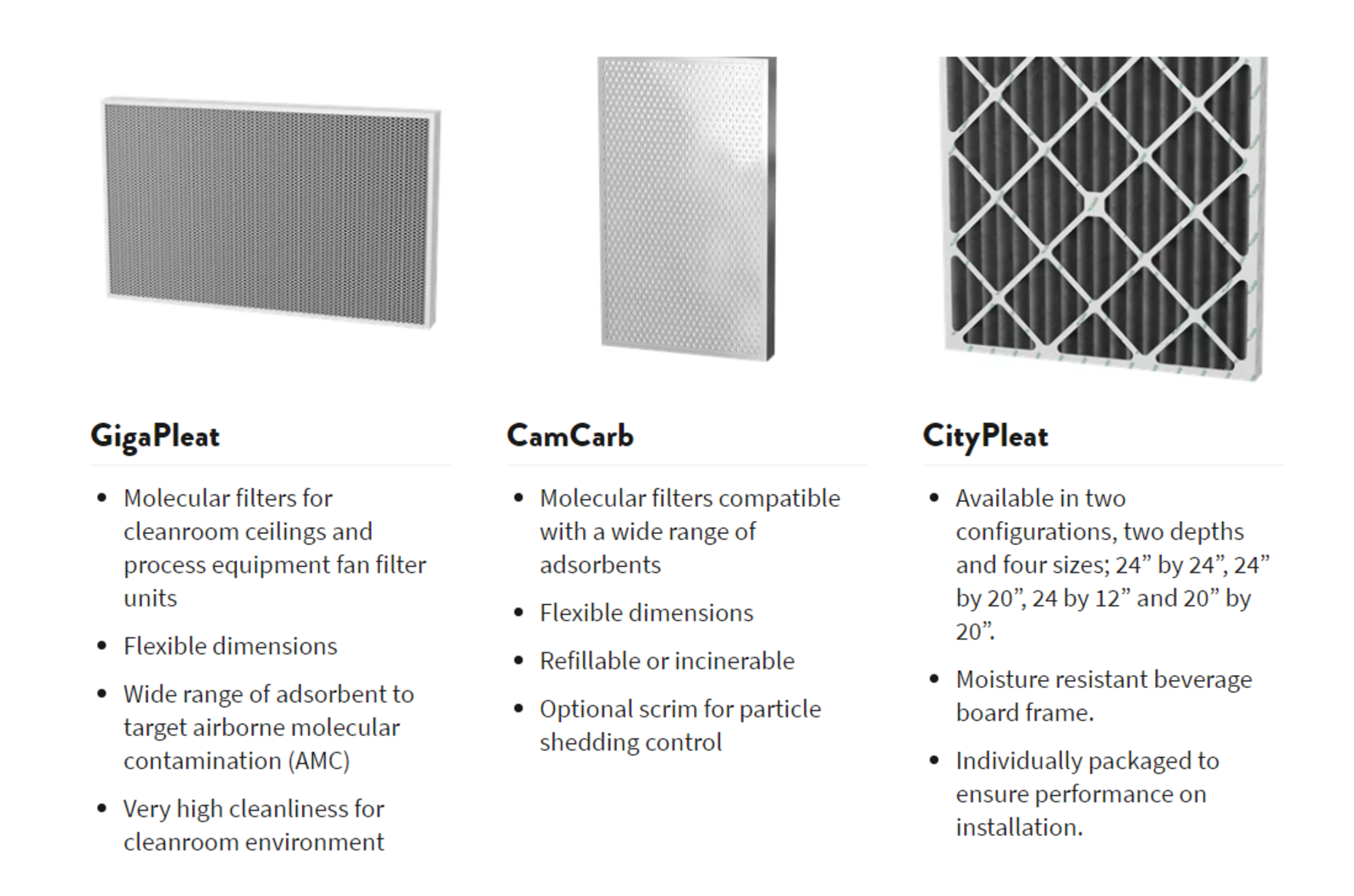
Camfil provides filters that can remove molecules, gases and vapors from the air through molecular filtration.
There are 156 million registered chemicals in the world and increasing at a rate of 15,000 new chemicals per day. Harmful gases and vapors produced by these chemicals cannot be controlled by even the most efficient particulate air filters because molecular pollutants are simply too small.
Many molecules are known to be harmful to humans, the environment, manufacturing processes (microelectronics, pulp and paper, oil refining, etc.) and more sensitive items like artifacts in museums and art galleries. These airborne molecules impact businesses in several ways ranging from nuisance odors to corrosion of electronic equipment, and can even be responsible for a wide range of health issues, including organ failure and death.
Molecular filters from Camfil can help control these problems. Ranging from very light to very heavy duty, Camfil has five molecular air filtration product families:
City Family products are contemporary solutions that combine molecular and particulate filtration to indoor air quality (IAQ) in schools, offices, and other public buildings.
CamCarb products have the widest range of capabilities to address specific problems in facilities such as medical buildings, airports, museums and light process industries.
GigaPleat products are designed to achieve extremely high removal efficiencies where even the smallest concentrations can have a significant impact on a process; primarily microelectronic cleanrooms.
ProCarb products are heavy industrial solutions designed to protect people, the environment, and equipment from toxic and/or corrosive gases at the highest removal efficiencies for the petrochemical, pulp & paper, and wastewater treatment industries.
Containment products provide the highest level of toxic mitigation from radioactive and/or lethal gases for nuclear power or military operations.
Customer support and laboratory services are also essential to ensure that the best product is selected for your application. Camfil molecular services include:
Air sampling by taking outdoor and indoor air quality measurements to define a customer’s molecular contaminants
Lifetime and efficiency simulations of molecular filters generated from an industry leading, proprietary software developed from over 50 years of real-world data and 20 years of in-house performance testing results based on actual operating conditions in accordance with ISO 10121
ASHRAE 145 and ISO 10121 performance of gas phase air cleaning media and devices to measure real-world performance
Media analysis to determine the remaining life of installed molecular filters
At Camfil, we work by the belief that breathing clean air should be a human right. Since 1963, our commitment, investment, and our people have allowed us to stand fully behind our molecular filtration solutions and instill customer confidence.
Even the most advanced and carefully maintained HVAC systems are underutilized in their efforts to bring meaningful improvement to a building’s indoor air quality (IAQ) without careful, regular monitoring.
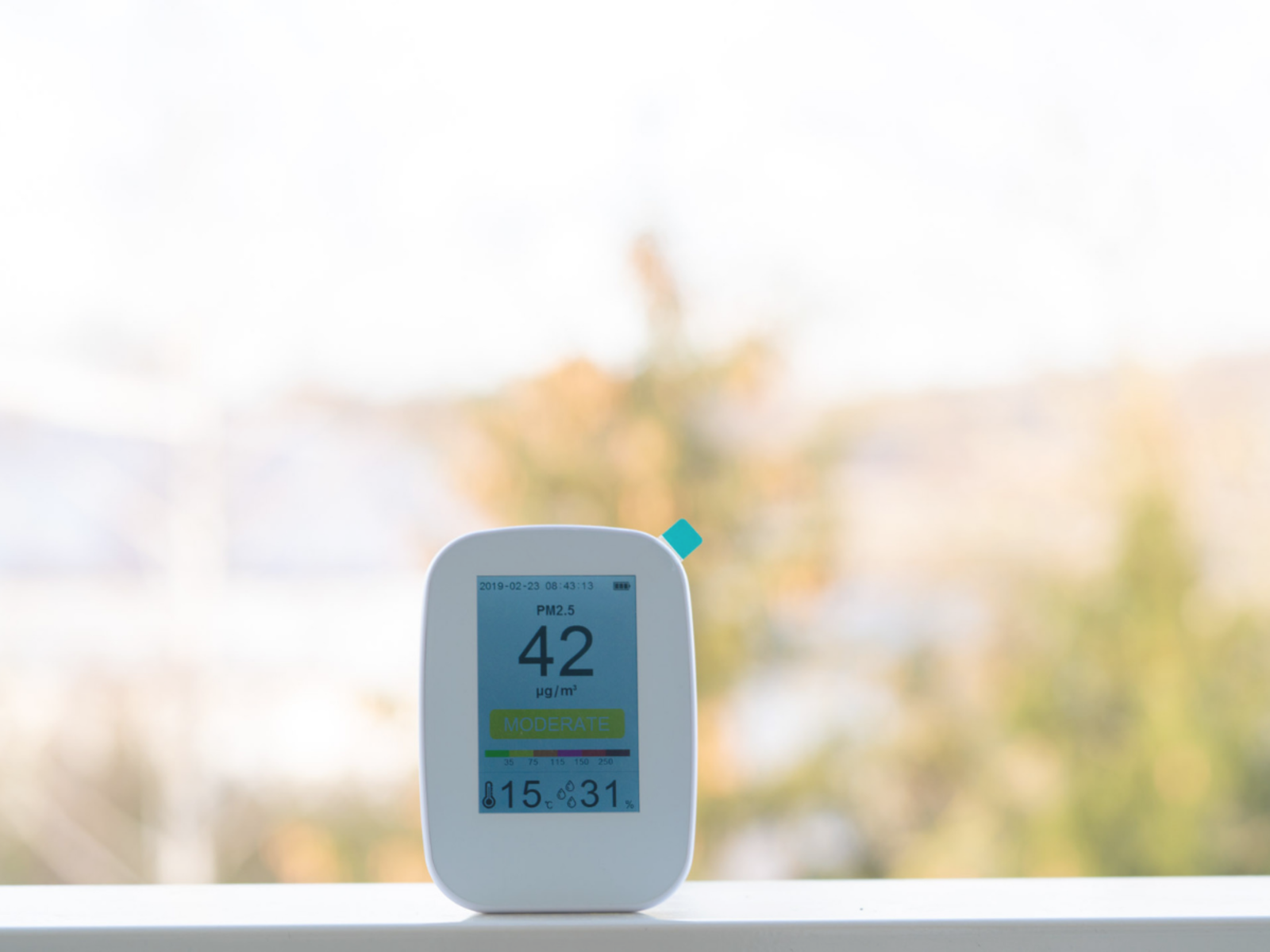
With the installation of real-time IAQ monitoring technology, building management systems can gain access to a wealth of actionable data that can be used to both record and respond to sudden changes in IAQ.
What Is IAQ Monitoring?
IAQ monitoring can come in many forms, but at its core, it is the ability to track both the efficiency of the HVAC system and the quality of the air that is moving through it. This means keeping track of conditions such as humidity, pressure drop, airflow rates, and composition.
Testing for both the presence and concentration of airborne contaminants is another essential role of IAQ monitoring, as it can have a direct and dramatic effect on human health.
The Importance of Indoor Air Quality Testing on the Commercial and Industrial Level
As companies across the globe are re-opening after months of inactivity due to various quarantine and stay-at-home orders, many operators are starting to consider more advanced air filtration systems with high-efficiency air filters as a way to combat the potential spread of COVID-19.
In addition to airborne pathogens, commercial and industrial IAQ is constantly threatened by other forms of air pollution, including carbon monoxide, lead dust, radon gas, and asbestos dust. Many of these pollutants come from inside the building, which is why it becomes the company’s responsibility to put adequate protection systems in place.
Three Ways Real-Time Indoor Air Quality Monitoring Can Improve a Commercial HVAC System
1. Better HVAC Sensors & Actuators – When facilities install real-time IAQ technology, one of the necessary upgrades to the system is the HVAC sensors and actuators, two components that work together to make operational adjustments based on received input.
2. Real-Time Reporting – The ability to trace temperature, humidity, pressure, and even airborne contaminants in real-time settings, allows building management systems (BMS) to be more agile, allowing for better forecasting and a more thorough integration.
3. More Effective, Efficient Maintenance – A BMS equipped with real-time IAQ monitoring is capable of predicting which components need maintenance prior to scheduled PM service or in need of early replacement. This reduces overall cost due to emergency situations that may arise.
Industrial Air Filter Specialist
While the importance of IAQ monitoring is becoming clearer to commercial and industrial operators around the world, the integration of real-time IAQ monitoring technology has only begun. However, like all new technology, there is a learning curve required to maximize its effectiveness. That’s why it’s important to work with an experienced HVAC professional, educated and trained in both equipment and filters, in order to get the correct products for your system.
About
Camfil is the world leader in air filtration and clean air solutions, with 23 production plants and R&D centers in the Americas, Europe, and the Asia-Pacific region. For more information, visit us online at www.camfil.us or call us toll-free at 888.599.6620.
The lessons that commercial and industrial businesses can learn from the healthcare sector in terms of air purification, air filtration, and indoor air quality in the wake of COVID-19.
Any commercial or industrial HVAC system is designed to perform a multitude of tasks, including heating, cooling, filtration, pressurization, and dehumidifying. Each of these direct influences on the indoor air quality within those buildings. One industry that takes those performance qualities very seriously is the: hospitals and healthcare facility management industry.
In the wake of COVID-19, commercial and industrial companies are taking a closer look at the way that these healthcare facilities approach IAQ in hopes of finding advanced air pollution solutions, systems, or products that can be applied to their own industries.
In some cases, these solutions are specialized filters or technological elements. In others, it is methods, procedures, or policies. Regardless of how it’s achieved, the goal is to find new ways to remove airborne contaminants and pathogens (like those that cause COVID-19) from commercial spaces.
Biological Air Pollution: Can Commercial Air Filters Fight What Causes COVID-19?
Even though the world has been experiencing the effects of this global pandemic for months, there aregaps in our collective understanding of how the COVID-19 virus is transmitted and how hospital-grade filtration systems can affect indoor transmission rates.
“While it’s true that HEPA filters can capture over 99% of particulate matter, which includes some viruses and bacteria, the threat from the SARS-CoV-2 virus cannot be entirely eliminated by simply upgrading your filters” explains Mark Davidson, Manager of Technical Materials for Camfil USA. Over the last few months, Camfil and other major air filter manufacturers have found themselves inundated by questions about the virus and what role HVAC systems and filters play in mitigating risk.
“The reality is hospitals aren’t only using top-of-the-line HVAC air filters to address biological threats.
They are using clean air to create areas of positive pressure that acts as a barrier and prevents airborne contamination from flowing into high-risk areas. While this air is being filtered, it’s also being conditioned and not just for temperature, but for humidity. Controlling humidity is a proven strategy to controlling the growth of microorganisms. All these techniques. They’reeffective anti-viral concepts that can be applied to the commercial sector.”
Improving Post-Pandemic Indoor Air Quality Management Standards
According to air quality experts like Davidson, one of the first steps in implementing a post-COVID air filtration plan is having another look at your commercial HVAC filters. The filter should be sized correctly to match airflow and properly installed to prevent the bypass of contaminants.
For standard-risk areas like commercial offices and retail buildings, filters with a minimum MERV 15/15A value such as theDurafil ES2or the Hi-Flo ESare adequate solutions for indoor air quality management. However, areas occupied by individuals who are known to be diagnosed with COVID should switch to a HEPA air filter with a minimum rating of at least 99.7% such as theAbsolute VG.
Addressing One Potential Variable that Could Increase the Risk of Infections Spreading
When it comes to biological contaminants like viruses and pathogens, controlling humidity may be one of the most important functions of a commercial HVAC system. According to research by the National Institutes of Health, the absolute humidity of indoor space can affect the way viruses like the ones causing the flu and COVID-19 proliferate.
The study suggests that low absolute humidity can cause increased infection rates. Critical information such as this is what drives healthcare facilities to pay close attention to the way their systems are handling humidity.
Can Hospital-Grade HVAC Systems Make Safer Workplaces after COVID-19?
The question of whether commercial entities and industrial manufacturers will upgrade their facilities with more complex HVAC systems often comes down to the significant investment of capital that may be required. Fortunately, installing high-capacity filters in existing HVAC systems is a relatively inexpensive way that employers can improve indoor air quality, a step that would certainly decrease the overall health risk of their employees.
Q: Can Portable Air Purifiers Equipped with HEPA Air Filters Reduce the Risk of Getting Sick?
Air filtration companies likeCamfil USAcontinue to equip American businesses with filtration tools needed to address airborne threats. Portable air purifiers with HEPA air filters like those found in the popularCamCleanercan help hospitals, data centers, and food production facilities remove airborne contaminants, particulates, and pathogens without the need to replace the entire system.
For anyone who is looking to learn more about how the experts are approaching indoor air quality, theCamfil USA Clean Air Blogis packed with valuable information and actionable advice for commercial, industrial, and retail businesses alike.
While it might be a long time before we have a full understanding of how exactly the virus SARS-CoV-2 spread COVID-19 through cities and communities, what we do know is sufficient for commercial, industrial, and retail operators to begin work on their post-COVID playbooks. In order to defend against both current and future viral outbreaks, companies need to adopt strategies that emphasize indoor air quality and new ventilation solutions.
According to the Centers for Disease Control and Prevention (CDC), the virus that causes COVID-19 spreads primarily through small respiratory droplet nuclei and aerosols produced from infected humans when they cough, sneeze, talk or even just breathe. With this basic information in mind, it comes as no surprise that many transmissions take place at the office or place of business when people are in close quarters for extended periods of time.
How Hospitals Do it: Ventilation and Industrial Air Filters
Businesses looking for a way to protect their workers from the ongoing threat of infection should look no further than our healthcare system, which has been addressing airborne pathogens for decades.
One of the difficult things about COVID-19, as well as other dangerous pathogens, is the nuclei and aerosols can remain suspended in the air for as many as three to four hours inside a room. This is why hospitals and health centers have invested heavily in research to identify filtration solutions. Appropriate ventilation is capable of replacing, filtering, or re-circulating indoor air at a rate that can significantly reduce the spread of airborne pathogens.
As states, cities, and countries begin to test the waters of re-opening, many businesses are still scrambling to come up with a plan that satisfies their clients, employees, and shareholders all at once.
The next question that arises is whether commercial and industrial segments duplicate the healthcare community’s dedicated commitment in providing cleaner air inside their facilities.
Increased Air Filtration Can Slow COVID-19
Understanding the infection mechanism most likely to increase risks in different facilities requires a dedication to research. If acted on, data is able to drive innovation. While the solution to preventing infections from a particular virus may take longer than we want, the benefits from these attempts provide a higher level of indoor air quality in the interim.
Indoor air quality is directly linked to lung health and healthy lungs are in turn linked to a lower likelihood of serious COVID-19 symptoms. Add this to the growing pile of evidence that IAQ, pandemic or no, is a valuable investment for companies of any size.
About Camfil Clean Air Solutions
For more than half a century, Camfil worldwide has been helping people breathe cleaner air. As a leading manufacturer of premium clean air solutions, we provide commercial and industrial systems for air filtration and air pollution control that improve worker and equipment productivity, minimize energy use, and benefit human health and the environment. During the COVID-19 pandemic, Camfil has been applying their decades of experience in biosafety containment, healthcare, and other sectors of the air filtration industry to provide technological solutions for the public as well as in hospitals and healthcare facilities.
Riverdale, NJ, Oct. 22, 2020 (KISS PR Story) — In order to maintain the integrity of a cleanroom environment, air filters have to be replaced when the end of their service life has been reached. While this cuts into production time, the shutdown is planned for ahead of time and the disruption is minimal. Once the installation is complete, it’s common to find several of the expensive, delicate new HEPA air filters were damaged in the process. Production can’t be started up again until the damaged filters are replaced. This creates expensive unplanned production delays, not to mention the large upfront cost of replacing filters twice unnecessarily.
In a Video: Camfil USA Matt Crouch – How to avoid increased costs caused by fragile HEPA air filters, Matt Crouch, Camfil’s Director of Clean Processes for the Americas, explains a straightforward solution to this problem. “When a factory’s not running, that’s money being burned away,” says Crouch, whose experience lies with biochemistry and microbiology, particularly as applied to pharmaceuticals, biotech, and medical diagnostics prior to his work with Camfil, “New technology is available to offer a solution, which allows us to avoid unplanned downtime.”
What’s Wrong with Traditional HEPA Air Filters?
When installed correctly, traditional HEPA air filters of high quality are effective for cleanroom purposes. The problem lies with their fragility. After a typical installation, a number of HEPA air filters can be damaged, threatening the production process as well as the end product itself.
As many as 20% of glass fiber media air filters need to be replaced after installation due to inappropriate handling. While careless or haphazard actions increase this risk, it’s partially due to the nature of the filters themselves: traditional glass media HEPA air filters are extraordinarily delicate. “A thumb in the wrong place will actually damage the media to the point where you can’t use it,” Crouch notes.
Additional Benefits of the Megalam EnerGuard Air Filter
There’s more to the Megalam EnerGuard than just its robustness.
The Megalam EnerGuard air filter is designed for process safety, so each filter features individual factory performance test results with full traceability.
The Megalam EnerGuard has a filter failure rate of close to 0% and can save facilities 30-50% in energy costs.
You don’t have to change your testing equipment or methodologies, unlike alternative HEPA technologies such as ePTFE (Teflon), which carries high cost and high safety risks.
The Megalam EnerGuard is the first HEPA air filter that will come with an accurately predicted service life based on input variables. . The testing to complete the calculations needed for this prediction are currently underway, so connect with Camfil on Facebook or Twitter to stay tuned.
About Camfil Clean Air Solutions
For more than half a century, Camfil worldwide has been helping people breathe cleaner air. As a leading manufacturer of premium clean air solutions, we provide commercial and industrial systems for air filtration and air pollution control that improve worker and equipment productivity, minimize energy use, and benefit human health and the environment. During the COVID-19 pandemic, Camfil has been applying their decades of experience in biosafety containment, healthcare, and other sectors of the air filtration industry to provide technological solutions for the public as well as in hospitals and healthcare facilities.
Riverdale, NJ, USA, 10/15/2020 / Story.KISSPR.com /
Leading air filtration industry manufacturer Camfil joins organizations globally in celebrating World Food Day this year. With over fifty years of experience in the industry, including focused expertise in the food and beverage segment, Camfil will be sharing their insights into food quality via Camfil clean air blog and social media channels.
What is World Food Day?
As one of the most celebrated days on the UN calendar, World Food Day commemorates the 1945 founding of the Food and Agriculture Organization (FAO) of the United Nations. Action and initiatives from governments, businesses, media outlets, non-profit organizations and the general public “promotes worldwide awareness and action for those who suffer from hunger and for the need to ensure healthy diets for all,” according to the FAO.
October 16th marks the 75th World Food Day, and presents an exceptional set of challenges because of virus concerns and lockdown restrictions.
Air Filtration is Essential for Safe Food Production
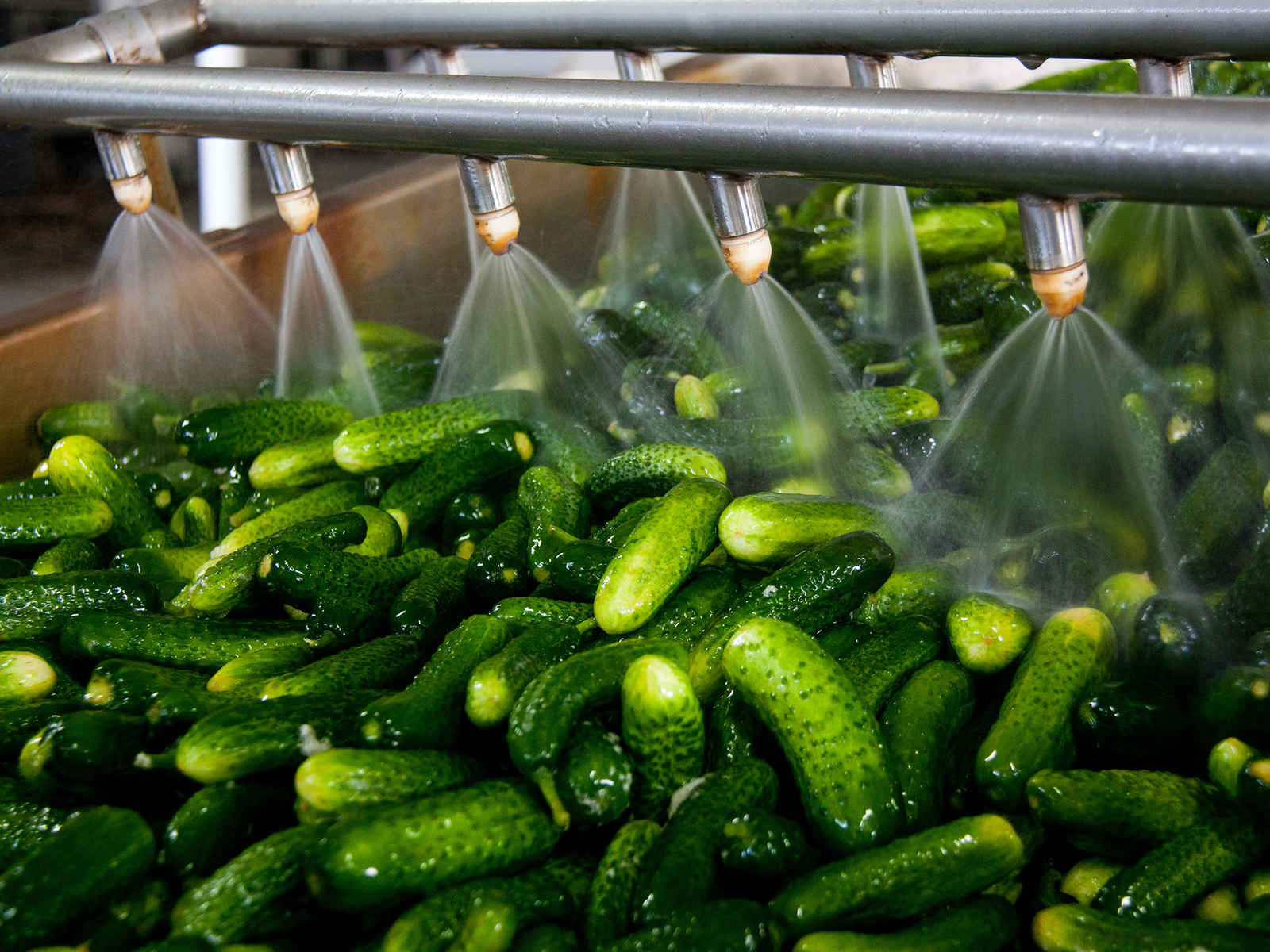
The importance of air filtration in the food and beverage production cannot be underestimated. The air quality in a production plant can vastly improve or diminish the quality of the end product, so it’s important to maximize air quality in the fight to solve hunger around the world.
“Across the world, the daily challenges facing the food & beverage industry have been intensifying for some time,” says expert Patrick Lally, Food & Beverage Segment Manager at Camfil USA, “This World Food Day, let’s talk about the importance of food safety and how the right high-efficiency air filters can provide an effective and affordable solution.”
About Camfil Clean Air Solutions
Camfil’s core belief is that clean air should be a human right. For more than half a century, Camfil worldwide has been helping people breathe cleaner air. As a leading manufacturer of premium clean air solutions, Camfil provides commercial and industrial systems for air filtration and air pollution control that improve worker and equipment productivity, minimize energy use, and benefit human health and the environment. During the COVID-19 pandemic, Camfil has been applying their decades of experience in biosafety containment, healthcare, and other sectors of the air filtration industry to provide technological solutions for the public as well as in hospitals and healthcare facilities.
Social Media Tags:75th Annual World Food Day, World Food Day, Food Safety, Zero Hunger, Foodand Beverage, Food and Beverage Air Filters, Camfil Air Filters
[Educational] – ]If you were not familiar with the N95 respiratory mask before the COVID-19 pandemic, you almost certainly are now. The fabrics that make up the N95 mask are easy to breathe through and able to filter out dangerous airborne pathogens too small for our eyes to see. In times like these, N95 masks can be the difference between life and death. While the N95 is widely known, the meaning behind the letter N and the significance of the number 95 may be a mystery.
What Does N95 Stand For?
N95 masks are highly regulated by NIOSH (The National Institute for Occupational Safety and Health) and should not be confused with FFP masks which are regulated by CEN (European Committee for Standardization). NIOSH classifies the respiratory masks they regulate into one of three categories based upon the intended use. One of the categories is the “N” class which stands for Not-for-Oil. This mask is designed for use in applications where the particles encountered consists of dry, ultra-fine non-oil aerosols such as those generated from grinding, sawing, and thankfully in today’s world, biological particles. The number “95” stands for 95% particle capture efficiency. Higher efficiencies are available, but the N95 mask is the one most commonly used by medical personnel.
Once these masks have been worn, they are not laundered with other hospital fabrics. Despite the high demand for these masks during the COVID-19 pandemic, manufacturers continue to recommend disposing after a single use and not worn day after day. The CDC has issued guidelines when masks may be reused, but the guidelines are limited and recommended to be overseen by professionals. The demand has driven companies to urgently research effective methods to sanitize and recycle masks. If masks could be easily cleaned and safely reused, demand could be met; however, it’s not a simple task to remove the dirt particles and maintain the 95% particle capture efficiency.
How the N95 Masks Capture Small Particles
The fabrics (known as media) used to construct many of these masks are nonwoven, which is to say the fibers are randomly arranged, not woven from yarn in a repeating pattern like the fabric commonly used in clothing. Nonwoven fabrics are not unique; they are used in countless applications we encounter every day. However, the next step in the process is unique and the secret to the mask’s performance. The nonwoven media used in many of these masks is infused with an electrostatic charge creating an effect, analogous to a magnet, known as an electret. The electrostatic charge greatly enhances the media’s filtration efficiency because the charge attracts small diameter particles to the relatively large diameter fibers in the media. Without that charge, many of these particles would otherwise easily pass straight through the media.
This media is typically sandwiched between two outer layers of fabric which acts as a prefilter to capture large particles and to protect the media from being damaged. Safely protected within the mask, the charged fabric makes an ideal filter for a respiratory mask. Unfortunately, an electrostatically charged media may turn out to be a very poor choice for a common HVAC system intake air filter.
“The most critical performance characteristic of an air filter is particle removal efficiency. The efficiency of an air filter is based on a test standard known as the MERV (Minimum Efficiency Reporting Value) scale developed by the ASHRAE 52.2 committee. Air filters are tested in a laboratory setting. Basically, an amount of test dirt with known particle sizes is introduced upstream and particles that pass through are counted downstream. The percentage of particles the filter captured is used to compute a MERV value. The MERV value is critical because the individuals responsible for the air quality inside a commercial office building, retail space, manufacturing facility or hospital for example, use the scale to select the MERV value that delivers the air quality needed for the safety of the people, products or equipment within their unique facility” according to Dave Blackwell, Director of Healthcare for Camfil, USA. “An air filter made from a nonwoven media containing a strong electrostatic charge, would seem to be an ideal fabric to use for many products, including air filters” says Blackwell. “However, one of the reasons you can’t use the same N95 mask day after day is why an everyday intake air filter, made with an electrostatic media, is not a good long-term decision.”
The Effect Accumulating Ultra-fine Dirt Particles Has on Charged Media
It was stated earlier that the “N” in N95 means the mask is intended for non-oil aerosols and the “95” indicates the percentage of ultra-fine particles the mask will capture. The outer layers of the mask act as a prefilter to capture large particles and heavy moisture when the user inhales or exhales. The prefilter ensures the highly-charged media in the center generally only encounters the dry, ultra-fine particles that escape capture in the outer layers. The magnetic-like effect of the charged media attracts these small particles out of the airstream and onto the fibers.
As ultra-fine particles accumulate on the charged media, an interesting phenomenon occurs that many may recall from a grammar school science class. A magnet will attract a steel coin and if the coin is put on a piece of paper, it can be moved across the paper with a magnet held underneath. Turn the paper sideways and the coin will not fall; appearing to defy gravity. However, add more sheets of paper, repeat the experiment and eventually a point will be reached where the magnet’s influence is unable to penetrate the paper and the coin falls to the floor.
An air filter made with highly-charged media will do the same. Much like the magnet and a single piece of paper, the filter may achieve a very high initial particle removal efficiency (MERV) when brand new. When the electret is performing at peak capacity, dirty particles passing by in the airstream are powerfully attracted to the fibers. However, as particles accumulate on the fibers, they begin to act as an insulator much in the same way adding paper reduced the magnets ability to hold the coin in place.
As the insulation effect continues, dirty particles begin slipping past in greater numbers. There is an inverse relationship between increasing insulation and particle capture efficiency. If it were possible to visibly display the MERV value of an installed filter undergoing this process, the numbers would continuously drop as time passed; 15 to 14 to 13 to 12 for example. Eventually the filter may bottom out three or four levels lower than what its value was when brand new. If a facility manager installed a filter with a high MERV value (i.e. MERV 15) only to discover later it was actually performing at a much lower level (i.e. MERV 12), the consequences could be severe, particularly in these days where there’s a high awareness of airborne viruses.
An Addition Added to the MERV 52.2 Test Standard to Account for the Phenomenon
Members of ASHRAE’s 52.2 committee were aware of this phenomenon. Appendix J was added to the Standard so consumers would know the actual MERV value of a filter as it is in use, not just when brand new. The Appendix J conditioning step addresses the electrostatic charge from the media. The result of the second test is listed as a filter’s MERV-A value which is the particle capture efficiency without the benefit of an electret.
For example, an initial MERV test conducted on a filter with an electret may result in a published value of MERV 15. However, the same filter tested under the Appendix J procedures may perform as a MERV 12. Putting the two test results together would result in the filter being labeled as a MERV 15 / MERV-A-12A. This indicates once the electret is no longer effective, the filter performs as if it is a MERV 12. A filter constructed without the value of an electret, could perform as a MERV 15 under the 52.2 standard. The Appendix J procedures are conducted, but since there is no electret to begin with, that filter still performs as a MERV 15. The labeling therefore would show the filter as a MERV 15/ MERV-A-15A indicating the filter performs as a MERV 15 before and after the influence of any electret present has dissipated. A consumer who determined a MERV 15 is required for a particular application would know which filter to select.
Camfil’s Dave Blackwell makes the point. “Charged media is one solution for N95 masks because it delivers a high capture efficiency. The downside is a short service life. Air filters can’t be replaced every day like masks can. What would medical personnel do if they wore the same N95 mask for weeks at a time and somehow the rating on their mask changed as the electrostatic charge became less effective?” questioned Blackwell. “Would medical professionals wear a mask that changed from N95 to N85? N80? N65? I don’t think so. Unfortunately, labels don’t magically change on masks anymore than they do on air filters, but if the labels could change , would a facility manager install a filter with a MERV that changed from MERV 15 to 14 to 13 and then 12? Of course not. That’s why a anyone responsible for the safety of others should select a filter based on its MERV-A value. That number doesn’t change.”
About Camfil Clean Air Solutions
For more than half a century, Camfil has been helping people breathe cleaner air. As a leading manufacturer of premium clean air solutions, we provide commercial and industrial systems for air filtration and air pollution control that improve worker and equipment productivity, minimize energy use, and benefit human health and the environment.