Thursday, February 4, 2021

Air Filtration Expert Explains New ASHRAE Recommendations for Healthcare Facilities in Free Webinar, February 11

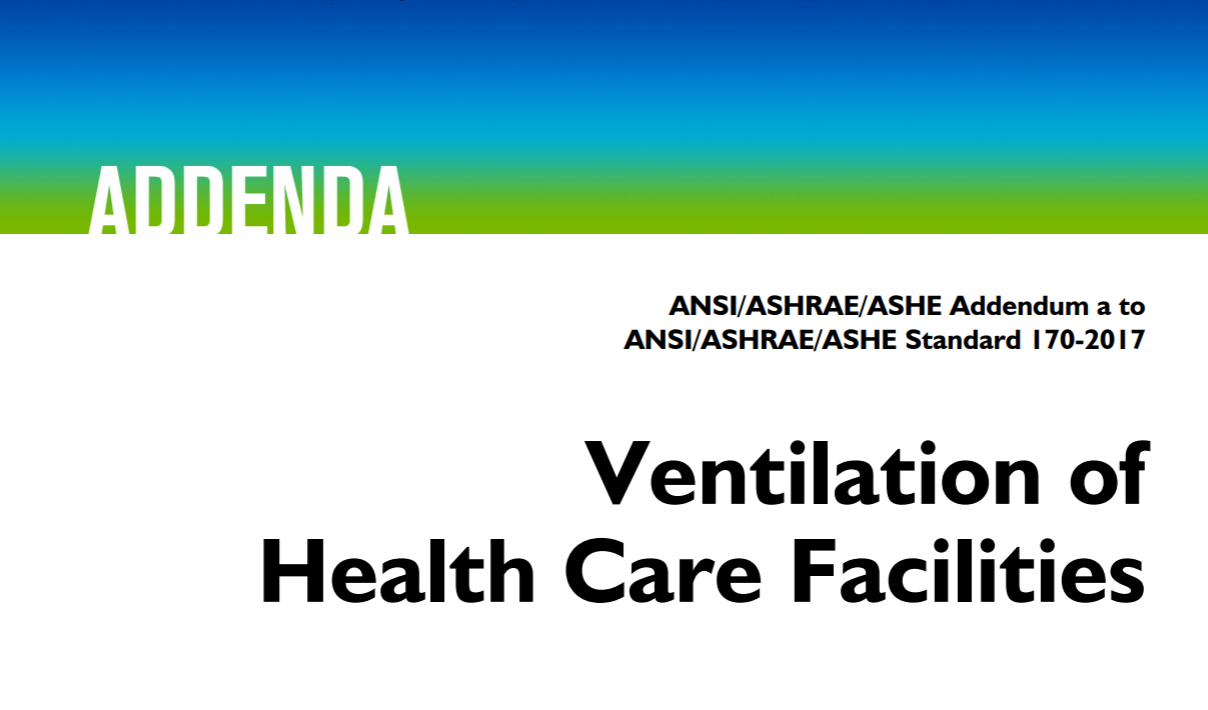
Camfil’s Director of Healthcare, Dave Blackwell, will explain ASHRAE Standard 170-2017 Addendum-a.

Riverdale, NJ, Feb. 04, 2021 — Join industry-leading air filtration manufacturer Camfil for a free webinar explaining ASHRAE Standard 170-2017 Addendum-a, which was first released in September 2020. Dave Blackwell, Camfil’s Director of Healthcare, will lead the webinar.

Addendum-a, which is publicly accessible here, lists updated air filtration recommendations for healthcare facilities by type. In a recent video, Camfil’s Healthcare Segment Manager, Kyle Petersen, explains the basics of Addendum-a. To the specifics of what this means for healthcare facilities and hospitals in greater depth, the webinar will take place on Thursday February 11, at 1:00pm Eastern Time (12:00pm Central Time, 10:00am Pacific Time), and run for approximately 45 minutes including discussion time.

Webinar topics will include:

  • A short summary of ASHRAE-170
  • The highlights of Addendum-a, including a review of the new table 7.1, detailing pressure relationships, air changes per hour, minimum air filter particle removal efficiencies, along with humidity and temperature requirements.
  • A review of PE rooms (Protective Environments)
  • An overview of the Informative Appendix C, which summarizes new filter requirements into four levels of indoor air quality for any facility.
  • A walkthrough of FGI’s (Facilities Guideline Institutes) implementation guideline, which indicates adoption timelines for the standards by state.


>> Click here to register for Camfil’s ASHRAE Standard 170-2017 Addendum-a free webinar.

About Dave Blackwell

As Camfil’s Director of Healthcare in the US, Dave combines an engineering background with in-depth knowledge of electrical and mechanical HVAC systems to optimize air filtration solutions for healthcare facilities. Prior to managing the healthcare segment, Dave was a sales manager at Camfil in the United States’ Southwest region, and before that, worked for a large HVAC and electrical equipment manufacturer, where he focused on energy savings solutions for large facilities. In total, Dave has over a decade of experience in the air filtration and HVAC industry. He is an accomplished speaker on various ASHRAE standards and guidelines, including ASHRAE 52.2 and ASHRAE 170, which are the most important to healthcare facilities that seek to maintain compliance to indoor air quality requirements. Dave is passionate about providing the best, compliant indoor air quality solutions for clients, patients, and visitors in healthcare facilities.

About Camfil Clean Air Solutions

For more than half a century, Camfil worldwide has been helping people breathe cleaner air. As a leading manufacturer of premium clean air solutions, we provide commercial and industrial systems for air filtration and air pollution control that improve worker and equipment productivity, minimize energy use, and benefit human health and the environment. During the COVID-19 pandemic, Camfil has been applying their decades of experience in biosafety containment, healthcare, and other sectors of the air filtration industry to provide technological solutions for the public as well as in hospitals and healthcare facilities. To get in touch with a local Camfil consultant, please click here.

https://www.camfil.com/en-us >>

##

Media Contact:

Lynne Laake

Camfil USA Air Filters

T: 888.599.6620

E: Lynne.Laake@camfil.com

F: Friend Camfil USA on Facebook

T: Follow Camfil USA on Twitter

Y: Watch Camfil Videos on YouTube

L: Follow our LinkedIn Page

This news has been published for the above source. Camfil USA Air Filters [ID=16806]

Disclaimer: The information does not constitute advice or an offer to buy. Any purchase made from this story is made at your own risk. Consult an expert advisor/health professional before any such purchase. Any purchase made from this link is subject to the final terms and conditions of the website’s selling. The content publisher and its distribution partners do not take any responsibility directly or indirectly.  If you have any complaints or copyright issues related to this article, kindly contact the company this news is about.

The post Air Filtration Expert Explains New ASHRAE Recommendations for Healthcare Facilities in Free Webinar, February 11 appeared first on Air Filters for Clean Air.


from Air Filters for Clean Air

Tuesday, January 26, 2021

Air Filtration Expert Explains ASHRAE Standard-170-2017 Addendum-a

The ongoing global pandemic has brought with it a marked increase in public awareness of the impact and importance of indoor air quality, in large part due to the evidence that COVID-19 infections have been spreading via airborne channels as well as via person-to-person contact.

In a new video, air filtration expert Kyle Petersen, Healthcare Segment Manager at Camfil USA, explains ASHRAE Standard 170-2017 Addendum-a, which lists updated air filtration efficiency recommendations for healthcare facilities.

What is ASHRAE?

ASHRAE, which stands for the American Society of Heating, Refrigerating and Air-Conditioning Engineers, is a professional association made up of engineers, architects, mechanical contractors, and other professionals who contribute their knowledge and experience to improving the HVAC industry. With more than 57,000 members across 132 countries worldwide, ASHRAE is the authority when it comes to developing technical standards for indoor air quality and related areas.

What is ASHRAE Standard 170?

What is ASHRAE Standard 170?

According to ASHRAE, Standard 170 was “developed in partnership with Facility Guidelines Institute (FGI) and American Society of Health Care Engineering (ASHE)” and “has been providing key guidance on ventilation requirements for health care industry facilities since 2008.”

“The committee draws on the experience of its members and others in their industry to develop these baseline standards and minimum requirements, with the hopes that local municipalities will enforce them to ensure public safety,” says Petersen.

First introduced in 2008, ASHRAE Standard 170 is published on a four-year cycle; the current version was first released in 2017. As in any science-based field, what experts know about indoor air quality is constantly being refined and updated, as is the latest HVAC and air filtration technology. Between publications, therefore, ASHRAE sometimes releases Addendums. “It’s important to keep in mind that ASHRAE 170 is a continuous work in progress,” he says, “The committee meets on a regular basis, and they continually update the standard to reflect technological or environmental changes that are occurring out in the real world.”

How Does Standard 170-2017 Addendum-a Impact Healthcare Standards?

The recommendations moving forward are designated by space as well as the type of facility. Mr. Petersen stresses that the term “healthcare facilities” shouldn’t be understood to mean only large buildings with an “H” on them. The term also includes outpatient centers and assisted living facilities. Healthcare facilities may be the buildings where COVID-19 is being treated, but the link between poor air quality and poor health outcomes extends beyond healthcare facilities and into commercial and retail buildings as well. indoor air quality is and will continue to be vital to health and healthcare outside of the context of the pandemic. “When you start to take this broader view of healthcare, you start to really see how vital good air quality is.”

Addendum-a breaks healthcare facilities down into three broad categories, and makes specific recommendations for each:

  • Inpatient facilities, such as hospitals

  • Outpatient facilities, such as urgent care rooms

  • Residential facilities, such as assisted living facilities

Importantly, 170 Addendum-a states in an informative appendix “Where listed, MERV rating is assumed to be non-degrading,” therefore implying that the recommendations are for MERV-A rated filters, which retain their effectiveness for the duration of their product life.

Addendum-a is publicly available here. For further clarification regarding how your healthcare facility may need to adapt to these recommendations, let an air filtration specialist contact you.

About Camfil Clean Air Solutions

For more than half a century, Camfil worldwide has been helping people breathe cleaner air. As a leading manufacturer of premium clean air solutions, we provide commercial and industrial systems for air filtration and air pollution control that improve worker and equipment productivity, minimize energy use, and benefit human health and the environment. During the COVID-19 pandemic, Camfil has been applying their decades of experience in biosafety containment, healthcare, and other sectors of the air filtration industry to provide technological solutions for the public as well as in hospitals and healthcare facilities. To get in touch with a local Camfil consultant, please click here.

https://www.camfil.com/en-us

##

Media Contact:

Lynne Laake

Camfil USA Air Filters

T: 888.599.6620

E: Lynne.Laake@camfil.com

F: Friend Camfil USA on Facebook

T: Follow Camfil USA on Twitter

Y: Watch Camfil Videos on YouTube

L: Follow our LinkedIn Page

The post Air Filtration Expert Explains ASHRAE Standard-170-2017 Addendum-a appeared first on Air Filters for Clean Air.


from Air Filters for Clean Air
Wednesday, January 20, 2021

Can COVID-19 Be Spread through Airborne Transmission

New Findings Show that COVID-19 May Be Spread through Airborne Transmission – Camfil USA Air Filters

In contrast to previous statements, which emphasized evidence that COVID-19 spreads primarily through respiratory droplets during close contact with an infected person, the World Health Organization (WHO) has acknowledged that “airborne transmission through respiratory aerosols could not be ruled out in crowded and poorly ventilated settings.”

The CDC has reported that virus appears to spread in one of the following four ways in most cases:

New Findings Show that COVID-19 May Be Spread through Airborne Transmission
  1. Person-to-person in close contact with one another.

  2. Through large respiratory droplets inhaled or deposited on mucous membranes when a nearby infected person coughs, sneezes, sings, talks, or even breathes.

  3. Airborne through smaller droplet nuclei or aerosols.

  4. Contacting contaminated surfaces.

Two of the routes involve airborne transmission via respiratory droplets. But the size of droplets is highly variable, meaning that some settle on surfaces while others remain suspended in the air for longer periods of time. These smaller droplets, or aerosols, can consequently be carried further away from their source, expanding the radius of infection risk around an infected person.

How to Mitigate COVID-19 Risk with Air Filtration.

Read Camfil’s full recommendations here.

  1. Consider other pathogens and health risks. COVID-19 is not the only virus carried by respiratory droplets, but in the case of other, better-researched viruses, a 0.5-micron size aerosol particle is likely capable of containing a sufficient quantity of viruses to be considered a risk.

  2. Because of the variable size of potentially infected droplets, air filtration experts from Camfil USA recommend using systems and air filters that have a higher likelihood of capturing both droplets and aerosols that exist outside the social distancing zones before the contaminants make contact with healthy people. In other words, go with the highest efficiency air filter your HVAC system and budget can handle.

  3. Increase outdoor air ventilation so that the percentage of air recirculated is lower, as recommended by ASHRAE (American Society of Heating, Refrigerating, and Air-Conditioning Engineers).

  4. Evaluate exhaust air for possible re-entrainment and investigate natural ventilation as a means to dilute any virus particles.

  5. Implement different solutions for areas with different levels of risk. Experts from Camfil recommend an air filter rated MERV-15A or higher if possible for standard risk areas. Contact an air filtration expert for help finding the right solution for your specific needs.

About Camfil Clean Air Solutions

For more than half a century, Camfil worldwide has been helping people breathe cleaner air. As a leading manufacturer of premium clean air solutions, we provide commercial and industrial systems for air filtration and air pollution control that improve worker and equipment productivity, minimize energy use, and benefit human health and the environment. During the COVID-19 pandemic, Camfil has been applying their decades of experience in biosafety containment, healthcare, and other sectors of the air filtration industry to provide technological solutions for the public as well as in hospitals and healthcare facilities. To get in touch with a local Camfil consultant, please click here.

Media Contact:

Lynne Laake

Camfil USA Air Filters

T: 888.599.6620

E: Lynne.Laake@camfil.com

F: Friend Camfil USA on Facebook

T: Follow Camfil USA on Twitter

Y: Watch Camfil Videos on YouTube

L: Follow our LinkedIn Page

Source first published

Disclaimer: The information does not constitute advice or an offer to buy. Any purchase made from this story is made at your own risk. Consult an expert advisor/health professional before any such purchase. Any purchase made from this link is subject to the final terms and conditions of the website’s selling. The content publisher and its distribution partners do not take any responsibility directly or indirectly.  If you have any complaints or copyright issues related to this article, kindly contact the company this news is about.

The post Can COVID-19 Be Spread through Airborne Transmission appeared first on Air Filters for Clean Air.


from Air Filters for Clean Air

Thursday, January 7, 2021

The Role of Industrial Air Filters in Mitigating Outdoor Air Quality Issues

There is a direct relationship between outdoor and indoor air quality. When the quality of outside air gets worse, indoor air gets worse shortly afterward since air is drawn into buildings through HVAC systems. The good news is high-quality air filters can limit the amount of airborne contaminants brought into a building. Air filters can break the direct relationship between outdoor and indoor air quality.

As scientists, researchers, and clean-air experts continue to investigate the sources and solutions of harmful air pollution, more and more studies are addressing the link between Indoor Air Quality and Outdoor Air Quality.

While the link between these two concepts seems obvious at first glance, the result of the relationship between them plays a much larger role in human health than previously realized.

How Outdoor Air Pollution Can Affect Indoor Air Quality

Contaminants from dust to pesticides to construction debris can be small enough to linger in a region’s air for days, weeks and even months. Unfortunately, industrial air filters are then forced to contend with those contaminants and expected to remove more pollutants from the air supply than the filtration designs intended.

While industrial air filters might be effective in removing some of the contaminants, they are only a single component in a larger and more complex HVAC system that provides ventilation into a building.

There are plenty of ways for contaminated outdoor air to get inside the home or office. Poorly installed or undersized air filters are one obvious path, but even situations such as a cracked window or propped door can introduce outdoor air into the building. The return air ducts in the system circulate the air back to the filters, putting extra strain on the HVAC system in the process.

Why Air Filter Quality is So Important

In our modern era, things like fossil fuels, home heating, electric power generation, and motor vehicle exhaust can introduce a frightening amount of pollutants into the air, even in areas that are considered to be more rural. However, air pollution has likely been a problem for much longer than that, as wildfires and volcanic eruptions can also be the cause of dangerous air pollution.

The quality and performance of an air filter matter. Modern air filters are designed to be effective on a wide range of contaminants, but specialized air filters are available that address specific areas of concern.

Understanding the Importance of Indoor Air Quality

When air with any of these pollutants finds its way into a building, there is a risk those pollutants may be inhaled by the inhabitants and could result in health issues.

EPA Indoor Air Quality Standards

As ambient air pollution increases in developing parts of the world like China and India, the chances of a severe health crisis (Like the “killer fog” in London, 1952) are greatly increased. In areas with severe pollution and poor air filtration standards, indoor areas can be a health risk.

The creation and adoption of EPA indoor air quality standards are necessary to protect not only from indoor-exclusive pollutants, but also those found in the air around us.


About 

Camfil is the world leader in air filtration and clean air solutions, with 30 production plants and R&D centers in the Americas, Europe, and the Asia-Pacific region. For more information, visit us online at www.camfil.us or call us toll-free at 888.599.6620.


Media Contact:

Lynne Laake

Camfil USA Air Filters

T: 888.599.6620

E: Lynne.Laake@camfil.com

F: Friend Camfil USA on Facebook

T: Follow Camfil USA on Twitter

Y: Watch Camfil Videos on YouTube

L: Follow our LinkedIn Page


The post The Role of Industrial Air Filters in Mitigating Outdoor Air Quality Issues appeared first on Air Filters for Clean Air.


from Air Filters for Clean Air
Thursday, December 10, 2020

As Global Outdoor Air Quality Improves, So Does Commercial Indoor Air Quality

In response to global shutdowns associated with the COVID-19 pandemic, worldwide levels of two major air pollutants have been drastically reduced. For industrial and commercial operators who are starting to get back to work, this means an initially reduced load on industrial HVAC and filtration systems.

Anytime a city’s outdoor air quality index is improved, it follows that there will be a similar improvement in indoor air quality. However, maintaining IAQ improvements will be a challenge as industries all over the world are getting back to work.

What COVID-19 Lockdowns Did for Outdoor Air Pollution

According to data published by the American Geophysical Union, levels of both nitrogen dioxide and general particulate matter pollution have experienced significant drops in concentration over China, where the study took place.

The results confirm what many have known for decades. Contaminants generated from economic activity play a major role in air pollution. However, stopping the economy to improve air quality is not a realistic course of action given the consequences of human suffering. However, the real-world benefits from an air quality point of view should reignite the search to produce the same results without the pain and suffering.

Understanding the Air Quality Index and Its Impact on Human Health

The Air Quality Index (AQI) is used around the world to report the daily air quality in certain locations. Depending on where someone lives in the world, the area’s AQI might be relatively stable, or it might be drastically different from day to day.

AQI is based on the average concentrations of the five major outdoor air pollutants, including ground-level ozone, particulate matter, sulfur dioxide, carbon monoxide, and nitrogen dioxide.

How Outdoor Air Pollution Affects Commercial Air Filtration Systems

In commercial spaces that are highly ventilated (like retail, commercial offices, factories, etc.) outdoor air containing harmful contaminants can make its way in through HVAC systems with low-efficiency air filters. In some areas of the world, buildings rely on natural ventilation or an open design with fans to move outdoor air throughout a facility.

Finding Indoor Air Pollution Solutions

Even if the AQI is particularly poor in a geographic region, there are a number of indoor air pollution solutions that can address the various health threats and respiratory issues that can occur because of bad indoor air.

One of the most effective solutions begins with building design, where an HVAC system can be designed with the local environment and climate features factored into the engineered solution. For existing operations, redesigning equipment can be cost prohibitive, but simply switching to high-efficiency and high-capacity air filters is a good way to immediately improve IAQ. An HVAC professional should always be consulted before undertaking either solution.

About Camfil Clean Air Solutions 

For more than half a century, Camfil worldwide has been helping people breathe cleaner air. As a leading manufacturer of premium clean air solutions, we provide commercial and industrial systems for air filtration and air pollution control that improve worker and equipment productivity, minimize energy use, and benefit human health and the environment. During the COVID-19 pandemic, Camfil has been applying their decades of experience in biosafety containment, healthcare, and other sectors of the air filtration industry to provide technological solutions for the public as well as in hospitals and healthcare facilities.

https://www.camfil.com/en-us

Sources

  1. https://www.sciencedaily.com/releases/2020/05/200511124444.htm

Media Contact:

Lynne Laake

Camfil USA Air Filters

T: 888.599.6620

E: Lynne.Laake@camfil.com

F: Friend Camfil USA on Facebook

T: Follow Camfil USA on Twitter

Y: Watch Camfil Videos on YouTube

L: Follow our LinkedIn Page

The post As Global Outdoor Air Quality Improves, So Does Commercial Indoor Air Quality appeared first on Air Filters for Clean Air.


from Air Filters for Clean Air

Thursday, December 3, 2020

Case Study: Camfil Filters Provide Significant Energy Savings for a Leading American Frozen Food Manufacturer

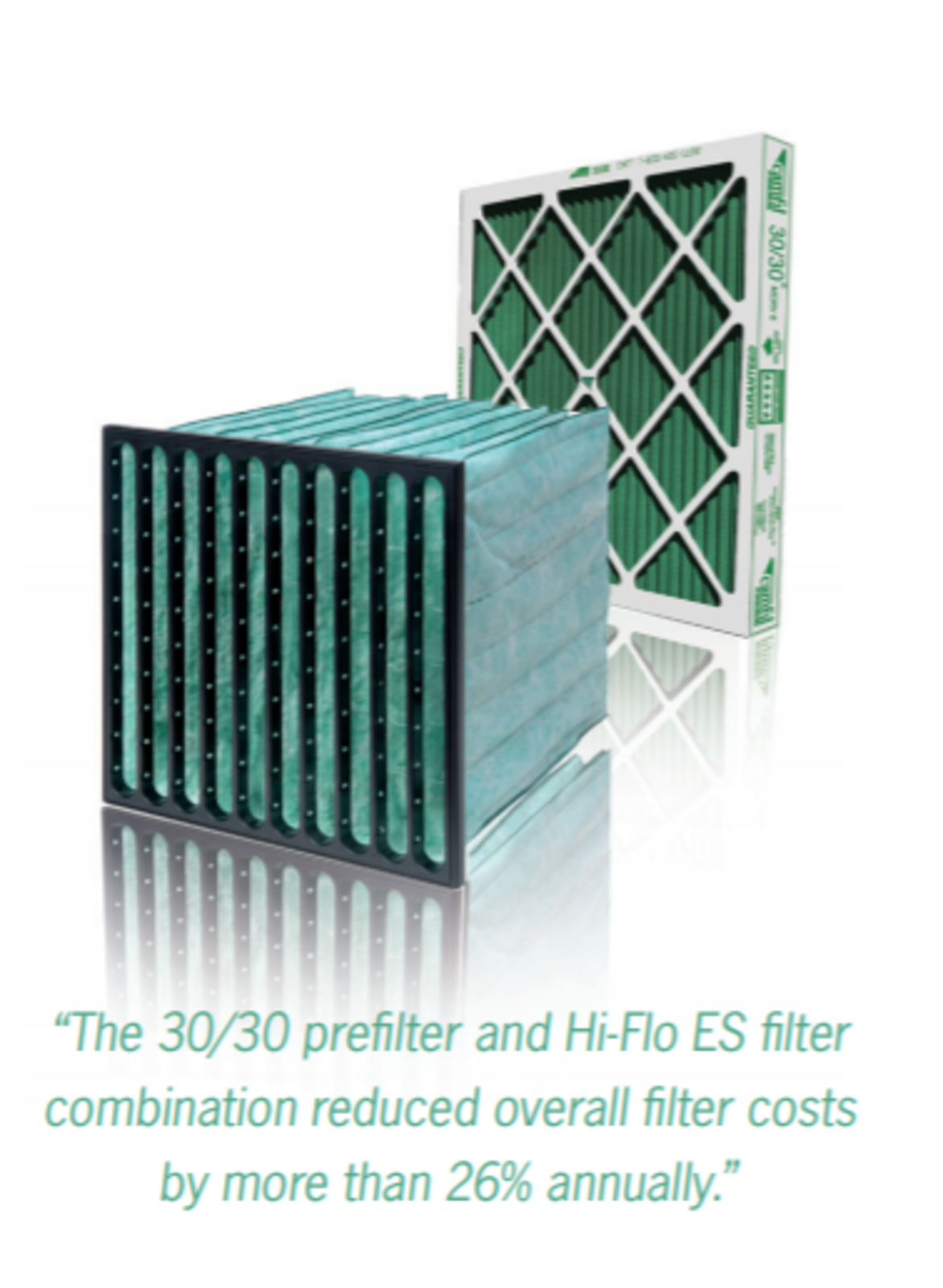
The combination of the Camfil 30/30 MERV 8A prefilter and Hi-Flo ES 22″ deep MERV 13A pocket final air filter saved $33,000 annually for a top American frozen food manufacturer.

After  45-days of testing air filters in two identical air handling units, an independent third-party consultant measured significant energy savings with Camfil air filtration products in one of America’s largest frozen food manufacturing facilities. The air filters used for this test pitted the Camfil 30/30 MERV 8A prefilter and the Hi-Flo ES 22″ deep MERV 13A pocket final air filter against a competitive MERV 8 pleated prefilter and  MERV 11 synthetically-charged media final air filter.

Camfil Filters Provide Significant Energy Savings for a Leading American Frozen Food Manufacturer

The case study found that “The high moisture return air contained breading residue which restricted airflow and overwhelmed the competitive MERV 8 pleated prefilter within one to two weeks.”

The inability of the competitive filters to adequately supply air to the facility’s critical processing areas resulted in the need to frequently change the air filters in their large rooftop air handling units.

What’s more, because the  MERV 11 competitive filter utilized synthetically-charged media, the final filter would lose particle capture efficiency (MERV value) the longer it remained in service. The net effect of this was the air filters that were the incorrect efficiency for the critical application, to begin with, would be even less efficient as time passed. Additionally,  the competitive final filter was only four inches in depth, which meant there was insufficient media area for the high dirt-loading application causing the filter to quickly reach its dirt holding capacity.

Along with longer service life and reduced labor and disposal fees, the Camfil air filters also provided a significant energy reduction due to their low average pressure drop. As dirt accumulates on an air filter, airflow is restricted. Air volume is crucial in a critical process such as food processing, so fans are programmed in order to increase speed to maintain the proper airflow. The design of the Camfil air filters allow far more dirt to accumulate before an adjustment to fan speed is required. The reduced fan speed translated into substantial cost savings.  The average cost of energy for the unit operating with the Camfil MERV 8A prefilter was $37.86 per day, as opposed to $42.67 per day for the unit running with the competitive pleated prefilter.

“The Camfil 30/30 MERV 8A prefilter and Hi-Flo ES 22” deep MERV 13A  pocket final filter combination was the perfect solution — and saved this particular facility over $33,000 annually,” stated Patrick Lally, Food and Beverage Segment Managers at Camfil USA.

About 

Camfil is the world leader in air filtration and clean air solutions, which has 30 production plants and R&D centers in the Americas, Europe, and the Asia-Pacific region. For more information, visit us online at www.camfil.us or call us toll-free at 888.599.6620.

Media Contact:

Lynne Laake

Camfil USA Air Filters

T: 888.599.6620

E: Lynne.Laake@camfil.com

F: Friend  Camfil USA on Facebook

T: Follow Camfil USA on Twitter 

Y: Watch Camfil Videos on YouTube

L: Follow our LinkedIn Page

The post Case Study: Camfil Filters Provide Significant Energy Savings for a Leading American Frozen Food Manufacturer appeared first on Air Filters for Clean Air.


from Air Filters for Clean Air