Thursday, March 31, 2022

Can Air Pollution Make You Gain Weight? New Research Links Particulate Matter to Weight Gain

The known health effects of air pollution are vast, with various types of pollution causing damage to just about every part of the human body. While most people are aware of long- and short-term effects of air pollution on the respiratory system (which can include respiratory irritation in the short term and higher risk for developing respiratory infections and diseases in the long term), you might not know that chronic exposure to air pollution may be causing you to put on weight or be preventing you from losing it. 

Existing research has established a correlation between higher levels of pollution and higher BMI amongst local residents. A recent long-term study has uncovered a link between ambient air pollution and weight gain. Specifically, the presence of particulate matter in the air is linked to a significant increase in weight over time.

In this article, clean air experts from Camfil, a global leader in the research, engineering, and manufacturing of premium air filtration technology, explain the findings of the new study.

Related article: EPA — Indoor Air Pollution One of Human’s Greatest Risks and Proper Air Filter Selection is a Vital First Step

What is Particulate Matter? 

To fully understand the methodology, findings, and implications of this study, it is important to understand what particulate matter is. Particulate matter is one of two main categories of air pollution (the other being gaseous, or molecular, pollution).

Particulate matter is defined as any solid or liquid particles suspended in the air. The composition of particulate matter can vary greatly. The particulate matter in the air often includes everyday pollutants and allergens such as pet dander, pollen, and dust, but can also include black carbon and other more harmful pollutants. 

Particulate matter, which is also known as particle pollution, is further categorized by the diameter of particles. The three types of particulate matter are: 

  • PM10 — defined as anything less than ten microns in diameter.
  • PM2.5 — defined as anything less than 2.5 microns in diameter.
  • PM1 — defined as anything less than one micron in diameter. 

A micron, or micrometer, is one-thousandth of a millimeter. To put into perspective just how small particulate matter is, it helps to know that the average human hair is approximately 70 microns in diameter. 

Related article: Air Pollution aAnd COVID-19 — Study Shows Exposure to Air Pollution Increases Risk of Getting Sick with COVID-19  

Does Air Pollution Cause Weight Gain?

The study was published in 2021 in Environmental Health Perspectives, a peer-reviewed, open-access journal that is published monthly with support from the U.S. National Institute of Environmental Health Sciences. Researchers noted evidence in the existing body of research that suggested that particulate matter was obesogenic (something that tends to cause obesity) in children and adolescents. In this study, they aimed to test whether or not the same effects were present in adults. 

For this study, researchers examined a group of United States Veterans from 2010 through 2018, with the sample totaling 3,902,440 veterans. Participants were selected through the Department of Veterans Affairs (VA) database and were included if they had at least one weight measurement on record in the year-long period spanning between July 1, 2010, and June 30, 2011. Accompanying height measurements were used to calculate BMI. 

To calculate fine particulate matter (PM2.5) exposure, researchers used satellite remote sensing, chemical transport modeling, and ground-based PM2.5 measurement data from the Environmental Protection Agency (EPA). Residential addresses for each participant were updated every quarter to maintain the most accurate estimate of pollution exposure possible. 

The researchers also accounted for individual factors that may interfere with results in their data analysis process, including state of residence, age, race, sex, marital status, and smoking status, as well as factors related to poverty such as diet, population density, exercise access, excessive alcohol use, and rurality. 

The data showed that exposure to higher levels of particulate matter is linked to increased risk of weight gain and obesity, as well as increases in weight on the individual level. These findings were consistent amongst multiple sensitivity analyses, which accounted for alternate exposure and outcome definitions, as well as multiple covariate factors. 

Preventing Particulate Matter Exposure with Air Filtration

While exposure to outdoor air pollution is difficult to control, Americans spend more than 90% of their time indoors, where indoor air quality can be up to fifty times worse than outdoor air quality. It is therefore essential to limit exposure to indoor air pollution as much as possible to optimize health outcomes.

Camfil offers a variety of air filtration solutions designed and engineered to protect human lungs from harmful pollutants.

Check out the 30/30 Dual 9 panel filter, which captures particulate matter out of the airstream passing through an HVAC system. The Dual 9 is the longest-lasting panel filter available on the market, providing protection against particulate matter for up to twelve months. 

Alternatively, consider the City M air purifier. As a standalone unit, the City M operates independently of the building’s HVAC system and requires no special installation or equipment to use. In fact, all you need to get started is a standard power outlet. By using actual HEPA air filters and an activated carbon filter, the City M targets both particulate matter and gaseous pollutants, all the while running quietly in the background. 

To learn about more air filtration solutions and to figure out which is ideally suited for your situation, contact your local Camfil air filtration expert. 

About Camfil Clean Air Solutions

For more than half a century, Camfil has been helping people breathe cleaner air. As a leading manufacturer of premium clean air solutions, we provide commercial and industrial systems for air filtration and air pollution control that improve worker and equipment productivity, minimize energy use, and benefit human health and the environment. We firmly believe that the best solutions for our customers are the best solutions for our planet, too. That’s why every step of the way – from design to delivery and across the product life cycle – we consider the impact of what we do on people and on the world around us. Through a fresh approach to problem-solving, innovative design, precise process control, and a strong customer focus we aim to conserve more, use less and find better ways – so we can all breathe easier.

The Camfil Group is headquartered in Stockholm, Sweden, and has 33​ manufacturing sites, six R&D centers, local sales offices in 30 countries, and about 4,80​0 employees and growing. We proudly serve and support customers in a wide variety of industries and in communities across the world. To discover how Camfil USA can help you to protect people, processes and the environment, visit us at www.camfil.us/ 

##


Media Contact: 

Lynne Laake 

Camfil USA Air Filters 

T: 888.599.6620 

E: Lynne.Laake@camfil.com

F: Friend Camfil USA on Facebook

T: Follow Camfil USA on Twitter 

Y: Watch Camfil Videos on YouTube

L: Follow our LinkedIn Page


Sources: 

https://www.sciencedaily.com/releases/2020/03/200312101033.htm

https://ehp.niehs.nih.gov/doi/10.1289/EHP7944

https://www.sciencedirect.com/science/article/abs/pii/S0013935121009051?via%3Dihub

The post Can Air Pollution Make You Gain Weight? New Research Links Particulate Matter to Weight Gain appeared first on Air Filters for Clean Air.


from Air Filters for Clean Air

Thursday, March 17, 2022

Air Filtration Trends that Don’t Work

The COVID-19 pandemic has highlighted the importance of breathing clean air, leading many people both in the United States and across the world to consider air quality for the first time, due to airborne transmission of the disease. In 2021, schools, offices, and other public spaces worked to make it possible for Americans to return to normal activities, while individuals worked to make their homes a safe place for visitors.

As indoor air quality became a prominent public health concern and organizations such as the WHO, the EPA, and the CDC recommended ventilation and air filtration to reduce the spread of the virus, some manufacturers took the opportunity to push products that supposedly combatted the virus. Some of these technologies provide a false sense of security by allowing consumers to think that they are safe when the risk of infection is still high, while other technologies compound air quality issues by releasing ozone, volatile organic compounds (VOCs), and other dangerous chemicals into the air. 

In this article, air filtration experts and engineers from Camfil — a global leader in air filtration technology — highlight  the dangers of some of 2021’s most unreliable air quality trends. 

Using  consumer-grade MERV-13 filters sourced through retail outlets instead of MERV-A-rated filters 

Throughout 2020 and 2021, you probably heard the term “MERV-13” used a lot in the news, by government bodies, and by agencies such as the CDC. In some areas, there were mandates that required public buildings such as malls to install MERV-13 filters in the HVAC systems before reopening to the public. 

Although you may be able to easily find MERV-13 filters at your local big box retailer for a low price point, these inexpensive MERV-13 filters don’t maintain their rated efficiency for long, and therefore need to be replaced frequently to provide adequate protection against COVID-19. This is because they rely on an electrostatic charge to increase particle capture efficiency. Once this charge dissipates, which can happen in as little as a month, the filter no longer operates at its rated efficiency. In fact, once MERV-13 filters lose their electrostatic charge, they operate at a particle capture efficiency equivalent to that of a MERV-9 or even a MERV-8 filter.  

Many HVAC systems in commercial buildings only have the capacity for filters that are one,  two, or four inches deep. MERV-13A filters utilize filter media produced with far more fine fibers in those same depths which could increase the pressure drop higher than what the HVAC system is designed to handle. Six- and twelve-inch deep MERV-13A filters can have pressure drops compatible with the HVAC system, but may be physically too large to fit in the unit.

However, if you are unable to replace your HVAC unit to accommodate the depth of a MERV-13A filter with similar pressure drops, and if you are unwilling to incur the added expense of frequent filter changeouts when standard two-inch deep MERV-13 pleats lose efficiency, one strategy to consider is to choose a filter with a MERV-A value lower than MERV 13 such as MERV 8A or 9A. This is because when filter performance drops below  rated efficiency, they lose effectiveness and stop protecting building inhabitants by letting more dirty, contaminated air into the space.This higher dirt load also places a strain on HVAC equipment, which can lead to costly repairs. 

Read about the difference between MERV and MERV-A ratings: What Are MERV Ratings? MERV vs MERV-A Filter Efficiency Ratings Explained   

DIY box filter “air purifiers”

Leading up to the beginning of the academic year, recipes for “DIY air purifiers” using box fans and inexpensive panel filters swept across the internet. Teachers and parents across the country saw this as an inexpensive way to protect their children from contracting the virus at school. One argument proponents of these DIY air purifiers made was the box fan’s high circulation rate meant that the room it was operating in would get more air changes per hour than a high-end HEPA air purifier. 

While this is technically true, more ventilation isn’t necessarily better, because pushing air through ineffective filters over and over again doesn’t mean that the air gets as clean as imagined.  As mentioned above, the consumer-grade MERV-13 filters that you can easily buy on Amazon or from a local big box retailer degrade quickly leaving you unprotected in as little as a month of regular use in an HVAC system.   

“The single biggest objection I have to the claims around these boxes ,” comments Steve Smith, CamCleaner Segment Manager at Camfil USA, “is the MERV 13 pleated filters do not have the particle capture efficiency required to remove a significant amount of potentially virus-laden aerosols from the air stream in a single pass. Expecting this device to be as efficient as a HEPA filter could lead to a false sense of security and actually increase risk.”

While these DIY air purifiers are a creative solution to certain air quality concerns — such as removing pet fur from the air in your home or preventing the buildup of sawdust in your home workshop — they are not an appropriate solution for protection against COVID-19. 

Read Camfil’s full article on the effectiveness of DIY air purifiers: Do “DIY Air Purifiers” Work Against COVID-19 In Schools? Not Exactly, According To Air Filtration Experts

Using cheap “HEPA” air purifiers that lack actual HEPA filters 

An effective in-room air purifier with HEPA filters is an excellent way to protect yourself against a wide range of air pollutants, including COVID-19 infected aerosols, allergens such as pet dander, dust,  pollen, and other particulate matter. 

However, due to increased demand for effective HEPA air purification systems, and millions in federal funds,  dozens of new products have appeared on the market to capitalize on public concerns about air quality and infection. The use of the term “HEPA” is somewhat unregulated, meaning that manufacturers  could falsely claim that their products use HEPA filtration. 

HEPA filter stands for high-efficiency particulate  air filter. An actual HEPA filter will be individually factory tested and come with paperwork showing the results of these tests. A scan tested and certified H14 HEPA filter (as found in the Camfil City M) is 99.995% efficient on MPPS-sized particles on a single pass. In other words, when air passes through a HEPA filter just once, a minimum 99.995% of the particles most difficult to capture, (MPPS stands for most penetrating particle size and is typically between 0.1 and 0.2 microns) are removed. 

If you are considering purchasing a HEPA air purifier, be certain to choose one from a well-regarded air filtration manufacturer, and make sure that you can access the factory testing and HEPA certification paperwork. If the only place you can find the word “HEPA” is on the outside of the box, that’s a red flag. Also, if it sounds like it’s too good to be true for its price, it probably is. 

For additional protection against harmful indoor air pollutants, choose an air purifier that uses an activated carbon filter, or other molecular filter that effectively targets gaseous pollutants such as ozone, carbon monoxide, and nitrogen oxides, in addition to HEPA filters. 

Related article: What The Heck Are HEPA Filters – And Why Should You Care?

Using needlepoint bipolar ionizers to try to “kill” the COVID-19 virus

This trend was so pervasive in 2021 that it even made it into the RealClearScience biggest junk science of 2021 article. School districts across the country invested a total of tens of millions of dollars or more in installing expensive devices called needlepoint bipolar ionizers based on claims that these devices could deactivate or kill the SARS-CoV-2  virus in the air by releasing charged molecules (ions).

However, these claims have little scientific evidence to back them up. Despite having been around for decades, bipolar ionizers are still considered questionable technology. Most of the studies on the effectiveness of ionizers is funded and conducted by their manufacturers, leading to a definite bias in research methods and therefore results. None of these studies has been published in a peer-reviewed journal, meaning that the findings of the studies are thus far unable to be replicated. Additionally, ionizers have only been tested under conditions that do not translate well to real life situations and haven’t been compared to an experimental control to establish a causal relationship. 

As is the case with “DIY air purifiers” and cheap “HEPA” air purifiers, bipolar ionizers give users a false sense of security, leading them to potentially forgo other protections against COVID-19 and in the end, potentially causing more harm. Officials from the CDC note that ionizers should not be used as a replacement for masks, social distancing, or proper ventilation in public spaces.   

In addition to failing to deliver the protection they promise, some ionizers emit ozone at potentially high levels. Ground-level ozone is a pollutant that can worsen symptoms of respiratory conditions such as asthma and cause respiratory irritation, migraines, and dizziness, as well as decrease productivity and cognitive function. 

In an official statement on these products, the State Education Department at the University of the State of New York summarized the issues surrounding these products: 

“We understand that the marketing associated with such products can be influential. However, as stated above, the marketing claims typically are not well documented. SED and DOH continue to review current studies and independent testing of this technology and will advise school districts of any new information.”

Using antiviral or antimicrobial filters 

Another unnecessary and potentially harmful air filtration trend that took off in 2021 is the use of antibacterial or antimicrobial filters. Air filter manufacturers are offering filtration products that are treated with biocides and other chemicals that are supposed to kill bacteria, viruses, and other pathogens in the air. 

On the surface, this solution might seem reasonable. However, as is the case with ionizers, antimicrobial filters are potentially ineffective, definitely unnecessary, and may cause more harm than they prevent. 

Firstly, many experts in areas such as air filtration and infectious diseases have pointed out questionable science behind the claims these products make. Most of the testing applications that point to the supposed effectiveness of antimicrobial filters against COVID-19 are not relevant to real-life applications or even applicable to air filtration purposes, with many tests using filters submerged in liquid. After conducting research on the effectiveness of antimicrobial filters by applying three different EPA registered treatments to filters, ASHRAE (the American Society of Heating, Refrigeration, and Air-Conditioning Engineers) concluded that “the addition of antimicrobial [coating] on filter fibers had little effect on the growth (or lack thereof) of microbial contaminants on the filter.” Other studies have shown that while some chemical treatments may work to kill pathogens at first, they steadily decrease in effectiveness over time. 

Secondly, antimicrobial treatments for air filters are unnecessary if the filters being used are effective enough to capture infected particles. High efficiency air filters, such as MERV-A rated HVAC filters and HEPA filters, are made of dense filter media configured to capture as much particulate matter as possible. Once infected virus particles are captured by these filters, they are trapped, and cannot escape to infect people. Though the SARS-CoV-2 virus  may be able to survive longer on surfaces outside of the human than originally thought, they will eventually dry out and  die while trapped in a regular filter. 

Finally, the chemicals used in antimicrobial and antiviral filters can be dangerous to humans. Unlike the kinds of antibiotic and antiviral medications that we ingest when we are sick, the chemicals used in these filters are not safe for human consumption, and can be dangerous for us to inhale. When antimicrobial filters are placed in HVAC systems, these chemicals are constantly pushed around the air stream, causing potential harm to building inhabitants. 

It is unpleasant to breathe in the residue left behind after a surface is cleaned with bleach or another heavy-duty disinfectant, and the buildup of these chemicals in the air can cause respiratory irritation, dizziness, and headaches. The long and short-term effects of antimicrobial filters aren’t entirely known, but may cause similar health risks.

Read more on antiviral and antibacterial filters in this article from our colleagues at Camfil Canada: An Analysis of Antiviral/Antimicrobial Filters and Impacts on Indoor Air Quality. 

Using air purifiers with photocatalytic oxidation

Photocatalytic oxidation is a process that involves ultraviolet light and a chemical catalyst to change harmful particles in the air into relatively benign substances (water, carbon dioxide, and detritus). The most common catalyst in air cleaners that use photocatalytic oxidation (PCO) is titanium dioxide (TiO2). While some manufacturers of air cleaners have implemented photocatalytic oxidation as a means of supposedly enhancing protection against COVID-19, organizations including ASHRAE recommend caution when using such devices. 

Firstly, air cleaners and air purifiers that use photocatalytic oxidation can produce small amounts of ozone. Secondly, volatile organic compounds (VOCs), which are commonly found in indoor air, a photocatalytic air purifier may convert them to other unpleasant pollutants, such as formaldehyde and acetaldehyde. It is overall more beneficial to remove these pollutants from the air entirely than to attempt to convert them to other substances. 

Another issue to consider with photocatalytic air purifiers is additional power consumption is required to operate the multiple components within the system. Potentially compounding that issue is the more components a system requires, the higher the likelihood one component will fail which could lead to costly repairs and downtime.  

Air filtration products with dry hydrogen peroxide

Dry hydrogen peroxide (DHP) is a gaseous form of hydrogen peroxide, a powerful disinfectant and antiseptic. “Dry” indicates that it is not a vaporized form of liquid hydrogen peroxide — instead, it is formed using chemical reactions between gases in the air — so it doesn’t have the same corrosive properties or weak acidic pH as liquid hydrogen peroxide. Some  new HVAC technologies  use dry hydrogen peroxide, claiming that it will essentially disinfect the air. 

Several studies have shown that dry hydrogen peroxide is highly effective against SARS-CoV-2 on surfaces, but there is little evidence to suggest that it has any significant effect against the virus when it is airborne. 

Furthermore, dry hydrogen peroxide interacts with other chemicals in the air in a potentially dangerous manner, according to the Socioeconomic Data and Applications Center (SEDAC).  While the concentrations of DHP generated by air purifiers using this technology are not dangerous on their own, the EPA cites the partial reaction between DHP and VOCs in the air as one of the primary concerns when it comes to using DHP for disinfection. These chemical reactions produce harmful byproducts, including nitrogen dioxide, formaldehyde, and carbon monoxide. 

Low wattage UV light with limited exposure time 

At the right frequencies, UV (ultraviolet) light kills certain pathogens. UVC light, which has a frequency of 200 to 280 nm (nanometers), has been shown to destroy the outer protein coating of the SARS-CoV-2 virus, essentially inactivating the virus. 

UVC light, however, is more harmful than other frequencies of UV light, with higher risk of more severe side effects. While UVC light is effective for killing viruses in the air and on surfaces, it should not be used while people are in the room. 

UV light is also being used inside of air purifiers. The idea behind UV air purifiers is that they sterilize the air as it passes through. However, air moves through an air purifier at a high velocity, which means that the period of time it is exposed to UV light frequencies is very brief. To compensate for short exposure time, a bulb with a very high intensity would be required, which increases cost and magnifies health side effects associated with UVC light. 

The FDA recommends careful use of UV light as a supplement to adequate air filtration and ventilation, not a replacement. 

When viewing new air filtration products, consider the evolution of technology, the search for a better mousetrap, has taken us from the wheel to internal combustion powered automobiles to rockets and to where we are today; a helicopter flying remotely over the surface of Mars.  At this point in the evolution of air filtration technology, a high quality air filter produced with fine fiber media utilizing the principles of mechanical air filtration, delivers the highest performance. Some of these new technologies are a step backwards. While others have value, they should all be considered supplementary to mechanical air filtration. 

About Camfil Clean Air Solutions

For more than half a century, Camfil has been helping people breathe cleaner air. As a leading manufacturer of premium clean air solutions, we provide commercial and industrial systems for air filtration and air pollution control that improve worker and equipment productivity, minimize energy use, and benefit human health and the environment. We firmly believe that the best solutions for our customers are the best solutions for our planet, too. That’s why every step of the way – from design to delivery and across the product life cycle – we consider the impact of what we do on people and on the world around us. Through a fresh approach to problem-solving, innovative design, precise process control, and a strong customer focus we aim to conserve more, use less and find better ways – so we can all breathe easier.


The Camfil Group is headquartered in Stockholm, Sweden, and has 33​ manufacturing sites, six R&D centers, local sales offices in 30 countries, and about 4,80​0 employees and growing. We proudly serve and support customers in a wide variety of industries and in communities across the world. To discover how Camfil USA can help you to protect people, processes and the environment, visit us at www.camfil.us/ 


##


Media Contact: 

Lynne Laake 

Camfil USA Air Filters 

T: 888.599.6620 

E: Lynne.Laake@camfil.com

F: Friend Camfil USA on Facebook

T: Follow Camfil USA on Twitter 

Y: Watch Camfil Videos on YouTube

L: Follow our LinkedIn Page


Sources:

http://www.p12.nysed.gov/facplan/documents/StatementRegardingIonizationAirCleaners12.14.21.pdf


The post Air Filtration Trends that Don’t Work appeared first on Air Filters for Clean Air.


from Air Filters for Clean Air
Saturday, February 19, 2022

Fighting the spread of COVID-19 in Schools, Colleges, and Universities through Ventilation and Air Filtration

Schools, colleges and universities continue implementing policies to operate in the safest way possible as the COVID-19 pandemic continues. The most often used strategies to prevent COVID-19 outbreaks are encouraging or requiring vaccination, wearing masks and social distancing. But evidence shows that upgrading ventilation and filtration to improve air quality is another crucial tactic in fighting the spread of the virus. In fact, American Rescue Plan (ARP) funds are available to help with these costs. 

Key CDC Recommendations for Schools and Higher Ed 

As pandemic conditions change, the Centers for Disease Control and Prevention (CDC) alters its guidelines to address public health concerns. In general, the agency advocates COVID-19 vaccinations as the top strategy to reduce the spread of the virus and to continue in-person learning and extracurricular activities at K-12 schools. In addition, the CDC recommends school officials use a multilayered approach to combat disease transmission. This includes indoor masking by students, teachers and visitors. The CDC’s guidance to higher education administrators is a similar mix of mitigation tactics.

The agency also encourages maintaining at least three feet of physical distance between students within classrooms. Additional tactics include testing for the virus when feeling ill or if exposed, handwashing, respiratory etiquette, staying home when sick, and cleaning and disinfection. 

The CDC notes that improving indoor air quality (IAQ) with proper ventilation and filtration also helps to keep schools safe. Specifically, a July 2021 CDC report shows that HEPA filters can reduce exposure to the virus that causes COVID-19. 

Experts stress that schools should not invest in surface cleaning at the expense of cleaning the air. “Surface cleaning isn’t very useful in terms of bang for the buck in COVID-19,” said Delphine Farmer, an aerosol expert at Colorado State University. “If nothing else, cleaning solutions can fill the air with a complex cocktail of toxic chemicals.” Regarding systems that use chemical processes that target certain airborne organisms, Farmer says these methods can produce a series of organic compounds, including toxins such as formaldehyde. “What we know works is ventilation and filtration.” 

“The layered approach covers  known methods for  slowing transmission of the virus,” says air filtration expert Mark Davidson, Manager of Marketing and Technical Materials at Camfil USA. “Efficient ventilation and filtration are an important part of the plan because the virus is most often spread   airborne  through respiratory droplets and aerosols.”

EPA Guidance 

To help combat the spread of COVID-19 in schools, the EPA focuses on creating healthy indoor environments. It provides guidance and resources to help administrators and facility operators in creating and maintaining IAQ in learning environments. These include a web page dedicated to Creating Healthy Indoor Air Quality in Schools and an IAQ Tools for Schools Action Kit. 

The agency advocates implementing engineering controls, administrative controls and space reconfiguration designed for the specific building and situation to address COVID-19 in public indoor spaces. 

The EPA says important engineering controls include: 

  • Increasing ventilation with outside air, 
  • Improving filtration of air recirculating throughout the building to remove as many airborne particles as possible, and  
  • Adjusting or reconfiguring airflows to minimize indoor airborne transmission of the virus.

The Difference Between Ventilation and Filtration

Building ventilation is the process of pulling in fresh outdoor air and/or pushing out stale or contaminated indoor air. Natural ventilation moves the air using non-mechanical forces like wind and is achieved by opening windows and doors to the outside. Mechanical ventilation may draw in outside air through heating, ventilating and air-conditioning (HVAC) systems using ducts and fans. 

An important factor in efficient ventilation is maintaining adequate airflow. A common way to evaluate ventilation is to measure how often the indoor air in a space is totally replaced. This measurement is known as air changes per hour (ACH). According to the Rhode Island Department of Health, in a 30-foot-square classroom with 25 students in it, the air should be replaced at least every 15 minutes, which equals an ACH of 4. If the air is replaced at least every 10 minutes, the ACH jumps to 6, which is better because a higher ACH lowers the risk of disease spreading through the air. 

Air filtration complements ventilation by capturing airborne contaminants through air filters. This process cleans the air before it is returned to the indoor environment. There are many types of specialized air filters designed to capture different kinds and sizes of particulates. Airborne particulate matter (PM) is characterized by its size in microns. As a reference, a single micron is one millionth of a meter and one inch is 25,400 microns in length. A person with good eyesight may be able to see a 20 micron particle under the right conditions. The most typical airborne contaminants are:

  • PM 1 particles <1 μm in size, such as viruses, bacteria and other pathogens that can cause infections and disease,
  • PM 2.5 particles <2.5 μm in size, such as pollen, spores, allergens and other organic particles,
  • PM 10 particles <10 μm in size, such as coarser fine dust and organic particles, and
  • Coarse particles 10 μm or larger, such as visible coarse dust, sand, leaves, hairs and other large organic particles.

It is important for facility operators to consult with an air filtration expert to make sure the building’s air filters are designed to capture large, small, nuisance and hazardous particles. 

“Well-designed ventilation and filtration go hand in hand to create good indoor air quality,” Davidson says. “Even the best HVAC systems won’t clean the air if they don’t include the right air filters that have been installed correctly to handle the job.”

How Ventilation and Filtration Improve Air Quality

Efficient ventilation is an important COVID-19 transmission prevention strategy. Introducing fresh outdoor air into a building helps disperse virus particles. Education facility managers can improve ventilation by:

  • Opening doors and windows (if this can be done safely),
  • Using child-safe fans to increase the effectiveness of open windows, and
  • Adapting HVAC or air filtration systems.

However, ventilating schools with recirculated air is not a comprehensive strategy to reduce COVID-19 transmission unless the air goes through an air filter designed to capture small particles. A minimum efficiency reporting value (MERV) rating is used to characterize how well an air filter removes different-sized particles in the air. The American Society of Heating, Refrigerating and Air-Conditioning Engineers (ASHRAE) recommends a minimum filtration efficiency target of MERV 13.

If the air filter has a  MERV 13 rating or higher after being tested, it is rated to capture at least 90% of the largest particles used in the test. This range of particles is between 3.0 and 10.0 microns and is the size of many virus-containing aerosols found in the air. The highest MERVvalue is 16 which is rated to capture up to 95% of all particles used in the test over 0.3 microns.  High-efficiency particulate air (HEPA) filters are better at filtering the smallest infectious airborne particles than MERV 16 filters. A HEPA air filter captures a minimum of 99.97% of 0.3 micron particles..  

Another consideration affecting MERV ratings is electrostatically charged filter media, which behaves similar to a magnet to attract particulates. These air filters can be effective because they have high MERV values, but this value is only accurate when the filters are newly installed. As the charged filter media captures more and more particulates, the electrostatic charge loses its ability to attract particles. As a result, the MERV value drops. For example, a new electrostatic MERV 13 filter can drop to the equivalent of a filter with a MERV 8 rating  within a short period of time.

To clarify this situation, the ASHRAE 52.2 committee who originally devised the test standard to assign MERV values based on performance, published an optional testing method for determining air filter efficiency without electrostatic charge. These ratings are referred to as MERV-A values. To distinguish between MERV and MERV-A, think of the “A” as “actual” efficiency. Education facilities should insist on MERV-A ratings to ensure optimal performance for the lifetime of the air filter. 

Viruses captured in an air filter operating within rated specifications will not release back into the airstream, according to Camfil experts. This is because viruses encapsulated in an aerosol or droplet are contained within the air filter and are strongly mechanically bound to the fibers in the filter media. Once the virus is captured, it will stay in the air filter and eventually dry out, die and become inactive. Many studies on the COVID-19 virus indicate that the virus does not survive longer than three days on open surfaces under ideal conditions.. 

IAQ Improvements Needed in Schools, Colleges and Universities

The COVID-19 pandemic has brought much-needed awareness to the state of ventilation and air  filtration in educational facilities around the country. A 2020 national survey of school districts by the United States Government Accountability Office (GOA) shows that about 54 percent of public school districts need to update or replace multiple building systems or features in their schools. Approximately 41 percent of districts need to update or replace HVAC systems in at least half of their schools. The survey also highlights that most states do not conduct assessments to determine school facilities’ needs, leaving the job to school leaders. 

Poor IAQ in schools increases the potential for long-term health problems among students and staff. It also negatively affects student comfort, the learning environment and attendance. And it reduces the productivity of teachers and staff due to discomfort, sickness or absenteeism.

The U.S. Department of Education acknowledges that even before the pandemic, many schools, colleges and universities had IAQ challenges. This leaves many schools and higher education leaders all the more challenged in opening schools for in-person learning. 

“Determining the best HVAC and filtration systems in educational facilities is challenging—even without the pandemic,” Davidson explains. “That’s because there are multiple environments to consider like classrooms, gyms, dining areas, labs, libraries, hallways, offices and living spaces.”

Fortunately, ARP funds can be used to improve IAQ, ventilation and air filtration. This includes mechanical and nonmechanical heating, ventilation, and air-conditioning systems, filtering, purification and other air cleaning, fans, control systems, and window and door repair. 

A recent study of spending plans of schools receiving funds from the Elementary and Secondary School Emergency Relief program shows that more than half the school districts and charter schools surveyed plan to spend on improving HVAC systems. These expenditures range from procuring better air filters for existing units to replacing underperforming systems.

Ventilation and Air Filtration Solutions to Reduce COVID-19 Transmission

Preparing safe in-person learning spaces during the COVID-19 pandemic in most cases will require improvements or changes to building ventilation and air filtration systems. Because educational facilities vary in age, complexity, HVAC equipment and building automation systems, ASHRAE offers technical resources to adapt HVAC systems to improve IAQ and slow the transmission of COVID-19.

According to the CDC, the particle size of the COVID-19 virus (also known as SARS-CoV-2) is around 0.1 micrometer (µm), but is contained within larger respiratory droplets and aerosols.As noted above, ASHRAE recommends a minimum filtration efficiency target of MERV 13. However, greater filtration sometimes can lower the performance of an HVAC system because it can increase the pressure drop across the air filters, so consulting with an HVAC filtration expert is recommended. 

If MERV 13 or higher air filters cannot be installed due to HVAC system constraints, ASHRAE suggests:

  • Increasing the unit’s filtration maximum available level,
  • Providing a recirculation fan filtration unit and duct into the return of units, or
  • Using a HEPA air filtration unit that recirculates air within the space.

Portable HEPA air filtration units do not draw outdoor air into the building, but they do clean the air within an indoor space. They are powered by a fan system and can reduce the concentration of airborne particulates, including COVID-19. The unit should be the right size for the space, which is based on the airflow through the unit measured in cubic feet per minute (CFM).

Air Cleaning Technologies That Do More Harm Than Good

Experts advise against using unproven technology to clean the air. Though slick marketing makes some of these options sound viable, they can actually cause contaminated air. These unproven technologies include:

  • Fogging and misting systems that use dangerous chemicals,
  • On-the-spot ultraviolet light systems, and
  • Disinfecting “robots.”

Camfil HVAC Filtration Solutions

With decades of experience in critical air filtration systems in many industries and applications, Camfil’s knowledge and expertise are important resources when determining the best air quality solutions for schools, colleges and universities, especially during this pandemic. 

When developing a ventilation and air filtration plan to mitigate the spread of the virus, a comprehensive strategy is to put systems and air filters in place that have the greatest likelihood of capturing droplets and aerosols.

In addition to using MERV 13-A to MERV 16-A rated filters in the HVAC system, facility managers can add extra protection by installing an upstream prefilter of a lesser MERV rating. For example, a Camfil 30/30® Dual 9 (MERV 9A) can be used as a prefilter followed by a Durafil® ES2 filter at MERV 13A or higher.

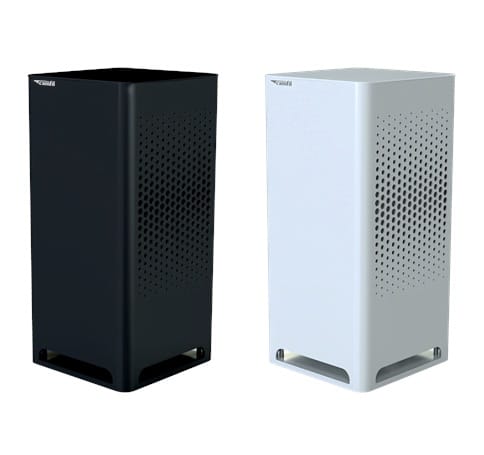
For additional localized protection, or where the HVAC system cannot accommodate higher MERV-rated filters, consider installing standalone air purifiers as supplemental filtration. Camfil’s City M air purifier uses both a HEPA air filter and a molecular gaseous contaminant filter. Each unit provides up to 256 CFM of clean air, ideal for an indoor space of 20 square feet or smaller. The specially designed HEPA filters for the City M air purifier capture airborne particulates such as viruses, dust and pollen from the airstream. These air filters are 99.995% efficient against even the smallest contaminants, including the COVID-19 virus. 

“Using multiple air filtration methods is an effective way to provide additional layers of transmission risk mitigation at educational facilities to help keep students, faculty and staff healthy,” Davidson adds.

About Camfil Clean Air Solutions

For more than half a century, Camfil has been helping people breathe cleaner air. As a leading manufacturer of premium clean air solutions, we provide commercial and industrial systems for air filtration and air pollution control that improve worker and equipment productivity, minimize energy use, and benefit human health and the environment. We firmly believe that the best solutions for our customers are the best solutions for our planet, too. That’s why every step of the way – from design to delivery and across the product life cycle – we consider the impact of what we do on people and on the world around us. Through a fresh approach to problem-solving, innovative design, precise process control, and a strong customer focus we aim to conserve more, use less and find better ways – so we can all breathe easier.

The Camfil Group is headquartered in Stockholm, Sweden, and has 33​ manufacturing sites, six R&D centers, local sales offices in 30 countries, and about 4,80​0 employees and growing. We proudly serve and support customers in a wide variety of industries and communities across the world. To discover how Camfil USA can help you to protect people, processes and the environment, visit us at www.camfil.us/ 


The post Fighting the spread of COVID-19 in Schools, Colleges, and Universities through Ventilation and Air Filtration appeared first on Air Filters for Clean Air.


from Air Filters for Clean Air

Thursday, February 3, 2022

Optimizing Your Workout with an Air Purifier — the Effects of Volatile Organic Compounds and Air Pollution on Athletic Performance

Optimizing Your Workout with an Air Purifier — the Effects of Volatile Organic Compounds and Air Pollution on Athletic Performance

By this point in the year, many New Year’s resolutions have been abandoned, particularly those related to physical fitness. But if you’re committed to prioritizing your health and optimizing your fitness, you understand that every detail makes a difference when it comes to how you eat and exercise. 

Just as the quality of your running shoes affects your stride and the quality of your pre-workout affects your energy levels, the quality of the air you breathe affects your cardio-respiratory system, which, in turn, affects every aspect of your physical fitness. In this article, read about the effects of air pollution on physical performance and how you can optimize your lung health with air filtration for your home gym.  City M

Indoor Air Pollution — What Pollutants are Found in Fitness Centers and Home Gyms?

Although most people are primarily concerned about the health effects of outdoor air pollution, indoor air can be as much as fifty times more polluted than outdoor air. Buildings from past decades were often designed with heavy seals to keep the polluted outdoor air outside, but  could inadvertently trap pollution from indoor sources, as well as any outdoor pollutants that made  their way inside through doors and windows. 

Pollutants commonly found inside gyms and home gyms include:

    • Particulate matter (PM). Particulate matter is a common air pollutant which is defined as any solid or liquid substance suspended in the air. There are three subcategories of particulate matter, based on the size of the particles: PM10 (anything less than ten microns in diameter), PM2.5 (anything less than 2.5 microns in diameter), and PM1 (anything less than 1 micron in diameter). The smallest particles can penetrate the lungs’ alveoli and enter the bloodstream, causing harm to major organs including the brain. Particulate matter includes common everyday pollutants such as pet dander, dust, and pollen, but can also include more directly harmful substances such as black carbon. The infected respiratory droplets that are responsible for spreading COVID-19 are also classified as particulate matter.
  • Carbon monoxide (CO). Carbon monoxide is an odorless, colorless gas that can cause dizziness, confusion, and even death. While there are natural sources of carbon  monoxide such as volcanoes or lighting, it is mostly a product of incomplete combustion, meaning it can come from everyday sources such as car engines, fireplaces, lanterns, stoves, and furnaces (1). If your home gym is in your garage, it is especially crucial to be aware of this potentially deadly pollutant. 
  • Volatile organic compounds (VOCs). A volatile organic compound is gaseous (or molecular) pollutants, which commonly originate from indoor sources such as cleaning chemicals, air fresheners, and even off-gassing from items of furniture (particularly low priced, mass-produced furniture). Volatile organic compounds are any chemical with a high vapor pressure and a low boiling point, meaning that they are in a gaseous state at room temperature. Commonly found VOCs include benzene, ethylene glycol, formaldehyde, methylene chloride, tetrachloroethylene, toluene, xylene, and 1,3-butadiene (2). 

Other pollutants may include nitrogen oxides (NOx) and ozone (O3).

Your home gym most likely shares its air supply with the rest of your house, meaning that the pollution from your day-to-day activities could be affecting your workouts. The panel air filters used in most HVAC systems are designed to protect the equipment from excessive debris; this level of air filtration is not thorough enough to protect human lungs from most particulate matter, nor does it do anything to protect against gaseous pollutants. 

How Does Air Pollution Affect Athletic Performance?

Scientific research has established a link between air pollution and athletic performance, which becomes more and more prominent the more advanced athletes become. In a 1986 literature review, researchers found that at the Olympic level, levels of air pollutants were predictors of how well athletes performed (3). Similar results were found in a study on high school track athletes; this study also found that short-term exposure to air pollution had the greatest effect on athletic performance (4).

Even more well-established is the impact of exercising in the presence of pollutants on overall respiratory health. Under physical exertion (even during activities such as yoga and weight-lifting), your muscles require more oxygen, causing you to take deeper breaths more frequently. As a result, you breathe more air while you are exercising, thereby increasing the volume of pollutants your lungs are exposed to during that time. 

Because of the higher rate of breathing and increased airflow velocity during exercise, you are especially susceptible to the following effects of air pollution when you are working out:

  • Respiratory irritation, including coughing, sneezing, watering eyes, sore throat, and runny nose.
  • Worsening of respiratory conditions such as asthma and COPD.
  • Increased likelihood of developing bronchitis and other respiratory infections. 
  • Dizziness, confusion, and decreased cognitive function. 

Targeting Particulate Matter and Gaseous Pollutants with a Premium Air Purifier

As noted above, the standard air filters used in an HVAC system are not enough to protect human lungs from most pollutants. Furthermore, scientists have observed high levels of certain pollutants in public gyms and fitness centers, particularly VOCs, CO2, and CH2O (formaldehyde; 5). 

You wouldn’t use equipment or consume protein shakes and pre-workouts that undermine your progress, much less actively harm you, so it is important to hold the air you breathe to the same standard. 

To target gaseous pollutants, including volatile organic compounds, and particulate matter, use an air purifier that uses a scan-tested and certified lHEPA air filter and an activated carbon filter, such as Camfil’s City M. The City M is a standalone in-room air purifier that you can plug into any standard outlet and use immediately with no special installation or HVAC specifications required. 

About Camfil Clean Air Solutions

For more than half a century, Camfil has been helping people breathe cleaner air. As a leading manufacturer of premium clean air solutions, we provide commercial and industrial systems for air filtration and air pollution control that improve worker and equipment productivity, minimize energy use, and benefit human health and the environment. We firmly believe that the best solutions for our customers are the best solutions for our planet, too. That’s why every step of the way – from design to delivery and across the product life cycle – we consider the impact of what we do on people and on the world around us. Through a fresh approach to problem-solving, innovative design, precise process control, and a strong customer focus we aim to conserve more, use less and find better ways – so we can all breathe easier.

The Camfil Group is headquartered in Stockholm, Sweden, and has 33​ manufacturing sites, six R&D centers, local sales offices in 30 countries, and about 4,80​0 employees and growing. We proudly serve and support customers in a wide variety of industries and in communities across the world. To discover how Camfil USA can help you to protect people, processes and the environment, visit us at www.camfil.us/ 


##


Media Contact: 

Lynne Laake 

Camfil USA Air Filters 

T: 888.599.6620 

E: Lynne.Laake@camfil.com

F: Friend Camfil USA on Facebook

T: Follow Camfil USA on Twitter 

Y: Watch Camfil Videos on YouTube

L: Follow our LinkedIn Page


Sources:

  1. https://www.cdc.gov/co/faqs.htm
  2. https://www.health.state.mn.us/communities/environment/air/toxins/voc.htm
  3. https://www.sciencedirect.com/science/article/abs/pii/0004698186903446
  4. https://jamanetwork.com/journals/jama/article-abstract/663749
  5. https://www.sciencedirect.com/science/article/abs/pii/S0360132314002856?np=y


The post Optimizing Your Workout with an Air Purifier — the Effects of Volatile Organic Compounds and Air Pollution on Athletic Performance appeared first on Air Filters for Clean Air.


from Air Filters for Clean Air
Monday, January 17, 2022

Do Needlepoint Bipolar Ionizers Kill COVID-19? According to Experts, No

Camfil Experts Say Needlepoint Bipolar Ionizers Don’t Kill COVID-19. Learn more here.

In 2021, an expensive trend took hold as school districts searched for a way to make in-person instruction safe for students. School districts across the United States have spent tens of millions of dollars in federal government relief funds installing expensive needlepoint bipolar ionizers under the belief  that they would protect students against COVID-19 infection by killing viruses in the air. 

The problem: they may not actually work and in fact make an appearance in RealClearScience biggest junk science of 2021 article. 

What Do Ionizers Do?

Ionizers release charged molecules (ions) into the air. Manufacturers of ionizers claim that these negatively or positively charged ions have a range of seemingly miraculous effects, including trapping allergens, reducing stress and anxiety, improving sleep, and even killing the virus that causes COVID-19.

However, there is little evidence to back up these claims.

Do Ionizers Actually Work Against Viruses?

ASHRAE, the American Society of Heating, Refrigeration and Airconditioning Engineers, which is the professional organization that makes recommendations to governments and institutions in regards to appropriate air filtration and ventilation systems, has commented the following on the use of ionizers as protection against COVID-19 (1):

“Relative to many other air cleaning or disinfection technologies, needlepoint bi-polar ionization has a less-documented track record in regards to cleaning/disinfecting large and fast volumes of moving air within heating, ventilation, and air conditioning (HVAC) systems. This is not to imply that the technology doesn’t work as advertised, only that in the absence of an established body of evidence reflecting proven efficacy under as-used conditions, the technology is still considered by many to be an ‘emerging technology.’ Convincing scientifically-rigorous, peer-reviewed studies do not currently exist . . . Systems may emit ozone, some at high levels.”

In other words, though ASHRAE has yet to take a firm stance on the effectiveness of bipolar ionizers as a means of protecting people in public spaces against COVID-19, they do assert that there simply isn’t enough evidence to rely on ionization technology. 

The CDC has made a similar statement (2), additionally noting that some variation of these technologies has been around for decades, and evidence in their favor has yet to be established. 

As other air filtration experts and engineers have previously pointed out, the research that points to the supposed effectiveness of these devices is severely lacking in several domains:

  1. None of the research is peer-reviewed, meaning that the findings of the studies haven’t been replicated, and their methodologies haven’t been found to be sound enough for publication in any reputable scientific journals. 
  2. Much of the research is funded and organized by the manufacturers of the ionizers themselves, so there is a definite bias in the conditions and methods chosen, and therefore in the results themselves.
  3. The conditions under which ionizers have been tested do not translate to real-life situations. For example, some studies test the devices in tiny rooms that don’t represent any real-life situation, while others fail to account for close, unmasked contact between people, which is responsible for much of the spread of the virus.
  4. The studies lack an experimental control condition to establish any actual causal link. 

Related: Air Filtration Expert Explains ASHRAE Standard-170-2017 Addendum-A 

Are Ionizers Safe?

Not only is it unlikely that ionizers are providing the protection that manufacturers claim they are, but some ionizers also emit ozone, and potentially at high levels. Ozone is a pollutant that can cause respiratory irritation, migraines, and dizziness, as well as decreased productivity and cognitive function. 

There are two primary goals when it comes to returning students to in-person instruction. First, social interaction with peers is essential for meeting social and developmental milestones. Second, in-person instruction increases the effectiveness of retention and learning for many students by providing motivation and the opportunity for a range of learning activities. 

If students are getting sick in school because of ozone buildup in their classrooms and their learning is being inhibited, the goal of improved learning over online instruction is undermined. 

Related: How Does Air Quality Impact Learning And Productivity In Schools? Air Pollution And Productivity Explained 

Air Filtration and Ventilation Protects Against COVID-19

A solution that is endorsed by ASHRAE and the CDC for protection against the spread of COVID-19 is the use of effective air filtration and adequate ventilation.

By using the appropriate MERV-A-rated filters in your building’s HVAC system, or choosing an in-room air purifying unit that uses HEPA filtration, you can actually trap virtually all  of the infected virus particles that cause the spread of COVID-19. 

Air purifiers with HEPA filters that have been scan tested and certified as H14 are 99.995% efficient on MPPS which stands for the “Most Penetrating Particle Size.” MPPS is  the particle size that is most difficult for the filter to capture. In most cases, MPPS is between 0.1 and 0.2 micron. The SARS-CoV-2 virus is generally sized at 0.125 micron but is usually encapsulated within a respiratory aerosol which makes the overall particle even larger and captured at a rate higher than 99.995%.  Once trapped in the dense media of a HEPA filter , virus particles cannot escape. 

When combined with adequate ventilation, which prevents the buildup of infected particles and reduces the chances of infection, public building occupants can be protected against COVID-19.

Read more about air filtration and COVID-19 here. 

About Camfil Clean Air Solutions

For more than half a century, Camfil has been helping people breathe cleaner air. As a leading manufacturer of premium clean air solutions, we provide commercial and industrial systems for air filtration and air pollution control that improve worker and equipment productivity, minimize energy use, and benefit human health and the environment. We firmly believe that the best solutions for our customers are the best solutions for our planet, too. That’s why every step of the way – from design to delivery and across the product life cycle – we consider the impact of what we do on people and on the world around us. Through a fresh approach to problem-solving, innovative design, precise process control, and a strong customer focus we aim to conserve more, use less and find better ways – so we can all breathe easier.

The Camfil Group is headquartered in Stockholm, Sweden, and has 33​ manufacturing sites, six R&D centers, local sales offices in 30 countries, and about 4,80​0 employees and growing. We proudly serve and support customers in a wide variety of industries and in communities across the world. To discover how Camfil USA can help you to protect people, processes and the environment, visit us at www.camfil.us/ 


##


Media Contact: 

Lynne Laake 

Camfil USA Air Filters 

T: 888.599.6620 

E: Lynne.Laake@camfil.com

F: Friend Camfil USA on Facebook

T: Follow Camfil USA on Twitter 

Y: Watch Camfil Videos on YouTube

L: Follow our LinkedIn Page


Sources:

  1. https://bit.ly/33DOR2p
  2. https://bit.ly/3fAyyWM

The post Do Needlepoint Bipolar Ionizers Kill COVID-19? According to Experts, No appeared first on Air Filters for Clean Air.


from Air Filters for Clean Air

Friday, January 7, 2022

Air Pollution and COVID-19 — Study Shows Exposure to Air Pollution Increases Risk of Getting Sick with  COVID-19 

Air Pollution and COVID-19 — Study Shows Exposure to Air Pollution Increases Risk of Getting Sick with  COVID-19 

A recent study led by the Barcelona Institutes of Health has provided the strongest evidence of a link between ambient air pollution and COVID-19. Specifically, the study was the first to show that chronic exposure to ambient air pollution increases the risk of developing the COVID-19 disease when exposed to the SARS-CoV-2 virus. This association was most pronounced in severe cases of COVID-19. 

The study was published in Environmental Health Perspectives, an open access peer-reviewed journal supported by the United States National Institute of Environmental Health Sciences. The study relied on data from 9605 participants based in Catalonia, an area of northeastern Spain that encompasses the provinces of Barcelona, Girona, Lleida, and Tarragon. 

SARS-CoV-2 Infection vs COVID-19 Disease

To understand the impact of the study’s results, it’s important to understand the distinction between SARS-CoV-2 infection and COVID-19 disease. COVID-19 disease occurs when an infection with the SARS-CoV-2 virus causes the symptoms we’re familiar with; shortness of breath, body aches, fever, respiratory irritation, and loss of taste or smell. However, SARS-CoV-2 infection can occur without causing any symptoms of COVID-19. These cases are referred as asymptomatic cases. 

Some of the symptoms of COVID-19, such as fever and coughing, are the body’s attempts to kill or expel the virus from the body. In asymptomatic cases, the immune system is able to fight and eliminate the virus without producing any of these responses. 

Because many people don’t get tested unless they are already showing COVID-like symptoms or have recently been exposed to a known COVID-19 case, and therefore may have carried the infection without knowing it, it is difficult to estimate how many SARS-CoV-2 infections have been asymptomatic. 

The Link Between Air Pollution and COVID-19 Disease

Between June and November of 2020, participants, most of whom ranged from 40 to 65 in age, were tested for antibodies indicative of having been previously exposed to the SARS-CoV-2 virus. Approximately 20% of the participants who were tested for antibodies showed evidence of having previously had SARS-CoV-2 infection.

Participants in the study were classified as having had COVID-19 disease if they had previously been admitted to the hospital for symptoms, had received a positive result on a diagnostic test, or had experienced three or more COVID-19 symptoms after known contact with a COVID-19 case. 481 participants (5% of the sample) were classified as having had COVID-19.

To determine participants’ exposure to air pollution prior to the pandemic, researchers used a model developed by the Effects of Low-Level Air Pollution: A Study in Europe (ELAPSE) project to estimate the levels of various pollutants at their residential addresses during the 2018-2019 period. The ELAPSE model uses air pollution monitoring data, satellite observations, dispersion model estimates, land use, and traffic variables as predictors to estimate pollution levels in a given area. 

The following pollutants were measured in the study: 

  • PM2.5 (fine particulate matter)
  • Black carbon
  • Nitrogen dioxide (NO2)
  • Ozone (O3)

Researchers were able to draw two important conclusions from the results of the study:

  1. Air pollution exposure was NOT significantly correlated to an increased likelihood of SARS-CoV-2 infection. However, in asymptomatic patients, higher levels of air pollution were correlated with a greater magnitude of antibody response. In other words, the more a person was exposed to air pollution before the pandemic, the harder their body had to work to eradicate the virus. 
  2. Air pollution exposure WAS correlated to the onset of COVID-19 disease, i.e. symptomatic COVID cases. In particular, NO2 and PM2.5 were most strongly correlated with the severity of the disease. Higher exposure to NO2 and PM2.5 meant more severe symptoms.

Though previous studies have indicated that SARS-CoV-2 may be able to survive on particulate matter pollution in outdoor air, thus increasing the distance it can travel, the results of this study did not support the hypothesis that air pollution aids the spread of COVID-19. 

Instead, the study shows that air pollution exposure (particularly NO2 and particulate matter exposure) increases host susceptibility to the disease and decreases immune system capabilities required to fight it.  

Why Do Polluted Areas Have More COVID-19 Cases?

Previous studies mostly examined symptomatic cases of COVID-19, but did not account for people infected with the SARS-CoV-2 virus who were asymptomatic. The problem with using samples that only contain infected individuals with symptoms is that it is impossible to distinguish whether long-term exposure to air pollution aided the spread of the virus, or long-term exposure to air pollution increased the likelihood of developing symptoms and serious complications when infected with the virus. 

If the former were true, higher instances of COVID-19 disease in more polluted areas could be attributed to other factors characteristic of those areas such as higher population density.  

By including more than just hospital patients to account for asymptomatic cases, this study has been able to isolate the presence of the virus from the onset of symptoms and examine their relationships to air pollution exposure. As a result of discovering this distinction, we have further evidence that adequate air filtration and ventilation in public and residential buildings will reduce the risk of developing COVID-19. 

Air Filtration to Lower the Risk of COVID-19

The findings of this study have useful applications in schools, offices, hospitals, public buildings, and even at home. 

In the United States, indoor air can be fifty times more polluted than outdoor air. This is because indoor sources of air pollutants, such as VOCs (volatile organic compound) off-gassing from furniture, cleaning fluids, air fresheners, and other sources are often overlooked. Additionally, pollutants that enter from outdoor sources become trapped in buildings with poor ventilation, leading to a buildup of these pollutants over time. 

While the study looked at air pollution exposure prior to the pandemic, the two year period measured ended approximately six months prior to antibody testing, meaning that improving the quality of air we breathe now will improve our immune system responses to the virus in the near future. 

Furthermore, the SARS-CoV-2 virus is spread via respiratory droplets and aerosols from infected individuals. These droplets and aerosols can be similar in size to particulate matter, and can be removed from the air by the same technology.  

One solution recommended by our team of air filtration experts here at Camfil is the City M air purifier. The City M is a standalone in-room unit (meaning that it works independently of your building’s HVAC system and does not require any special equipment or installation) that uses both HEPA filters and activated carbon filters to target particulate matter and gaseous pollutants such as NO2.

Read more about the City M here. 

About Camfil Clean Air Solutions

For more than half a century, Camfil has been helping people breathe cleaner air. As a leading manufacturer of premium clean air solutions, we provide commercial and industrial systems for air filtration and air pollution control that improve worker and equipment productivity, minimize energy use, and benefit human health and the environment. We firmly believe that the best solutions for our customers are the best solutions for our planet, too. That’s why every step of the way – from design to delivery and across the product life cycle – we consider the impact of what we do on people and on the world around us. Through a fresh approach to problem-solving, innovative design, precise process control, and a strong customer focus we aim to conserve more, use less and find better ways – so we can all breathe easier.

The Camfil Group is headquartered in Stockholm, Sweden, and has 33​ manufacturing sites, six R&D centers, local sales offices in 30 countries, and about 4,80​0 employees and growing. We proudly serve and support customers in a wide variety of industries and in communities across the world. To discover how Camfil USA can help you to protect people, processes and the environment, visit us at www.camfil.us/ 

##

Media Contact: 

Lynne Laake 

Camfil USA Air Filters 

T: 888.599.6620 

E: Lynne.Laake@camfil.com

F: Friend Camfil USA on Facebook

T: Follow Camfil USA on Twitter 

Y: Watch Camfil Videos on YouTube

L: Follow our LinkedIn Page

 https://www.sciencedaily.com/releases/2021/11/211117103904.htm

https://ehp.niehs.nih.gov/doi/10.1289/EHP9726

http://www.elapseproject.eu/


The post Air Pollution and COVID-19 — Study Shows Exposure to Air Pollution Increases Risk of Getting Sick with  COVID-19  appeared first on Air Filters for Clean Air.


from Air Filters for Clean Air

Saturday, January 1, 2022

COP26 Highlights Air Pollution-Related Deaths and the Global Need for Air Filtration 

COP26 Highlights Air Pollution-Related Deaths and the Global Need for Air Filtration 

The devastating impact of air pollution on human health was a central issue at the United Nations Climate Change Conference (COP26). 

A delegation of mothers from around the world — Brazil, India, Nigeria, Poland, South Africa, and the UK, specifically — presented a letter to the president of the conference calling on world leaders to limit air pollution and protect children who are being harmed by its effects. One of the women’s daughters, who passed away last year, was the first person in the UK to have air pollution listed as her official cause of death. 

The letter was signed by 500 parent groups from 44 countries, showing a global need to protect children from the effects of air pollution.

The World Health Organization names air pollution as one of the biggest threats to human health globally. In 2019 in Delhi, which is one of the world’s most polluted cities, air pollution contributed to the deaths of  more people than any other risk factor. The risk of fatal air pollution-related health complications is greater for children from poor families, a New York Times investigation found, because they spend more time outdoors and are more likely to use wood-burning stoves for cooking and as a source of heat. 

Global Health Risks Associated with Air Pollution — What Are the Health Effects of Air Pollution?

In September of this year, the World Health Organization (W.H.O.) published a report detailing the effects of air pollution on human health. Exposure to polluted air is known to cause seven million premature deaths yearly and can aggravate asthma, cause lung infections, and reduce lung growth and function. In 2019, at least 90% of people across the world lived in areas where pollution levels exceeded W.H.O. guidelines.

The effects of air pollution on health are seen close to home, too. In the United States, at least 40% of people live in areas with dangerous levels of pollution  per the same W.H.O. guidelines.  According to the Environmental Defense Fund, “children, the elderly, people with existing diseases,  minority and low-income communities are particularly vulnerable to adverse health outcomes and economic impacts, such as missed work days, from exposure to air pollution.” 

The exact effects of exposure to air pollution depend on the composition of the pollution itself, as well as the duration and intensity of the exposure. For example, long-term exposure to polluted air from living in a city will have different effects on different parts of the human body than short-term exposure to intense smog, wildfire smoke, or other abnormally high concentrations of pollution in one area. 

Air Pollution and the Respiratory System

A long history of research indicates that short-term exposure events involving high concentrations of air pollutants cause adverse effects on the lungs and other parts of the respiratory system. But long-term exposure to lower concentrations of pollution can have similar effects, including: 

  • Nose and throat irritation.
  • Bronchoconstriction (narrowing of the airways) and dyspnoea (difficulty breathing), particularly in asthmatic individuals, following exposure to sulfur dioxide, nitrogen oxides, and some heavy metals. 
  • Worsened symptoms in individuals with lung disease, lung lesions, and other respiratory conditions. 
  • Increased susceptibility to respiratory infections, especially following exposure to nitrogen oxides. 
  • Lung cancer, asthma, and emphysema caused by exposure to heavy metals. 


Air Pollution and the Cardiovascular System

The cardiovascular system is closely connected to the respiratory system and is responsible for circulating oxygen around the body. Effects of air pollution on the heart, blood vessels, and other parts of the cardiovascular system include: 

  • Reduced organ function, including brain function after carbon monoxide exposure, because carbon monoxide bonds to hemoglobin in the blood and reduces the capacity to deliver oxygen to vital organs and other parts of the body. This can lead to impaired concentration, slow reflexes, and confusion.
  • Ischemic heart disease can be caused by exposure to dioxins, which are formed when chlorine containing compounds and hydrocarbons are burned together. 
  • Tachycardia (a heartbeat exceeding 100 beats per minute), increased blood pressure, and anemia following exposure to heavy metal air pollution. 

Air Pollution and the Nervous System 

The nervous system is mainly affected by exposure to dioxins and heavy metal air pollution. Health effects of air pollution on the nervous system can include: 

  • Neurotoxicity leads to neuropathies (nerve damage) in the brain, which can lead to symptoms including memory disturbances, sleep disorders, anger, fatigue, hand tremors, blurred vision, and slurred speech. These effects have been observed in patients exposed to arsenic, lead, and mercury in air pollution. 
  • Lead exposure from air pollution is known to injure neurotransmitter circuitry; in particular, the dopamine system, the glutamate system, and the NMDA receptor complex, which are all important for memory function, are most affected by lead exposure. 
  • In children, dioxin exposure decreases the speed of nerve conduction and impairs mental development. 

Air Pollution and the Urinary System 

Exposure to heavy metals can cause kidney damage, as well as increase the likelihood of developing kidney stones and nephrocalcinosis (excessive calcium deposits within kidney tissue). 

Air Pollution and the Digestive System

Dioxin exposure causes an increase of certain liver enzymes in the blood, which indicates liver cell damage. Dioxin exposure is also linked to gastrointestinal and liver cancers. 

Air Filtration to Protect Human Health 

Efforts to reduce the source of air pollution globally to prevent premature deaths and harmed health will require long-term commitments from governments and industries across the world. But that doesn’t mean that the devastating effects of air pollution on our lungs can’t be alleviated locally.

Pollutants can be filtered out of the air before they enter public buildings (including offices, schools, grocery stores, hospitals and healthcare centers) and residential buildings with high efficiency air filters engineered to capture the particles and gases that create  indoor air pollution. The result is cleaner  air with every breath..  Read more about commercial and residential air filtration solutions here. 

About Camfil Clean Air Solutions

For more than half a century, Camfil has been helping people breathe cleaner air. As a leading manufacturer of premium clean air solutions, we provide commercial and industrial systems for air filtration and air pollution control that improve worker and equipment productivity, minimize energy use, and benefit human health and the environment. We firmly believe that the best solutions for our customers are the best solutions for our planet, too. That’s why every step of the way – from design to delivery and across the product life cycle – we consider the impact of what we do on people and on the world around us. Through a fresh approach to problem-solving, innovative design, precise process control, and a strong customer focus we aim to conserve more, use less and find better ways – so we can all breathe easier.


The Camfil Group is headquartered in Stockholm, Sweden, and has 33​ manufacturing sites, six R&D centers, local sales offices in 30 countries, and about 4,80​0 employees and growing. We proudly serve and support customers in a wide variety of industries and in communities across the world. To discover how Camfil USA can help you to protect people, processes and the environment, visit us at www.camfil.us/ 


##


Media Contact: 

Lynne Laake 

Camfil USA Air Filters 

T: 888.599.6620 

E: Lynne.Laake@camfil.com

F: Friend Camfil USA on Facebook

T: Follow Camfil USA on Twitter 

Y: Watch Camfil Videos on YouTube

L: Follow our LinkedIn Page


Sources:

  1. https://www.edf.org/health/health-impacts-air-pollution
  2. https://www.nytimes.com/2021/11/05/world/europe/cop26-mothers-pollution.html
  3. https://climatenexus.org/wp-content/uploads/2015/09/HumanHealthEffectsofAirPollutionKampaandCastanas.pdf

The post COP26 Highlights Air Pollution-Related Deaths and the Global Need for Air Filtration  appeared first on Air Filters for Clean Air.


from Air Filters for Clean Air