Thursday, February 22, 2024

VLOG 3 — The Ins and Outs of an Air Filter Survey: Insights from Camfil’s Experts Mark Davidson and Dave Blackwell

A Practical Conversation About Air Filter Selection

In our latest vlog, we dive into the nitty-gritty of air filter selection with Mark Davidson and Dave Blackwell from Camfil, North America’s leading filter manufacturer. Mark poses a question to Dave about how Camfil handles the flood of RFQs they receive, given their recommendations against cross-referencing air filters using traditional RFQs.

Mark Davidson and Dave Blackwell in Camfil’s YouTube Shorts Video: What Does an Air Filter Survey Involve?

Dave Blackwell’s Approach:  Beyond the Spreadsheet

Dave explains that offering specialized air filtration advice entails more than just providing a spreadsheet. This could mean a phone call, or often, a personal site visit to assess each air handling unit and understand the specific applications. Dave highlights the importance of understanding the physical dimensions of the air handler unit, the type of filters it can accommodate, the particular application, the contaminant load, and the characteristics of the surrounding environment.

The Essence of an Air Filter Survey

In the video, Dave is explaining the process of conducting a thorough air filter survey. This process is crucial because it uncovers critical information that a simple spreadsheet can’t show. By personally assessing the site and the air handling units, Camfil can provide tailored recommendations that align perfectly with the needs of the HVAC system and the specific environment in which it operates.

Why This Matters for HVAC Managers

For HVAC managers, a hands-on, detail-oriented approach is key. It ensures that the air filters chosen are not just fitting in terms of size and type but are also the most efficient and effective for the unique challenges of the specific application and situation.

Learn More From the Experts

For a deeper understanding of what goes into an air filter survey, check out our full conversation with Mark Davidson and Dave Blackwell in Camfil’s YouTube Shorts Video:3. What Does an Air Filter Survey  Involve?.

Practical Takeaways for HVAC Professionals

  • Air filter selection is a detailed process, requiring more than just a look at a spreadsheet.
  • A personalized approach to surveying air handling units ensures optimal filter selection.
  • Understanding the unique environment and demands of each HVAC system is crucial.

Catch Up on Previous VLOGs

Don’t forget to check out our previous vlogs for more insights into air filtration and HVAC management:

The post VLOG 3 — The Ins and Outs of an Air Filter Survey: Insights from Camfil’s Experts Mark Davidson and Dave Blackwell appeared first on Air Filters for Clean Air.


from Air Filters for Clean Air

Sunday, February 18, 2024

Vlog 2 — Commercial Air Filtration: Understanding Air Filter Costs. . .Insights from Camfil Mark Davidson and Dave Blackwell

Choosing the Right Air Filter:  More Than Just Price

Choosing the right air filter for your facility involves a comprehensive assessment, as highlighted in a recent exchange between Mark Davidson and Dave Blackwell, featured in Camfil’s new YouTube Shorts Video.

The Shortcomings of Spreadsheet Cross-Referencing

Mark Davidson raises a critical point about the common practice of using spreadsheets for air filter selection. He questions whether this approach truly captures the total cost of ownership (TCO) of air filters.

Dave Blackwell’s Perspective on Air Filter Selection

Dave Blackwell, representing Camfil, outlines the limitations of relying on initial purchase prices for air filter selection. He emphasizes that air filters are unique products with distinct lifetime operational costs and should not be treated as interchangeable commodities.

Camfil’s Advice:  Look Beyond the Purchase Price

Dave advises a deeper evaluation of air filters, focusing on the total cost of ownership. This includes factors like energy consumption, longevity, maintenance requirements, and the overall impact on HVAC systems. Understanding these elements can lead to significant long-term savings and more effective decision-making.

Key Takeaway:  A Holistic View of Air Filter Procurement

This conversation between Mark Davidson and Dave Blackwell underscores the importance of a holistic approach in selecting air filters. It’s not just the sticker price that matters, but the accumulated costs and benefits over the lifespan of the product.

Watch the Full Conversation

Gain more insights by watching the full discussion in Camfil’s YouTube Shorts Video: 2. What’s the Right Air Filter to Use?.

Related resource: https://cleanair.camfil.us/2024/01/16/air-filter-procurement-guide-how-to-properly-procure-air-filters/

Catch Up on Previous VLOGs

Don’t forget to check out our previous vlogs for more insights into air filtration and HVAC management:

The post Vlog 2 — Commercial Air Filtration: Understanding Air Filter Costs. . .Insights from Camfil Mark Davidson and Dave Blackwell appeared first on Air Filters for Clean Air.


from Air Filters for Clean Air

Wednesday, February 7, 2024

How Should Large Companies Procure Air Filters: A New Insight from Camfil’s YouTube Shorts Video

Understanding the Process of Air Filter Procurement through Camfil’s Expertise

When procurement departments select products that directly impact air quality, understanding the intricacies is critical, especially when the product is air filters.  Camfil USA, a leader in air filtration solutions, recently shed light on this process in a concise and informative YouTube Shorts Video. This blog aims to delve into the insights provided by Camfil, focusing on how they approach requests for quotations (RFQs) for air filters.

The Importance of Specificity in Air Filters Procurement:  An Interview with Mark Davidson and Dave Blackwell.  

Mark’s Query: The Role of RFQs in Procurement

In the video, Mark interviews Dave about the implications of relying on RFQs in sourcing products, particularly air filters. He is curious about how Camfil, known for delivering high-performance filtration solutions cost-effectively, responds to these RFQs.

Dave’s Explanation: Beyond Cross-Referencing

Dave, Camfil’s Healthcare Segment Manager, explains the company’s unique approach. Contrary to some common practices, Camfil does not recommend procurement departments rely on RFQs. Dave emphasizes that air filters should not be equated based on cross-reference spreadsheets, as these suggest misleading equivalences in performance.

Commercial air filters, as Dave points out, are not mere commodities but technical products integral to the broader functionality of HVAC systems. Their impact on the system’s performance is substantial, and thus, a mere part number or description is insufficient for accurate comparison or selection.

The Camfil Approach:  Delving Deeper

Camfil’s policy is to delve deeper than surface-level descriptions or part numbers. By understanding the complex role of air filters in each HVAC system, they ensure that their responses to RFQs are grounded in technical expertise and a commitment to quality and efficiency.

Conclusion:  A New Perspective on Air Filter Procurement

The insights from Camfil’s YouTube Short offer a fresh perspective on air filter procurement for large organizations. It’s a reminder that technical products like air filters demand a more nuanced approach than what cross-referencing sheets can provide.

Watch and Learn More

For a more detailed understanding, watch Camfil’s enlightening video on YouTube: 1. How Do Large Companies Procure Air Filters.

The post How Should Large Companies Procure Air Filters: A New Insight from Camfil’s YouTube Shorts Video appeared first on Air Filters for Clean Air.


from Air Filters for Clean Air

Friday, February 2, 2024

HEPA Air Filters Serve Critical Function in Containing Pathogens Born in Airborne Infection Isolation Rooms

Every modern healthcare institution implements practices for infection prevention and control to ensure patient safety. A key strategy for managing the spread of infectious diseases is isolating patients with infections in airborne infection isolation rooms (AIIRs). 

These rooms, designed for a single patient, confine the infected individual in a private area and use advanced ventilation systems to remove infectious aerosols from the surroundings. Research shows that the rooms are highly effective in preventing the spread of infectious diseases within a hospital.

Most infectious diseases are transmitted between people through direct contact, touching contaminated surfaces, or inhaling airborne droplets. When people with an infection cough or sneeze, they release respiratory droplets and aerosols carrying bacteria or viruses into the air. The airborne pathogens can then spread through the environment and settle on surfaces which are then known as fomites. Anyone who touches these surfaces or breathes air containing infected droplets or aerosols,  is at a higher risk of contracting the disease. This includes patients, staff, and visitors in the affected area.

The Centers for Disease Control recommends specific precautions for treating patients potentially infected with contagious diseases. These include isolating them in AIIRs to prevent the spread of infection. Unlike general patient rooms, AIIRs are sealed using negative pressure that keeps air inside with controlled ventilation so that bacteria and viruses do not escape into the general areas of a hospital. 

This technology keeps the air inside the room and ensures it does not mix with the air in general hospital areas. The air in AIIRs is controlled and filtered to prevent bacteria and viruses from escaping, reducing the threat of outbreaks. 

These rooms are designed with several safety features. They have a secure entry system, doors that can be sealed tightly, and high-efficiency particulate air (HEPA) filters. These filters are similar to those used in cleanrooms and other environments requiring high air purity. HEPA filters play a crucial role in the ventilation system of AIIRs by removing airborne pathogens. 

Additional safety measures in AIIRs include anterooms, along with strict hygiene and waste management protocols, further reducing the risk of airborne transmission of infections throughout the hospital.

The Evolution of AIIRs

The concept of isolation treatment has a long history, dating back to the late 1700s. It was initially implemented to separate individuals with contagious diseases such as typhoid, scarlet fever, smallpox, and the plague. During those times, the ill were isolated in specific sections of hospitals, homes, or epidemic houses. This practice continued as a crucial precautionary measure against disease transmission until the discovery of penicillin.

However, despite isolating patients with specific illnesses in designated hospital wards, outbreaks would frequently lead to the closure of these wards due to inadequate infection control measures.

Notably, shortcomings in infection control became evident during significant events like the 2001 U.S. anthrax crisis, the 2003 SARS (severe acute respiratory syndrome) pandemic, and the 2009 influenza H1N1 outbreak. In response to these challenges, the EUNID (European Network for Highly Infectious Diseases) undertook a six-year project aimed at improving high-level infection control. This initiative facilitated the exchange of information among leading clinicians and the sharing of best practices in the care of highly infectious disease patients.

Through extensive research and collaboration with medical experts, the use of high-level isolation units emerged as the most effective method for controlling high-level infections.

By 2014, 56 U.S. hospitals were equipped with high-level isolation units, specifically designed as airborne infection isolation rooms to care for patients with highly contagious diseases. Today, modern healthcare facilities incorporate dedicated airborne infectious isolation rooms as an integral part of their infection management and control strategies. According to the CDC, all acute-care inpatient facilities need at least one AIIR.

The Risk Posed by Airborne Pathogens

Communicable diseases are different from non-communicable ones like cancer, diabetes, and asthma because they can spread from one person to another through the exchange of pathogens like bacterial and viral microorganisms. Examples of communicable diseases include:

  • COVID-19
  • Chickenpox
  • Mumps
  • Measles
  • Whooping cough
  • Tuberculosis
  • Diphtheria
  • Pneumonia

As everyone learned from the COVID-19 outbreak, individuals can contract a communicable disease without even direct contact with an infected person. The tiny, aerosolized particles released by infected individuals can linger in the air for extended periods. These particles can either remain confined within rooms or travel significant distances on air currents before coming into contact with another person. For instance, the measles virus can remain airborne for up to two hours after an infected person has left a room. 

Those who breathe in these particles are at a heightened risk of contracting the disease. Preventing airborne pathogen transmission in AIIRs requires specially designed ventilation systems equipped with effective filtration mechanisms. These controls are supplemented with infection prevention measures such as regular handwashing, thorough antiseptic cleaning, and the use of personalized protective equipment. 

Guidelines for Air Handling in Isolation Rooms 

The American Society of Heating, Refrigerating, and Air-Conditioning Engineers (ASHRAE) Standard 170 lays out specific requirements for selecting equipment when designing the mechanical systems for isolation rooms. Components include air handling systems to maintain the necessary differential air pressure between adjacent areas, regulate airflow, and incorporate air filtration. 

According to the International Health Guidelines, HEPA filters are recommended for both supply and exhaust air in isolation rooms. Ideally, air from AIIRs should be directly exhausted to the outdoors. 

HEPA filters are tested and certified to capture at a minimum of 99.7% at .03 microns, and they efficiently capture particles both larger and smaller than the most penetrating particle size (MPPS). Typically, the contaminated aerosols targeted for removal from an AIIR measure less than 5 µm in size. According to the CDC, HEPA filters exhibit even greater efficiency compared to filters with MERV 16 ratings when it comes to capturing smaller infectious particles generated by humans.

Filtration with High Air Exchange

AIIRs maintain high rates of air exchange for both air supply and exhaust flow rates compared to other sections of the hospital. According to CDC guidelines, isolation rooms should achieve a minimum of 12 air changes per hour (ACH). This ACH 12 rating signifies how many times the room’s air is completely exchanged with fresh air within an hour, effectively minimizing the risk of infectious disease transmission.

To calculate the ACH rate, you can use the following formula: 

ACH = (CFM, which represents the airflow in cubic feet per minute) x 60 (minutes in an hour) / (cubic feet of the space, calculated by multiplying its length by width by the height of the ceiling).

For example, a room measuring 20 feet by 10 feet with a ceiling height of 10 feet, and an HVAC system with a supply air ventilation rate of 400 CFM, would achieve an ACH rating of 12. This means that the room’s air is completely replaced with fresh air 12 times every hour, ensuring a high level of cleanliness and reducing the risk of disease transmission.

The Importance of Filter Efficiency 

When it comes to air purification, the function of all physical air filters is the same: as air passes through them, they capture particles of various sizes, including pathogens, allergens, and dust. There are a variety of filters available in the market, each possessing different efficiency ratings for capturing different types of particles of various sizes. 

One common measurement used to gauge filter efficiency is the MERV (minimum efficiency reporting value) rating, which assesses a filter’s ability to trap particles ranging from 0.3 to 10 microns in size. This rating system is based on a testing method established by the American Society of Heating, Refrigeration, and Air Conditioning Engineers (ASHRAE). Filters are categorized on a scale from 1 to 16 based on their MERV ratings, with higher numbers indicating superior filtration capabilities.

This table outlines the efficiency of different filters in capturing particles from the air. 
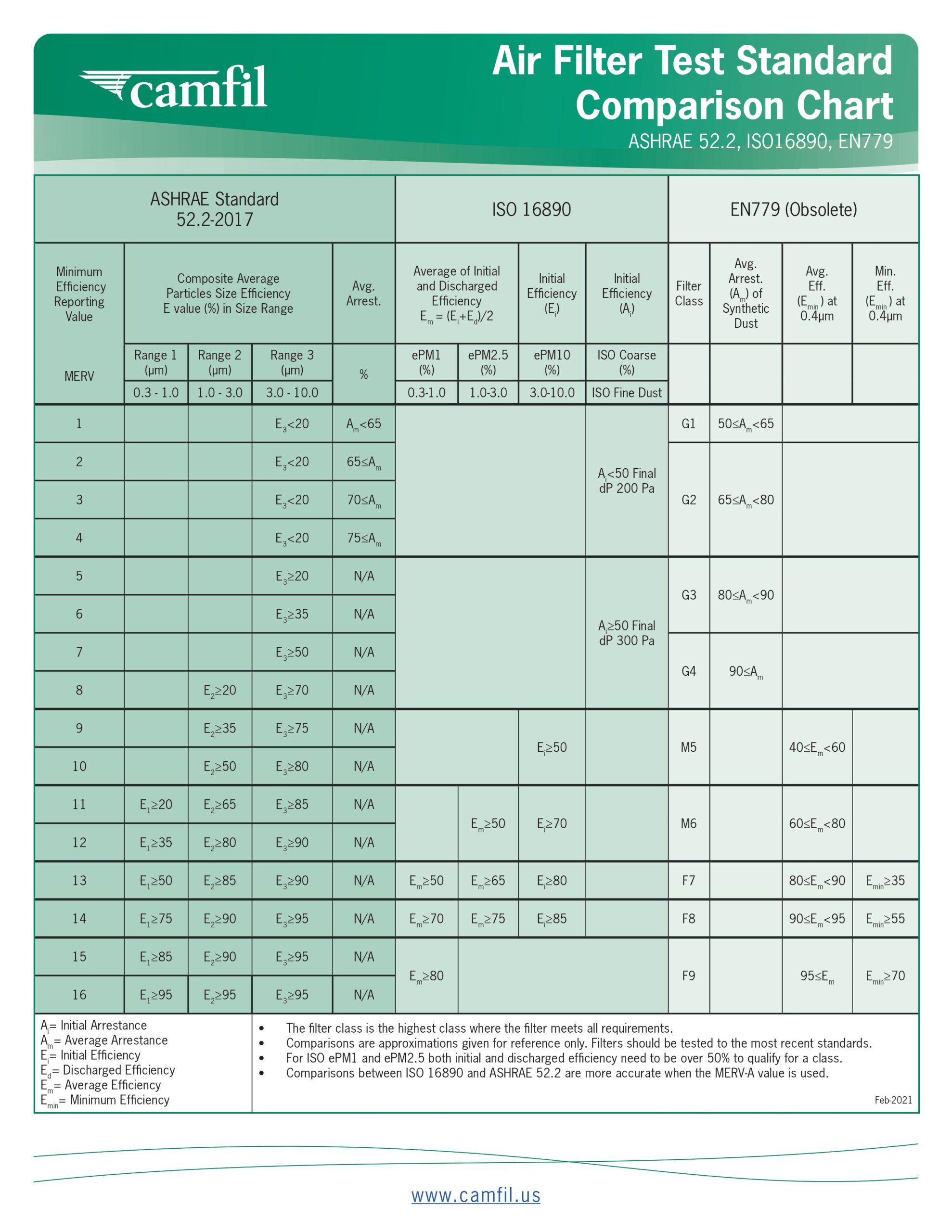
 

Air Filter Test Standard Comparison ChartASHRAE recommends using MERV 16-rated filters in common hospital spaces like Class 3 imaging, cesarean delivery  and general surgery operating rooms. These filters are known for their ability to capture tiny droplet nuclei (like those from sneezes) and bacteria. However, these filtering recommendations may not be sufficiently effective in rooms occupied by patients with infectious diseases.

HEPA Filters Work with Other Filters

HEPA filters are a key component in controlling air quality within AIIRs. They come in various forms. For example, global air filtration specialist Camfil offers HEPA air filter panels for terminal filtration in panel configurations and box-type HEPA filters which are often installed as the final stage of filtration in HVAC systems. tAir filters with lower efficiency are installed in the stages prior to HEPA filters to enhance overall efficiency and to lessen the burden on the main HEPA filter, thereby extending its useful life.

For instance, air-handling units in isolation rooms might use a MERV 14 pre-filter paired with a HEPA filter to capture the finest particles. Pre-filters, like the Hi-Flo ES a high efficiency bag filter, capture larger particles before they reach the main HEPA filter, helping to maintain the integrity and extend the lifespan of the more costly HEPA filters. These pre-filters, which are efficient in energy use due to their low-pressure drop, can be rated from MERV 11 to MERV 15.

In situations where space is limited, the Camfil Durafil ES high-performance V-bank air filters are used as pre-filters to the main HEPA filter. These are available in MERV 13 to MERV 16 ratings, ensuring that even in compact air handling units, filtration is not compromised. 

Maintaining Filter Efficiency

To ensure that AIIR rooms function effectively, it’s essential to maintain the filtration system properly, even with a top-tier HVAC system in place. This means that filters should be serviced or replaced regularly for the best performance. Indicators that a filter needs replacing include: 

  • Decreased airflow that relates to less efficiency in capturing particlesExcess accumulation of dust and particulates within the space being protected
  • Increased power consumption as the HVAC system works harder to pump air through a clogged filter
  • Gaps in and around filter banks causing particles to bypass filter fibers

In addition, it’s crucial to follow the filter replacement schedule provided by the manufacturer, regardless of whether the above signs are present.

Improving Hospital Safety Records

The COVID-19 pandemic highlighted the necessity of effective isolation methods within healthcare facilities to curb the spread of infectious diseases. AIIRs are critical in this effort, as they isolate patients with contagious diseases and prevent the spread of airborne pathogens within the hospital.

Proper ventilation is also crucial to halt the spread of diseases transmitted via airborne particles. Implementing a top-tier air filtration system is a sound investment, preventing expensive and potentially deadly outbreaks. This is particularly important for the elderly and other patients with weakened immune systems. Infectious disease containment is a measure of a hospital’s commitment to safety, influencing its reputation and standing in the community.

HEPA filters are vital in isolation rooms, with medical-grade HEPA filters outperforming other types by removing 99.9% of particles as small as 0.3 µm. Although less efficient filters can be used effectively as prefilters, HEPA filters are the cornerstone for eradicating airborne pathogens from an AIIR.

The selection of HEPA filters depends on various factors, including the size of the facility, contamination levels, budget constraints, industry standards, and maintenance costs. 

Consulting with an air filtration expert, particularly one with healthcare industry experience like Camfil, can help a hospital determine the appropriate medical-grade HEPA filter for any AIIR. Camfil trained experts can advise on how to design a system of staged filters that will best prevent the transmission of infectious agents.

¹Transmission-Based Precautions, Centers for Disease Control, Transmission-Based Precautions | Basics | Infection Control | CDC”

²Al-Benna, Sammy; van Zijl, Francie. The Association for Perioperative Practice. December 1, 2020. Sage Journals. Negative pressure rooms and COVID-19 – Sammy Al-Benna, 2021 (sagepub.com)

³Andersen, Bjorg Marit. Prevention and control of Infections in Hospitals. Background Information, Isolation Routines. September 25, 2018.  National Library of Medicine. Background Information: Isolation Routines – PMC (nih.gov)

⁴Bannister, Barbara; Puro, Vincenzo, Fusco; Francesco, Heptonstall; Julia, Ippolito; Giuseppe.  Framework for the design and operation of high-level isolation units: consensus of the European Network of Infectious Diseases. National Library of Medicine. Framework for the design and operation of high-level isolation units: consensus of the European Network of Infectious Diseases – PMC (nih.gov)

⁵Herstein, Jocelyn; Iwen, Peter; Jelden, Katelyn; Biddinger, Paul: Gibbs, Shawn: Le, Aurora: Hewlett, Angela: Lowe, John. U.S. High-Level Isolation Unit Clinical Laboratory Capabilities Update. National Library of Medicine.  U.S. High-Level Isolation Unit Clinical Laboratory Capabilities Update – PMC (nih.gov)

⁶Guidelines for Environmental Infection Control in Health-Care Facilities. Background C. Air. 2003. Centers for Disease Control and Prevention. https://www.cdc.gov/infectioncontrol/guidelines/environmental/background/air.html

⁷Types of Airborne Disease, Healthline, https://www.healthline.com/health/airborne-diseases#types

⁸Ventilation of Heal Care Facilities, ANSI/ASHRAE/ASHE addendum to ANSI/ASHRAE/ASHE Standard 170-2017. ANSI/ASHRAE/ASHE Addendum s to ANSI/ASHRAE/ASHE Standard 170-2017

⁹Isolation Rooms. International Health Facility Guidelines.  https://healthfacilityguidelines.com/ViewPDF/ViewIndexPDF/iHFG_part_d_isolation_rooms

¹⁰Ventilation in Buildings, Centers for Disease Control and Prevention. May 12, 2023.  https://www.cdc.gov/coronavirus/2019-ncov/community/ventilation.html   

¹¹Hospital Isolation Room Requirements – What You Need to Know. Thomas, a Xometry Company. https://www.thomasnet.com/articles/plant-facility-equipment/hospital-isolation-room-requirements/

¹²Ventilation of Heal Care Facilities, ANSI/ASHRAE/ASHE addendum to ANSI/ASHRAE/ASHE Standard 170-2017. ANSI/ASHRAE/ASHE Addendum s to ANSI/ASHRAE/ASHE Standard 170-2017

The post HEPA Air Filters Serve Critical Function in Containing Pathogens Born in Airborne Infection Isolation Rooms appeared first on Air Filters for Clean Air.


from Air Filters for Clean Air

Friday, January 26, 2024

Making Your New Year’s Resolution Last: How an Air Purifier Can Optimize Your Workout

A popular goal among those who participate in setting New Year’s resolutions is the commitment to exercising more often and more consistently. However, the quality of the air we breathe during workouts is an often overlooked factor that can significantly impact our performance and overall health. Just as you wouldn’t use equipment or consume products that hinder your progress or pose harm, it’s essential to hold the air you breathe to the same high standard for optimized athletic performance.

Continue reading to learn from air quality specialists about how an air purifier can protect your health and enhance your workouts.

How Does Air Pollution Affect Athletic Performance? 

There is a long-standing scientific link between exposure to air pollution and declines in academic performance; these effects become even more prominent in more advanced athletes. Researchers have found that air pollution levels are predictors of athletic performance in populations ranging from average Americans to high school track runners and even Olympic athletes, with short-term air pollution exposure having greater impacts than long-term exposure. 

Extensively documented evidence underscores the notable impact of exercising amidst pollutants on respiratory health as a whole. When engaging in physical exertion, even activities such as yoga and weight-lifting that may not necessarily induce breathlessness, the heightened oxygen requirement of the muscles necessitates deeper and more frequent inhalations compared to a state of rest. As a result, the amplified intake of air during exercise exposes the lungs to an increased concentration of pollutants.

When exercising, the increased rate of breathing and airflow velocity make you more vulnerable to the effects of air pollution. Keep an eye out for the following impacts during your workout:

  • Respiratory irritation, including coughing, sneezing, watering eyes, sore throat, and runny nose.
  • Worsening of respiratory conditions such as asthma and COPD.
  • Increased likelihood of developing bronchitis and other respiratory infections. 
  • Dizziness, confusion, and decreased cognitive function.

For individuals at all levels of athletic ability, exercising in an environment that causes unnecessary physical discomfort and/or pain may become a deterrent from exercising altogether.

Read more: Can Air Pollution Make You Gain Weight? New Research Links Particulate Matter to Weight Gain

What Air Pollutants Are Found in Home Gyms and Fitness Centers?

While the health impacts of outdoor air pollution are a primary concern for many, it is worth noting that indoor air can be up to fifty times more polluted. Structures from previous eras were frequently constructed with stringent seals to prevent outdoor air pollution from infiltrating indoors. However, the unintended consequence of that construction technique is that it can also trap indoor pollutants and any outdoor contaminants that manage to enter through doors and windows. 

Pollutants commonly found inside gyms and home gyms include:

  • Particulate matter (PM). Particulate matter is a common air pollutant which is defined as any solid or liquid substance suspended in the air. There are three subcategories of particulate matter, based on the size of the particles: PM10 (anything less than ten microns in diameter), PM2.5 (anything less than 2.5 microns in diameter), and PM1 (anything less than 1 micron in diameter). The smallest particles can penetrate the lungs’ alveoli and enter the bloodstream, causing harm to major organs including the brain. Particulate matter includes common everyday pollutants such as pet dander, dust, and pollen, but can also include more directly harmful substances such as byproducts of the combustion process. The infected respiratory droplets and aerosols that are responsible for spreading COVID-19 are also classified as particulate matter.
  • Carbon monoxide (CO). Carbon monoxide is a silent and invisible gas that can lead to dizziness, confusion, or even fatality. Although natural sources like volcanoes or lightning exist, it is primarily produced through incomplete combustion in everyday items such as car engines, fireplaces, lanterns, stoves, and furnaces. If your home gym is located in your garage, it is crucial to be mindful of this potentially lethal pollutant.
  • Volatile organic compounds (VOCs). Volatile organic compounds (VOCs) are gaseous or molecular pollutants that commonly originate from indoor sources, such as cleaning chemicals, air fresheners, and even off-gassing from low-priced, mass-produced furniture (including exercise equipment). VOCs are characterized by high vapor pressure and a low boiling point, resulting in a gaseous state at room temperature. Benzene, ethylene glycol, formaldehyde, methylene chloride, tetrachloroethylene, toluene, xylene, and 1,3-butadiene are among the commonly found VOCs.

Other common pollutants may include nitrogen oxides (NOx) and ozone (O3). 

Home Gym Air Pollution Sources

Sources of indoor air pollution in home gyms can also vary wildly, depending on the location of your home gym within your home, as well as the location of your home.

The air supply in your home gym is likely shared with the rest of your house. Consequently, the pollution generated by your day-to-day activities could potentially affect your workout sessions. The panel air filters typically utilized in HVAC systems are designed to safeguard the equipment from excessive debris. They do not offer an adequate level of filtration to safeguard human lungs against most particulate matter, nor do they provide any defense against gaseous pollutants, such as volatile organic compounds, which are a significant risk when exercising at home.

For home gyms located in garages, other uses of the space, such as tool and chemical usage, or parking a car, present additional risks of harmful air pollution.

Many people who exercise primarily at home do so in their living room, bedroom, home office, or other location used for multiple purposes. Even if you have a specifically designated space for a home gym in your house or apartment, managing indoor air pollution in the areas where you exercise is important. Indoor air pollution can have negative long- and short-term effects on your body even at rest, which are heightened during exercise when the lungs are working harder and taking in more air.

Additionally, the makeup of the air pollution inside your home is, in part, determined by where it is located. Homes located near major roadways or industrial areas will have lower indoor air quality than those with minimal nearby pollution sources unless adequate air filtration systems are put in place.

Read More: The Importance of Air Filtration in Cities with Heavy Traffic

Why Your Home Gym Needs an Air Purifier in 2024

  • Reach Your Athletic Goals. Breathing clean air has been shown to increase athletic performance. When you breathe in clean air, your body is more easily able to deliver oxygen to your muscles, increasing strength and endurance. Additionally, because air purifiers help eliminate harmful airborne particles, you’ll be less likely to experience headaches, dizziness, and other short-term side effects that are likely to hinder your performance.
  • Eliminate Allergens. Indoor air in houses and apartments is often full of pollen, pet dander, dust, mold spores, and other allergens, even in the winter. The presence of allergens can make exercising uncomfortable and exacerbate seasonal allergies, asthma, and other respiratory conditions. Allergens are a type of particulate matter, meaning that they can be effectively targeted by a true HEPA filter.
  • Reduce Health Risks. As discussed above, breathing polluted air during exercises strains the respiratory system and poses short- and long-term health risks.  Short-term symptoms include coughing, wheezing, headaches, and nausea. Long-term effects can be more serious and include respiratory diseases and heart complications. Air purifiers with activated carbon filters are particularly effective at removing harmful pollutants like ozone and volatile organic compounds (VOCs) to prevent health complications.
  • Create a Comfortable Atmosphere to Stick to a Routine. Using air purifiers in your home gym to reduce indoor air pollution and increase the circulation of clean air helps to create a comfortable, rejuvenating atmosphere that will make working out a more positive experience. When working out is more physically comfortable, sticking to a routine and making exercise a habit becomes easier.

Finding the Right Air Purifier for Your Home Gym

The ideal air purifier for a home gym should be able to target both particulate matter and gaseous pollutants. For the most effective results, choose an air purifier that uses a factory-tested and certified HEPA filter (to target particulate pollution) and an activated carbon filter (to target gaseous pollutants).

To target gaseous pollutants, including volatile organic compounds, and particulate matter, use an air purifier that uses a scan-tested and certified HEPA air filter and an activated carbon filter, such as Camfil’s City M. The City M is a standalone in-room air purifier that you can plug into any standard outlet and use immediately with no special installation or HVAC specifications required. 

About Camfil Clean Air Solutions

For more than half a century, Camfil has been helping people breathe cleaner air. As a leading manufacturer of premium clean air solutions, we provide commercial and industrial systems for air filtration and air pollution control that improve worker and equipment productivity, minimize energy use, and benefit human health and the environment. We firmly believe that the best solutions for our customers are the best solutions for our planet, too. That’s why every step of the way – from design to delivery and across the product life cycle – we consider the impact of what we do on people and on the world around us. Through a fresh approach to problem-solving, innovative design, precise process control, and a strong customer focus we aim to conserve more, use less and find better ways – so we can all breathe easier.

The Camfil Group is headquartered in Stockholm, Sweden, and has 30​ manufacturing sites, six R&D centers, local sales offices in 35+ countries, and about 5,600 employees and growing. We proudly serve and support customers in a wide variety of industries and in communities across the world. To discover how Camfil USA can help you to protect people, processes and the environment, visit us at www.camfil.us/ 


##


Media Contact: 

Lynne Laake 

Camfil USA Air Filters 

T: 888.599.6620 

E: Lynne.Laake@camfil.com

F: Friend Camfil USA on Facebook

T: Follow Camfil USA on Twitter 

Y: Watch Camfil Videos on YouTube

L: Follow our LinkedIn Page

The post Making Your New Year’s Resolution Last: How an Air Purifier Can Optimize Your Workout appeared first on Air Filters for Clean Air.


from Air Filters for Clean Air

Tuesday, January 16, 2024

Air Filter Procurement Guide: How to Properly Procure Air Filters

The importance of procuring high-quality air filters cannot be overstated. The proper air filters not only ensure the health and well-being of the occupants but also contribute significantly to the building’s energy efficiency and longevity.

Many professionals should be able to understand the technical, environmental, and economic aspects of air filtration equipment, as well as what an HVAC technician will see when installing and replacing filters, to make the best purchasing decisions for their organizations. Professionals involved in air filter purchasing decisions include procurement managers, procurement specialists, buyers, purchasing agents, purchasing managers, supply chain managers, chief financial officers, accounting managers, quality control personnel, quality engineers, and quality managers. Getting all of these professionals up to speed and on the same page about air filter procurement is a challenging task.

Camfil has launched a new series of videos where their Director of Comfort Air, r Dave Blackwell discusses the process of air filter procurement for commercial buildings and provides steps for ensuring that you are getting the highest quality filters for your building’s specific needs.

This article will serve as an additional resource for those who are responsible for ensuring the air quality in commercial buildings. In the following sections, we will navigate you through the process of identifying, selecting, and obtaining the highest-quality air filters for your commercial building.

Problem Identification: Why RFQ Doesn’t Work

In most cases, companies use an RFQ (request for quote) to procure air filters. The RFQ process typically involves requesting quotes from multiple suppliers and then comparing them based on price and delivery time.  For example, a large corporation purchasing paper goods for numerous facilities across North America may list a need for 5000 boxes of two-ply, soft, facial tissues in two different-sized containers. Suppliers responding to this RFQ would input their price per piece for each size on a spreadsheet included with the RFQ. The assumption is made that the products submitted by all suppliers responding to the RFQ are the same or at least similar enough from a performance perspective that users would be unable to tell the difference.

Unfortunately, many companies currently source air filters the same way. Often, the only  requirements listed are the size of the filter,  the efficiency (MERV rating) and sometimes  the annual quantity is included. The filters are listed on a spreadsheet and the supplier is requested to submit (quote) their best price for each filter size / MERV rating. The assumption is filters submitted by various suppliers are all basically the same, or  close in performance. Since the piece price of each filter is the primary factor for  the supplier  granted the business, a bidding war begins and the lowest bid wins. The company adds up the savings and assumes that by using this commodity-type purchasing procedure to source air filters, they’ve saved the company X% of money.

However, air filters are not commodity products, but highly technical pieces of equipment. While it may be true that there is no significant difference in performance between various types of 2-ply facial tissues, the same cannot be said for air filters of the same depth and MERV rating.  

An air filter is just one component (and often one of the lowest priced) in a much larger and more complex HVAC system. However, an air filter can have drastic effects on the overall performance (and therefore, the operational cost) of the entire HVAC system. Poor quality filters that become clogged quickly drive up energy prices and reduce air circulation. Air filters that allow debris to pass through can result in major damage to sensitive HVAC equipment that requires expensive repairs. Sourcing air filters as if they are commodities costs money. It does not save money.

Learn more: How Do Companies Procure Air Filters? 

 The Technical Nature of Air Filters

Air filters may seem like a simple and straightforward product, but they are actually quite technical in nature. There are various types of air filters available in the market, each with its own unique features and specifications. This makes it difficult for procurement teams to identify  and specify the optimum air filter for each HVAC system within  their building using a spreadsheet. Hidden Lifetime Costs of Air Filters

When procuring air filters, it’s crucial to consider more than just the initial purchase price. There are several hidden lifetime costs associated with air filters that are often overlooked, which can significantly impact a company’s budget and the health of building occupants.

  • Energy Costs. Air filters directly affect the energy efficiency of your HVAC system. A poor-quality, old, or clogged filter can make the system work harder to maintain air quality and temperature, leading to increased energy consumption and higher utility bills. Look for filters with a 5-Star Energy Cost Index rating for the lowest energy consumption.
  • Labor and Replacement Costs. Filter change frequency depends on the quality of the filter and the environmental conditions. Lower-quality filters require more frequent replacements, resulting in higher labor costs. When in-house maintenance staff is used, the lost labor hours could have been reallocated to far more valuable projects. Replacing an air filter also necessitates the disposal of the old filter, which is another expense that needs to be accounted for when assessing lifetime costs.
  • Health Implications. The quality of air filters also has direct implications on occupant health. Lower-quality filters allow more pollutants and allergens to circulate in the indoor air, impacting not only the physical health of occupants and employees but also their cognitive functioning and capacity for productivity. Inadequate air filtration therefore leads to additional costs as a result of increased employee sick days and decreased productivity. (Read more: Exploring the Link Between Better Indoor Air Quality and Improved Productivity.)

It’s important to remember that financing for energy usage, contracted maintenance, and employee labor are likely handled by different departments in large organizations, and budgets may be fragmented even further in regional and national companies that operate dozens of buildings in multiple districts.

Because costs are possibly dispersed into different budgets, it can be difficult to see just how much current air filters are costing your company.

Learn more: How Do You Know If Your Air Filters Are Costing You Extra?

Why Cheap Air Filters Need to Be Replaced So Frequently

There are air filters that incorporate an electrostatic charge which essentially functions as a magnet for particulate matter, enhancing particle capture efficiency across all three size ranges. Consequently, manufacturers can assign the filter a higher MERV value after factory testing. However, as the filter accumulates dirt, the charge loses its ability to attract particles, causing a decline in the actual particle capture efficiency of the filter.

A MERV-13 filter, for example, can drop to a particle capture efficiency equivalent to that of a  MERV-8 filter within a short period of time, sometimes as little as a month, leaving people and equipment less protected than expected.  ASHRAE’s testing standards specify an optional testing method for determining filter efficiency without electrostatic charge. The values determined from this test are MERV-A values. MERV-A-rated filters will retain their rated efficiency across the lifespan of the filter.  An easy way to remember the distinction between MERV and MERV-A is to think of the “A” as standing for “actual,” so a filter’s MERV-A rating represents its “actual” efficiency. 

Additional Resources for Air Filter Procurement

For those seeking in-depth knowledge and understanding of air filter procurement, the following resources are useful:

  • Camfil’s official website provides a range of expert advice, product details, case studies, industry news, and insightful articles.
  • Camfil’s YouTube channel provides comprehensive and easily digestible information on a wide array of including cost-efficiency, maintenance, and quality assessment.

Camfil’s Solution for Air Filter Procurement:  Focusing on TCO

Understanding the application and performance expectations of each air filter is crucial in making the best-informed decision for your commercial building. Not all air filters are made equal, and it’s important to choose a high-quality air filter that meets or exceeds industry standards and fits the unique needs of each building, which include:

  • HVAC System Specifications. Many commercial HVAC systems have shallow tracts to house filters, usually limiting options to one-,  two-  or four-inch deep air filters. (Learn more: Do All Air Handling Units Use the Same Air Filter?) 
  • Air Pollution Composition.  The location of your building and local air quality, in addition to what indoor air pollutants are being generated inside the building, are important factors to consider when selecting an air filter.
  • Air Quality Goals. Each organization’s goals for indoor air quality in their buildings may vary based on recommendations from professional organizations, state regulations, and federal standards.

Once the factors have been considered, the ideal filtration solution will consider the total cost of ownership (TCO) rather than the initial purchasing price of individual filters.

Air filters may seem like a small expense, but they can add up over time. Consider the total cost of ownership when selecting an air filter, including initial purchase price, replacement frequency, and energy efficiency. A lower-priced filter may seem like a bargain, but if it needs to be replaced more frequently or has higher energy consumption, it may end up costing your company more in the long run.

Example Analysis

The following example uses round numbers to illustrate the difference in TCO between an inexpensive commodity filter and a higher-priced technical filter. The figures do not represent real filter or energy prices. For a real-life example of the savings a building-wide filter upgrade can bring, read about how Nasville’s Music City Center decreased labor by 80% and energy consumption by 34% with Camfil air filters.


Cost Category Inexpensive Commodity Filter Premium Technical filter
Filter Replacements 4 x $10 = $40 1 x $20 = $20
Replacement Labor 4 x $10 = $40 1 x $10 = $10
Disposal 4 x $5 = $20 1 x $5 = $5
Annual Energy Usage $10 $5
Total $110 $40

In this example, purchasing the higher quality filter saves $70 annually for every filter opening in the HVAC system that requires a filter to be in place. Within just one commercial building, savings can quickly add up, and for large organizations with branches across the country and internationally, it can quickly total tens or even hundreds of thousands of dollars saved each year. 

Case Study 30/30 Dual 9 Air Filter Retail Mall Saves Energy and Labor Canada Calgary (camfil.com)

 The above example only considers costs that are easily quantifiable and generally consistent and predictable across time. Cheap panel filters, which lose their rated effectiveness rapidly (sometimes in as little as one month), additional costs such as maintenance and downtime for damaged HVAC equipment, and decreased employee productivity due to poor air quality must be added to the total cost of ownership. Additionally, when workers gain access to rooftops using ladders or lifts, it can affect employee productivity or the customer shopping experience in retail environments. This is especially bothersome if quarterly service is needed due to air filters with limited service life. Plus, repeated worker visits during very hot or very cold days can damage sensitive roof membranes requiring expensive repairs.  

To accurately calculate the total cost of ownership (TCO) and potential savings of air filter procurement for your specific organization, seeking expert guidance can prove invaluable. Industry specialists, well-versed in HVAC systems, can conduct a comprehensive analysis of your current air filter usage, energy consumption, and replacement frequency, providing a detailed cost-benefit analysis. This will not only assist you in identifying the most cost-effective and efficient air filters for your needs but also help identify which pollutants affect your building the most. Furthermore, having an expert on board ensures that all factors influencing the TCO are taken into account, enabling your organization to make an informed decision that optimizes both financial savings and air quality.

Recommended Action Plan

Evaluating the effectiveness of your current air filtration technology and determining what changes need to be made can be a lengthy and potentially complicated process.

Camfil recommends beginning the process three to four months in advance of your next scheduled filter changeout for larger organizations with multiple buildings. Smaller organizations need less time, but consulting with an air quality professional sooner rather than later is recommended for the best results.

(Learn more:  What Does an Air Filter Survey Involve?) 

Changing the Approach to Air Filter Procurement for Cost Savings and Better Results

Proper air filter procurement is crucial for the well-being of both the personnel and the HVAC equipment in a commercial building. It’s not simply about securing the most affordable filters, but rather sourcing filters that ensure optimal air quality and energy efficiency. The right filters can mitigate pollutant impact, reduce downtime and maintenance costs, and enhance overall productivity. Undertaking a comprehensive cost-benefit analysis with the aid of industry specialists can guide organizations in making a well-informed decision that optimizes financial savings and air quality. Starting this process well in advance of the next filter changeout is recommended to achieve the best results.

About Camfil Clean Air Solutions

For more than half a century, Camfil has been helping people breathe cleaner air. As a leading manufacturer of premium clean air solutions, we provide commercial and industrial systems for air filtration and air pollution control that improve worker and equipment productivity, minimize energy use, and benefit human health and the environment. We firmly believe that the best solutions for our customers are the best solutions for our planet, too. That’s why every step of the way – from design to delivery and across the product life cycle – we consider the impact of what we do on people and on the world around us. Through a fresh approach to problem-solving, innovative design, precise process control, and a strong customer focus we aim to conserve more, use less and find better ways – so we can all breathe easier.

The Camfil Group is headquartered in Stockholm, Sweden, and has 30​ manufacturing sites, six R&D centers, local sales offices in 35+ countries, and about 5,600 employees and growing. We proudly serve and support customers in a wide variety of industries and communities across the world. To discover how Camfil USA can help you to protect people, processes and the environment, visit us at www.camfil.us/ 

##


Media Contact: 

Lynne Laake 

Camfil USA Air Filters 

T: 888.599.6620 

E: Lynne.Laake@camfil.com

F: Friend Camfil USA on Facebook

T: Follow Camfil USA on Twitter 

Y: Watch Camfil Videos on YouTube

L: Follow our LinkedIn Page

The post Air Filter Procurement Guide: How to Properly Procure Air Filters appeared first on Air Filters for Clean Air.


from Air Filters for Clean Air

VLOG 1 Review: Camfil Filtration Experts Discuss Air Filter Procurement Strategies

Introduction

In the vlog titled “How Do Large Companies Procure Air Filters,” Camfil’s filtration experts Mark Davidson and Dave Blackwell explore the intricate process of air filter procurement in large organizations. They focus on Camfil’s unique approach, prioritizing quality and total cost of ownership over mere price comparisons, a significant shift from traditional procurement strategies.

Key Points from the Vlog

  • Dave Blackwell’s Role at Camfil:  Dave, as a director at Camfil USA, is a key figure in interacting with sourcing departments across North America, providing essential quotes for air filters in various facilities.
  • Camfil’s Policy Against Cross-Referencing Filters:  Breaking away from standard industry norms, Camfil, under Dave’s guidance, refrains from cross-referencing filters with those on spreadsheets. This policy is rooted in the understanding that spreadsheets can’t adequately capture the environmental nuances and specific HVAC system conditions.
  • Focus on Total Cost of Ownership:  Emphasized by Dave Blackwell, the evaluation of air filters at Camfil transcends initial pricing. Camfil considers the long-term performance and cost implications, advocating for an assessment based on the total cost of ownership.
  • Response to RFQs:  Camfil’s response to requests for quotations is unconventional. Camfil avoids cross-referencing and instead concentrates on offering solutions that ensure optimal performance within the HVAC system. This underscores their philosophy of viewing air filters as technical products, not just commodities.

Analysis and Perspective

The vlog effectively conveys a pivotal shift in procurement philosophy. Camfil’s approach, focusing on holistic evaluations of performance and cost, is vital because air filtration quality profoundly affects system efficiency, maintenance costs, and ultimately; human health. This stance challenges traditional procurement methods, advocating for a more nuanced understanding of each facility’s unique needs, potentially leading to more sustainable, cost-effective solutions.

Conclusion

Mark Davidson and Dave Blackwell provide enlightening insights into air filter procurement, proposing a paradigm shift towards prioritizing total cost of ownership and performance. Their perspectives could be instrumental in reshaping how large companies handle this crucial aspect of facility management.

Additional Resource

For a more comprehensive and visual insight, viewers can access the short video featuring Dave Blackwell, where he discusses these strategies in depth: Camfil Air Filter Procurement Strategies.

The post VLOG 1 Review: Camfil Filtration Experts Discuss Air Filter Procurement Strategies appeared first on Air Filters for Clean Air.


from Air Filters for Clean Air